Satin Cortez Under a Field Jacket? That’s the Point
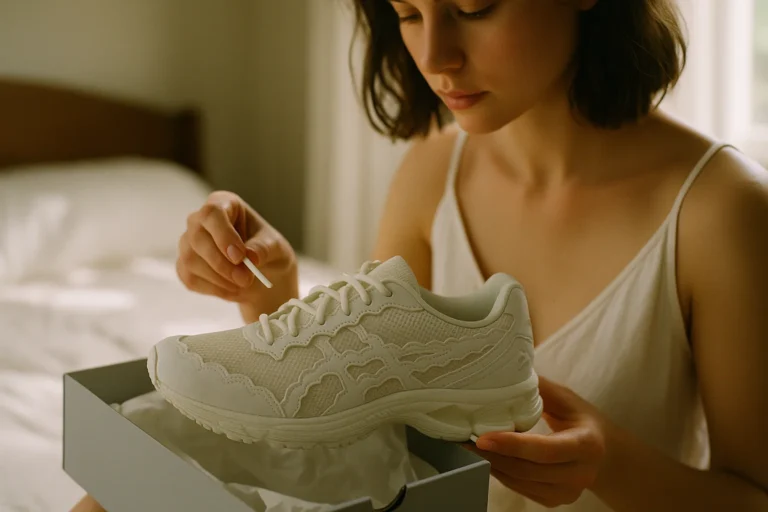
In 2024, women accounted for roughly 40 percent of all sneaker purchases in North America, according to Circana’s footwear tracking data—a figure that’s climbed steadily for five years and that still somehow surprises people who should know better. That number doesn’t just represent buying power. It represents taste-making power. And right now, the most interesting expression of that power isn’t happening on a product page or in a design studio. It’s happening in the space between the shoe and everything above the ankle, where women are taking the sneaker industry’s most overtly feminine silhouettes—slim, satin-paneled, ballet-coded—and refusing to style them the way anyone expected.
If that sounds like something you’ve been doing quietly for a while now, keep reading. This is your language.
Satin Sneakers Deserve More Than a Midi Skirt
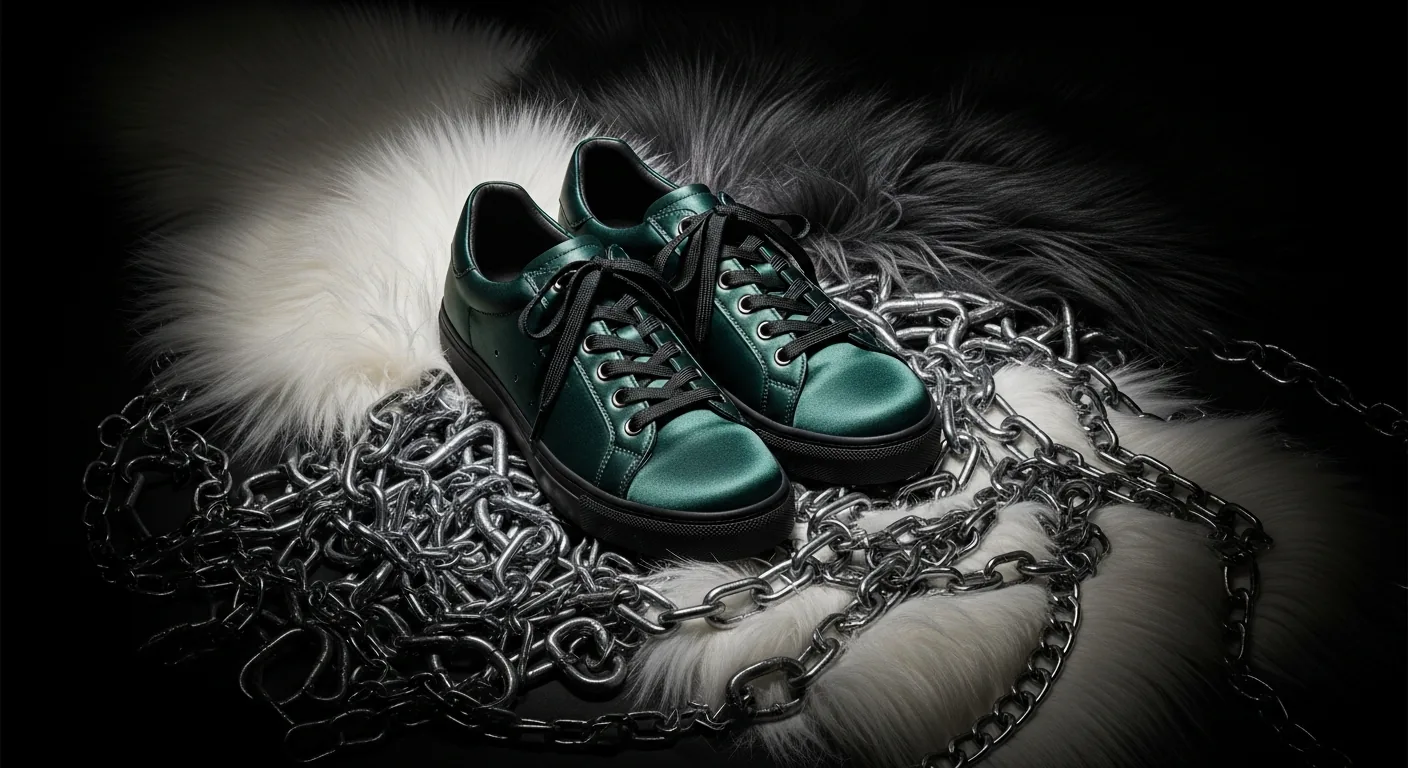
Let’s name the cliché so we can move past it. For years, every time a brand dropped a sneaker with a satin upper, a ribbon lace, or a pointed-toe profile, the lookbook told the same story: pair it with a slip dress, maybe a pleated skirt, maybe a fitted blazer with nothing underneath. “Dress it up” became the universal styling suggestion, as if the only way to justify a delicate sneaker was to trap it inside a feminine outfit from head to toe. That formula was never wrong, exactly. It was just boring. And it dramatically underestimated what women actually wanted to do.
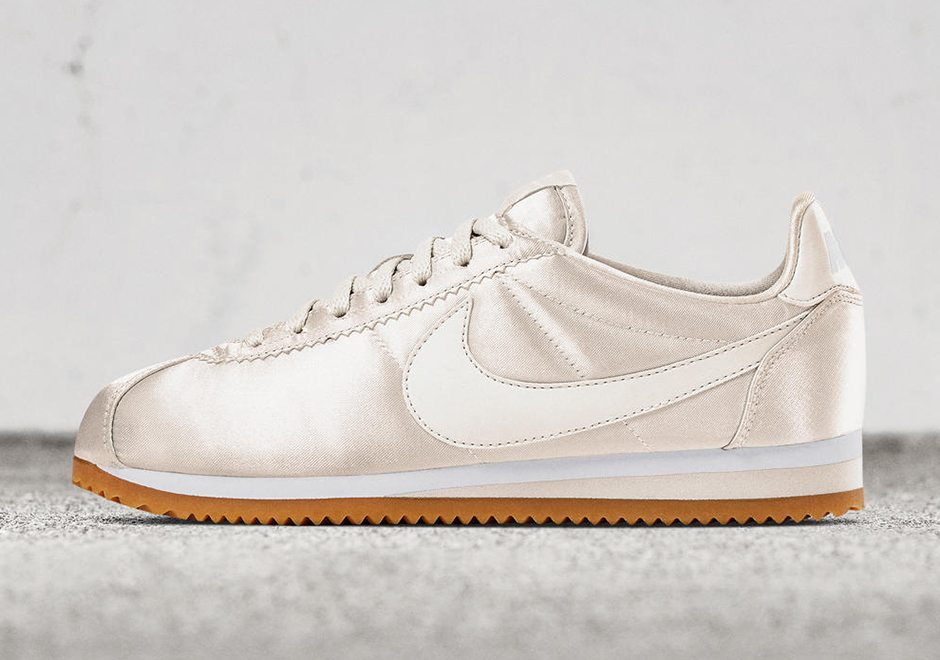
What’s happening now is a full-blown rejection of tonal styling—the idea that a soft shoe demands a soft outfit. Instead, women across sneaker communities, street style circuits, and social media are building looks that weaponize contrast. The ballet flat silhouette of Nike’s Cortez Textile in the Smokey Mauve colorway, released in February 2025, keeps showing up under wide-leg cargo trousers and oversized M-65 field jackets—a combination that treats the shoe’s softness as a blade, not a bow. Puma’s Speedcat, which re-entered the conversation in late 2024 with its slim, low-profile motorsport shape, has been absorbed into an entirely different wardrobe language: double-pleated wool trousers, boxy topcoats hitting below the knee, the shoe barely visible at the break. And then there’s the Adidas Taekwondo W in chalk white and gum—arguably the most ballet-adjacent sneaker a major brand has released in years. Forget the expected leggings-and-cropped-hoodie pairing. The outfits turning heads start with structured, menswear-weight suiting and let you discover the shoe last, a whisper at the bottom of a sentence built entirely from consonants.
This isn’t about “dressing down” a tailored look with sneakers. That’s a ten-year-old conversation. This is about using a deliberately delicate shoe as the sharpest point in a look that’s otherwise built for weight and volume. And if you’ve ever stood in front of a mirror holding a satin sneaker in one hand and an oversized blazer in the other, wondering if it works—it does. You already knew that.
Why Contrast Styling Hits Different in 2025
To understand why this formula has so much traction right now, you have to look at what’s been building in women’s fashion more broadly. The last two years have seen an aggressive swing toward oversized, utilitarian, and traditionally masculine silhouettes in womenswear—not as a trend imported from menswear runways, but as a movement driven by women themselves. Phoebe Philo, whose eponymous line launched in late 2023, built an entire aesthetic around volume, structure, and refusal to flatter in conventional ways—and while her collections center on leather flats and architectural heels rather than sneakers, she codified the proportions that make contrast sneaker styling land: the overcoat that swallows the shoulder, the trouser that pools at the floor, the sense that the silhouette is the statement and everything else is punctuation. Stylist Gabriella Karefa-Johnson, one of the most influential voices in contemporary fashion, has repeatedly championed the same proportion philosophy—looks where the relationship between garment and body is the creative act. Neither is primarily a sneaker figure. But together, they’ve normalized the oversized, structured canvas that makes a slim satin sneaker read as an intentional disruption rather than an afterthought.
Into this landscape, satin and ballet-coded sneakers arrive as exactly that kind of visual punctuation mark. They don’t soften the look. They complicate it. A Salomon XT-4 under wide trousers reads as functional and grounded. A Nike Cortez in pearl satin under those same trousers reads as a choice—a deliberate tension between what the outfit says and what the shoe whispers. That tension is what’s making this moment so compelling if you care about styling as a form of self-expression rather than brand-dictated coordination.
It also helps that the sneakers themselves have gotten significantly better. For a long time, “feminine” sneakers meant compromised sneakers—thinner soles, cheaper materials, colorways that prioritized pastel palatability over actual design integrity. The current crop of slim and satin silhouettes doesn’t carry that baggage. The Puma Speedcat’s low-slung motorsport DNA gives it a genuine design lineage. The Adidas Taekwondo is rooted in martial arts footwear, which means its slim profile comes from function, not decoration. Even Nike’s move to bring back the Cortez in textile and satin finishes connects to a silhouette with nearly sixty years of weight behind it—from Compton to *Carlito’s Way* to East LA softball leagues. These shoes earn their place in a hard outfit because they were never as fragile as they looked.
The Outfit Formulas That Actually Work

Talk to women who are building these looks daily and you’ll hear the same two or three formulas described with slight variations but unmistakable consistency. The first, and probably the most widespread, is the wide-leg trouser formula: a slim, low-profile sneaker paired with a high-waisted, full-break trouser in wool, cotton twill, or ripstop nylon, topped with a cropped or boxy jacket. The trouser does the heavy lifting in terms of silhouette, and the sneaker peeks out at the hem like a quiet contradiction. This works especially well with the Onitsuka Tiger Mexico 66 in its cream and burgundy colorway or the New Balance 480 in white leather—shoes that sit close to the ground and don’t compete with the trouser’s volume.
The second formula flips the proportions: a fitted or tapered cargo pant, usually in olive, black, or stone, tucked or half-tucked into the sneaker, with an oversized coat or puffer on top. Here the sneaker gets full visibility, and the satin or slim profile reads against all that utilitarian fabric like a deliberate act of refusal. This is the formula that’s been circulating most aggressively on Instagram and TikTok, especially among women in London, Seoul, and New York who move between streetwear and fashion without treating them as separate worlds. The Nike Air Rift, with its split-toe silhouette and mesh panels, has become a quiet favorite in this formula—a shoe that’s technically athletic but reads as almost sculptural when it’s the only delicate element in a look full of cargo pockets and industrial zippers.
The third formula is the one that feels most genuinely new: full suiting—jacket, trousers, sometimes even a vest—worn with a satin or ballet-coded sneaker instead of loafers, derbies, or heels. This isn’t the Silicon Valley “sneakers with a suit” move, which was always about signaling casual status. This is about creating a look where the suit is the architecture and the sneaker is the material surprise. The suit says structure; the shoe says texture. Brooklyn-based stylist and sneaker collector Danie Mañosa has been vocal about this approach, calling it “the most interesting thing happening in women’s sneaker styling right now” in a February 2025 conversation on the Dressed & Laced podcast. “When you put a satin Cortez under a charcoal wool suit, you’re not dressing it down,” Mañosa said. “You’re adding a layer of information. You’re telling people the suit isn’t the whole story.”
Which formula is yours? Maybe it’s one of these, maybe it’s something you haven’t seen anyone else try yet. That’s the point.
Voices From Women Shaping the Movement

What makes this styling shift a genuine signal rather than a passing editorial trick is who’s driving it. It’s not coming from brand campaigns. It’s not being dictated by a single designer or influencer. It’s emerging from a distributed network of women sneakerheads who’ve been thinking about this intersection for years.
Gia Choi, a Seoul-based sneaker collector with over 80,000 followers on Instagram, has been pairing slim sneakers with Korean-tailored wide trousers since at least 2023. Her approach treats the sneaker as a foundation rather than an accessory. “In Seoul, the trouser break is everything,” Choi told Kicks & She over email. “A slim sneaker lets the fabric do what it wants to do. A chunky shoe fights the trouser. I want them to cooperate, but I want the sneaker to surprise you when you look down.”
In London, community organizer and vintage dealer Priya Kaur-Jones has been hosting styling workshops at Crepe City events that explicitly focus on contrast styling. Her sessions, which drew standing-room-only crowds at the November 2024 Crepe City at the Truman Brewery, ask attendees to bring one “hard” piece and one “soft” shoe and build an outfit from that tension. “The women who come to these workshops aren’t beginners,” Kaur-Jones said. “They’ve got collections. They’ve got taste. What they want is language for what they’re already doing—permission is the wrong word, because they don’t need it. They want framework. They want to name the thing.”
That desire for language and framework shows up in the way women talk about these outfits online, too. Scroll through the #sneakerstyling hashtag on TikTok—which has accumulated over 2.1 billion views as of March 2025—and you’ll find women narrating their outfit choices with a specificity that goes far beyond “cute shoes.” They’ll talk about the weight of a fabric against the sheen of a satin upper. They’ll explain why a particular trouser rise works with a particular sneaker height. They’ll reference specific runway looks (Miu Miu Spring 2024 comes up constantly) not to copy them but to articulate what those looks got right or wrong about the proportions they’re chasing.
Why Brands Keep Getting This Wrong
If you follow brand marketing around women’s satin and ballet-coded sneakers, you’d think the only way to wear them is with a dress, a skirt, or “your favorite denim.” The lookbooks rarely show tailoring. They almost never show utility trousers. And they certainly don’t show the kind of deliberate proportion play that’s actually driving the most engaged styling conversations among women.
This disconnect isn’t new, but it feels more glaring in 2025 because the gap between what brands suggest and what women actually do has widened into a canyon. When Nike released the Cortez ’72 in its Silk Sail colorway in January 2025, the campaign imagery featured the shoe almost exclusively with cropped, fitted, traditionally feminine outfits. Within a week, the most-engaged Instagram posts featuring the shoe were women wearing it under oversized wool coats and pleated menswear trousers. The brand told one story. The community told a better one.
Part of the problem is structural. Brand styling teams still tend to operate from a binary framework: women’s sneakers get styled “feminine,” men’s sneakers get styled “hard.” When a sneaker falls into the satin or ballet-coded category, that binary pulls even harder toward softness. The result is marketing that treats the shoe’s material or silhouette as a directive for the entire outfit rather than as one variable in a much more complex equation.
There’s also a representation issue. Many brand lookbooks and campaigns still don’t feature the diversity of body types, personal styles, and contexts that define how women actually wear sneakers. A satin sneaker styled under a West African-tailored wide-leg trouser tells a completely different story than the same shoe under a French-cuff slim jean, and both of those stories are valid and vibrant. But you won’t see either in most brand campaigns, which tend to flatten women’s styling into a single, easily digestible mood.
The brands that are getting it right tend to be the ones that hand creative control to women. Puma’s Speedcat campaign in late 2024 featured styling directed by Aleali May, who chose to shoot the shoe under relaxed suiting and cargo silhouettes rather than the expected slim, fitted looks. The result was a campaign that actually reflected what women in the sneaker world were already doing—and it performed accordingly, with the Speedcat selling out in women’s sizes within 72 hours across multiple colorways.
What This Means for You
This styling movement matters beyond aesthetics because it represents something larger about who gets to define what a “women’s sneaker” is for. For decades, brands defined that category through product—smaller sizes, softer colors, “feminine” silhouettes. Women are now redefining it through styling, which is a form of creative authority that doesn’t require anyone’s approval, collaboration offer, or campaign budget. You don’t need a brand to tell you that a satin Cortez works under a surplus field jacket. You just need eyes and conviction.
That shift from product-defined identity to styling-defined identity is significant because it’s harder to co-opt. A brand can release a “women’s exclusive” colorway and call it progress. But a brand can’t control what happens after the shoe leaves the box. The styling conversation belongs to the women having it—in their apartments, on their feeds, at their meetups, in their group chats. And the conversation right now is overwhelmingly about contrast, tension, and the refusal to let a shoe’s surface dictate an outfit’s meaning.
It also matters because it’s expanding the audience for these silhouettes. If you weren’t drawn to a satin sneaker when the only styling reference was “pair with a slip dress,” look again. Styled under a wool overcoat and cargo trousers, the ballet-coded sneaker isn’t just for women who like ballet aesthetics. It’s for anyone who wants to build a look with genuine tension in it—a look that asks the viewer to hold two ideas at once. Your kicks tell your story. This is just a new dialect.
The Formula Belongs to the Women Who Built It
Here’s what stays with me about this moment. The sneaker industry spent years telling women that feminine sneakers were for feminine outfits. Full stop. No further conversation needed. And women—collectors, stylists, everyday wearers who just knew what looked right—spent those same years quietly doing something far more interesting. They were taking the most delicate shoes on the market and putting them in the hardest possible context, not to prove a point, but because the contrast was beautiful. Because the tension was the outfit. Because a satin sneaker under a wool trouser and an oversized trench isn’t a contradiction. It’s a complete thought.
That thought belongs to the women who had it first. Not to the brands that will inevitably catch up with their next lookbook. Not to the algorithms that will surface it as a “trend” six months after it was already a movement. And not to anyone who will try to package it as a hack or a how-to or a “fresh way to dress it up.” It belongs to Gia in Seoul, building outfits where the trouser break is a whole philosophy. To Priya in London, running workshops that give framework to instincts women already trusted. To Danie in Brooklyn, articulating what it means to add a layer of information to a look instead of just adding a shoe.
The formula is out there. It’s alive. It’s being refined every single day by women who don’t need a brand to confirm what they can see with their own eyes. A slim shoe. A hard silhouette. A tension that makes you look twice.
That’s not a trend. That’s taste. And it’s yours.