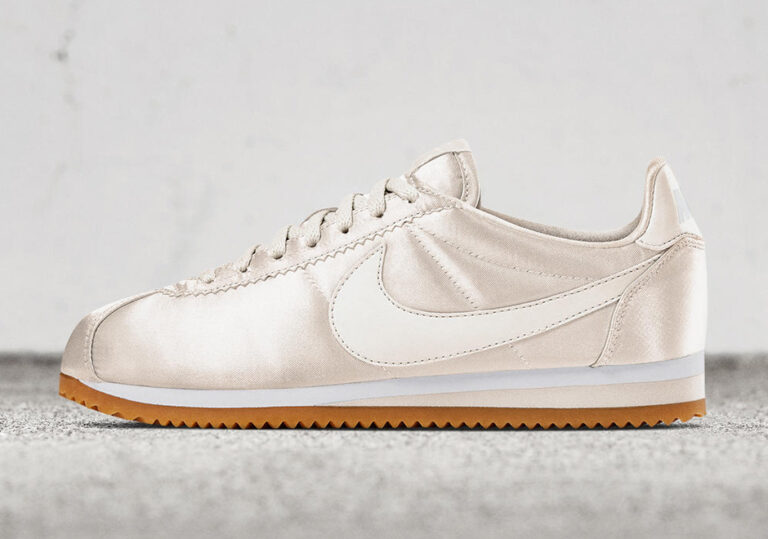
Name Her: The Credit Gap Sneaker Culture Still Owes

Women didn’t just show up to sneaker culture. They’ve been building it, archiving it, and styling it into relevance for decades without a single credit line to show for it.
That’s not a grievance. That’s a fact. And what makes this moment different from the ones before it isn’t that women are suddenly “entering” the sneaker space. It’s that the question of credit, who gets named, who gets cited, who gets positioned as the authority rather than the audience, is finally being asked out loud. Not in whisper networks or group chats, but in brand campaigns, editorial mastheads, and the architecture of how sneaker stories get told.
This is bigger than a trending hashtag. This is about whether the infrastructure of sneaker media and marketing is actually restructuring itself to reflect what’s been true all along: women aren’t adjacent to sneaker culture. They are sneaker culture.
The Long History of Being Seen but Not Credited
Let’s rewind. The first modern sneaker designed specifically for women hit the market in 1982. Before that, women laced up what they could find, often men’s shoes sized down with no consideration for foot shape, width, or biomechanics. That’s not ancient history. That’s within the lifetime of many women reading this right now. And that structural access gap wasn’t caused by women’s lack of interest. It was caused by brands that didn’t think women’s feet, wallets, or opinions were worth engineering for.
For decades after that 1982 milestone, the sneaker industry continued to treat women as a secondary market. Shrink it and pink it was the unofficial operating manual. Take a men’s silhouette, scale it down, dip it in pastel, and call it a women’s release. The assumption baked into that approach was devastating in its clarity: women don’t know what they want, so we’ll just give them a softer version of what men already have.
Meanwhile, women were doing what they’ve always done when institutions ignore them: they built their own thing. They decorated their kicks with markers and rhinestones and fabric paint. Sneakers got styled under skirts and over knee-highs in ways that no brand lookbook imagined. Sizing intel traveled through dorm rooms and church parking lots and, eventually, online forums that became the earliest blueprints for the community platforms we use today. All of that creative labor, all of that taste-making, none of it showed up in the official record. The magazines didn’t quote them. The documentaries didn’t feature them. The brand campaigns didn’t name them.
They were the audience. Never the experts.
Why This Moment Feels Different and Why Skepticism Is Earned
Something has shifted in the last three years, and it’s worth being specific about what that shift actually looks like. Jordan Brand tapped sneaker collector and content creator Melody Ehsani for a collaboration on the Air Jordan 1 Mid SE, positioning her as a genuine creative partner rather than a celebrity co-sign. Adidas’s partnership with designer Grace Wales Bonner on the Samba line wasn’t framed as “a women’s take” on a classic. It was framed as a designer’s vision, full stop, and it reshaped how the entire market saw the silhouette.
These are real shifts. They matter. But here’s where the skepticism has to stay sharp.
There’s a difference between featuring a woman in a campaign and building an ecosystem where women’s expertise is the norm rather than the novelty. One is a media moment. The other is structural change. And right now, the scene is swimming in media moments while structural change moves at a glacial pace.
Look at bylines. In the major sneaker publications (Sole Collector, Hypebeast, Nice Kicks) women writers and editors are still vastly outnumbered. The experts quoted in trend pieces, market analyses, and historical deep-dives are overwhelmingly male. When a woman does get quoted, it’s often in a piece specifically about women in sneakers, as if her expertise only applies to her own demographic. You’d never see a male sneaker historian quoted only in articles about men. His knowledge is treated as universal. Hers is treated as niche.
Women Collectors Are Rewriting the Archive in Real Time
The collector space is where this credit gap becomes most vivid. Women have been amassing extraordinary sneaker collections for years: rare Air Maxes, vintage New Balance 990s, deadstock Dunks that would make any reseller weep. Yet the “greatest collections” features in major outlets still skew dramatically male. The sneaker vault tour, that staple of YouTube and editorial content, rarely knocks on a woman’s door.
But the women aren’t waiting for permission anymore. Francesca Mottola, a Milan-based collector whose archive of 1990s Nike ACG and women’s-exclusive Air Max colorways is one of the most meticulously documented in Europe, has built her own platform through Instagram and Substack, cataloging not just the shoes but the cultural context around each acquisition. She’s not just collecting sneakers. She’s building a counter-archive that challenges the dominant narrative of what “rare” and “valuable” mean in this space.
“I got tired of seeing the same ten collections profiled over and over,” Mottola said in a recent interview with Kicks & She. “Collections that are impressive, sure, but that reflect a very specific perspective on what matters. My archive tells a different story, about access, about what women were actually wearing and customizing, about the shoes that brands forgot they even made.”
That word, forgot, is doing heavy work. Because the erasure of women’s sneaker history isn’t always malicious. Sometimes it’s just lazy. Brands discontinue women’s-exclusive colorways without documenting them. Retailers purge inventory records. And the sneaker media, overwhelmingly staffed and sourced by men, simply doesn’t think to ask what women were wearing in 1996 or 2003 or 2011.
The result is a cultural archive with massive holes in it. Women collectors like Mottola, like Brooklyn-based archivist Dana Harrison, like the anonymous team behind the @womensneakerhistory account, are filling those holes with their own labor, their own research, their own money. They deserve to be credited as historians, not hobbyists.
Stylists Who Shaped Taste Without Getting the Title
If collectors are the archivists of sneaker culture, stylists are its translators: the people who take a shoe from product to proposition, who show the world not just what a sneaker looks like but what it *means* when it’s on someone’s body, in someone’s life.
Women stylists have been doing this translation work since long before the industry acknowledged it. Think about the way sneakers entered high fashion in the early 2010s. The Céline Stan Smith moment of 2015, Phoebe Philo pairing Adidas Stan Smiths with tailored trousers on the streets of Paris, is often cited as a turning point, the moment sneakers became “acceptable” in luxury contexts. But that styling language didn’t emerge from a vacuum. Women in New York, London, Tokyo, and Lagos had been pairing sneakers with non-athletic wear for years. The bloggers, the street style subjects, the everyday women who wore Air Force 1s with midi skirts to brunch: they created the visual vocabulary that Philo canonized.
And who got the credit? The designer. The brand. The publication that photographed it. Not the thousands of women who’d been doing it first.
This pattern repeats with numbing regularity. A styling trend emerges from women’s lived practice. It percolates through social media and street style. A brand or designer adopts it. The media covers the brand or designer as the originator. The women who built the trend become the audience for coverage of their own innovation.
Stylist and creative director Aleali May has spoken about this dynamic with characteristic directness. Her Jordan Brand collaborations, including the Air Jordan 1 “Shadow Satin” in 2020 and the Air Jordan 14 Low “Fortune” in 2021, were notable not just for their design but for the way they were positioned. May wasn’t presented as a celebrity endorser or a “female perspective.” She was presented as a designer with a vision rooted in her own experience growing up in the world of kicks in South Central Los Angeles. That framing matters. It signals expertise, not tokenism.
But May is still one of a small handful of women who’ve been given that platform. For every Aleali May, there are dozens of women stylists, creative directors, and cultural consultants whose contributions to sneaker campaigns go unnamed. They pull the looks, they curate the mood boards, they make the creative decisions that determine how a shoe is perceived, and their names don’t appear in the press release.
Brand Campaigns Are Changing, but Not Fast Enough
Let’s talk about the campaigns themselves, because this is where the outsole meets the concrete.
The last two years have seen a genuine uptick in brand campaigns that center women as authorities rather than accessories. New Balance’s “We Got Now” series in 2023 featured women athletes, artists, and entrepreneurs not as aspirational figures but as narrators of their own stories, with their names and credentials prominently displayed. Puma’s “She Moves Us” platform, launched in 2022 and expanded through 2024, explicitly positioned women as cultural leaders rather than consumers. Even Nike, which has historically been criticized for the gap between its women’s marketing rhetoric and its product investment, made moves with its 2024 “What’s Next” campaign that foregrounded women sneaker designers within its own ranks, including Senior Footwear Designer Jihye Hwang, whose work on the Air Max Scorpion FK received overdue public recognition.
These are meaningful steps. But they exist alongside a parallel reality where the vast majority of sneaker advertising still centers male athletes, male collectors, and male street style. Where women appear in campaigns, they’re often styled and shot in ways that emphasize aesthetics over authority, looking good in the shoe rather than knowing about the shoe. The visual grammar of expertise in sneaker advertising (the close-up on the details, the collector’s shelf, the confident monologue about construction and heritage) is still disproportionately reserved for men.
There’s also the question of who’s making these campaigns. Creative agencies, marketing teams, and content studios in the sneaker industry remain male-dominated spaces. When the people making the decisions about representation are themselves part of the demographic that’s been overrepresented, the changes tend to be incremental, performative, and easily reversed when the next quarter’s priorities shift.
Community Voices Are Louder Than Any Press Release
The most honest barometer of where things stand isn’t in brand campaigns or media coverage. It’s in the community itself. And the community is not subtle about its frustrations.
On platforms like TikTok, Instagram, and dedicated sneaker forums, women are calling out the credit gap in real time. When a major sneaker publication ran a “50 Most Influential People in Sneaker Culture” list in late 2023 that included only seven women, and three of those were celebrities rather than industry professionals, the response was swift and specific. Women in the comments didn’t just say “this is wrong.” They named names. They tagged the women archivists, designers, boutique owners, and community organizers who should have been on that list. They built their own counter-lists. They didn’t wait for the institution to correct itself; they corrected it publicly and moved on.
This kind of community accountability is one of the most powerful forces reshaping the scene right now. It’s not polite, it’s not patient, and it’s not interested in giving brands or publications credit for half-measures. When Jordan Brand announced its 2024 women’s collection with a campaign that featured women prominently but was creative-directed entirely by men, the community noticed and said so. When a well-known sneaker podcast invited its first woman guest in two years and introduced her as “a female sneaker enthusiast” rather than by her professional title (she’s a footwear buyer for a major retailer) the clip went viral for all the wrong reasons.
These moments matter because they create consequences. Brands and media outlets are learning, slowly, that the community is watching not just *whether* women are included but *how* they’re included. Are they named? Are they titled? Are they positioned as experts or as representatives of their gender? The distinction is everything.
Your Kicks Tell a Story Too
Maybe you’ve never thought of yourself as part of this history. Maybe you’re reading this in your favorite pair, the ones you styled your own way before anyone told you they were cool. Maybe you customized a pair with paint pens in your bedroom, or traded sizing tips with a stranger online, or wore sneakers to an event where nobody else did and felt like you were making a quiet, defiant statement.
You were. That’s the whole point.
Every time you style your kicks as an extension of who you are, not who a brand tells you to be, you’re contributing to this culture. You’re part of the archive, whether anyone’s documenting it or not. And you deserve to see yourself reflected not just in the ads but in the authority, the bylines, the design credits, and the community leadership that shapes where this all goes next.
Join the drop, style your story. But also: demand that the story names the people who built it.
What Real Credit Looks Like Going Forward
So what does it actually look like when women get real credit in this space? It’s not complicated, but it does require intention.
It looks like bylines. Women writing the definitive pieces on sneaker history, market trends, and design innovation, not just the pieces about “women in sneakers.” It looks like women being quoted as sneaker experts in stories that aren’t about gender at all. When a journalist needs a source on the history of the Air Jordan 4, the evolution of foam technology, or the economics of the resale market, women’s names should be in their rolodex alongside everyone else’s.
It looks like design credit. When a woman leads the design of a sneaker, her name should be on the press materials, in the product description, and in the campaign. Not buried in an Instagram caption or mentioned in a follow-up interview weeks after launch. Upfront, unambiguous, and unapologetic.
It looks like curatorial authority. Women should be selecting the sneakers for museum exhibitions, curating the retrospectives, writing the catalog essays. The sneaker’s cultural history is incomplete without women’s perspectives, and the people telling that history should reflect that reality.
It looks like investment. Not just in women’s product lines, though that matters enormously, but in women-led sneaker media, women-owned sneaker boutiques, and women-founded community platforms. The infrastructure of this world, the stores, the publications, the events, the platforms, needs to be built and led by women, not just marketed to them.
And it looks like memory. Crediting women in sneaker culture means going back and filling in the gaps. It means retroactive recognition for the women who shaped this space when nobody was documenting their contributions. It means treating their stories not as footnotes but as foundational texts.
The Work Isn’t Finished Until the Credits Roll for Everyone
Here’s the truth that should keep every brand executive, editor, and content creator in the sneaker space uncomfortable: the bar for crediting women is still on the floor. The fact that we celebrate when a woman designer gets named in a press release, or when a publication quotes a woman collector as an authority, tells you everything about how low expectations have been set.
Women have been doing the work, designing, collecting, styling, archiving, community-building, taste-making, for as long as sneaker culture has existed. They didn’t need anyone’s permission, and they didn’t wait for an invitation. What they’re owed now isn’t access. It’s acknowledgment. Specific, named, permanent acknowledgment that can’t be walked back when the marketing budget shifts or the cultural conversation moves on.
This isn’t about a single campaign getting it right or a single publication adding more women to its contributor list. It’s about a wholesale rethinking of who this culture belongs to and who gets to narrate its story. The answer has always been everyone. The credits just haven’t reflected that yet.
So here’s the charge for anyone reading this who has a platform, a byline, a budget, or a microphone: name her. Name the collector whose archive you referenced. Name the stylist whose look you recreated. Name the designer whose innovation you’re wearing on your feet right now. Credit isn’t a favor. It’s the bare minimum. And women in sneaker culture have been earning it for a lot longer than anyone’s been paying attention.
The chronicle continues. Make sure the right names are in it.