Slim Sneaker Silhouettes 2026: The Rules Are Being Rewritten
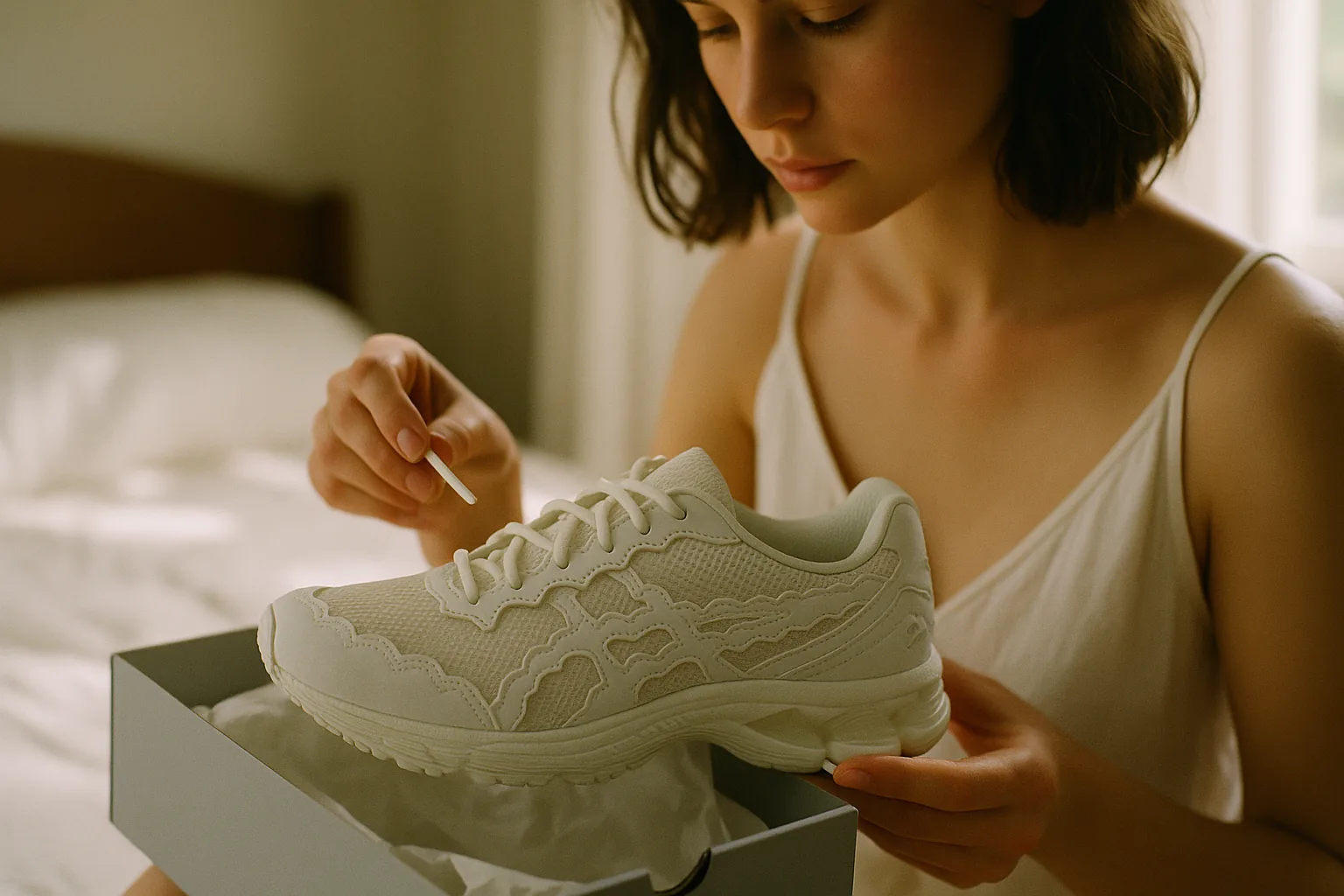
The alarm hasn’t gone off yet, but she’s already sitting on the edge of the bed, tissue paper crinkling as she pulls the left shoe from the box. It’s the Cecilie Bahnsen x ASICS Gel-Kinetic FR—pearl white with a scalloped overlay that looks almost hand-stitched, the kind of detail you don’t notice in product shots but can’t stop touching in person. This is what slim sneaker silhouettes in 2026 actually look like—not a trend forecast, but a woman deciding how her day starts. She slides her foot in. No bulk. No platform theatrics. Just a clean, tapered shape that hugs the arch and stops exactly where it should. She stands, rolls to the ball of her foot, and catches her reflection in the mirror: pleated midi skirt, cropped blazer, and a sneaker that doesn’t fight the outfit but finishes it. This is the moment. This is where 2026 lives.
The shift from chunky to slim isn’t a retreat—it’s a recalibration. After nearly a decade of maximalist soles, exaggerated proportions, and sneakers that demanded the room’s attention before you even spoke, the women you’re watching have already made the switch. They’re reaching for silhouettes that curve closer to the foot, that sit lower to the ground, that let the rest of the outfit actually breathe. And they’re doing it not because some trend report told them to, but because the collabs landing right now—from Simone Rocha to Gohar World to MoMA’s curatorial eye—are finally designed with this kind of intentional dressing in mind.
“I sold every chunky pair I owned in February,” says Lex Torres, a 29-year-old sneaker collector and creative consultant based in Los Angeles who’s been documenting her rotation on Instagram since 2019. “Not because I stopped loving them. Because I started building outfits differently. I wanted the shoe to finish the sentence, not start a new one. The second I put on the [ASICS Gel-DS Trainer](https://www.asics.com), I realized I’d been letting my shoes do all the talking and my clothes were just standing there.”
That feeling—of a wardrobe suddenly clicking into sharper focus—is what makes this shift feel personal, not just seasonal.
How Chunky Sneakers Lost Their Grip on Style
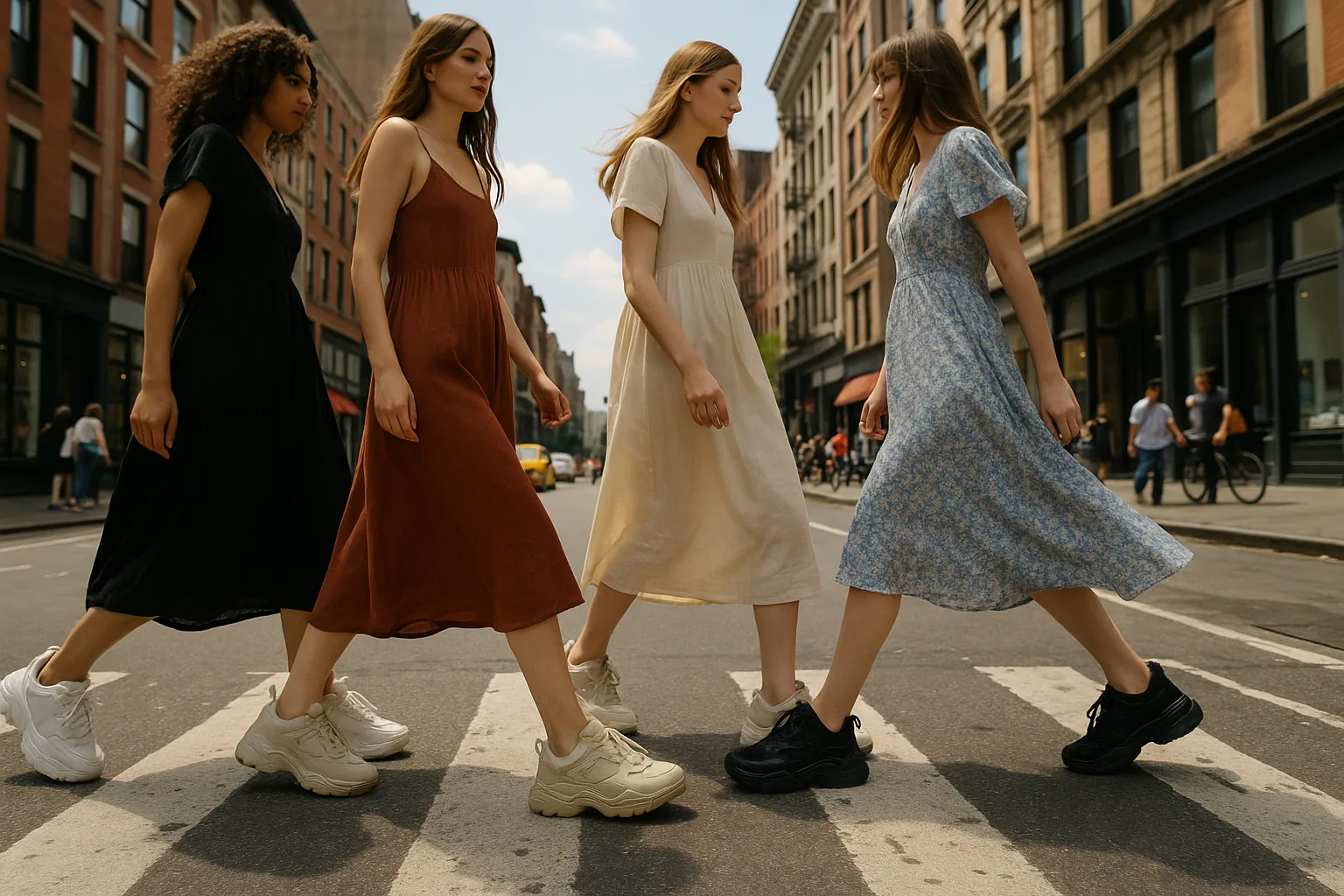
Rewind to 2017. The Balenciaga Triple S detonated, and suddenly every brand from Nike to New Balance was engineering the thickest midsole physics would allow. For women, the chunky sneaker era was genuinely liberating in one specific way: it gave permission to take up space. A massive sole under a flowy dress said something. It was contrast as confidence. But by 2023, the formula had calcified. Every outfit formula started to look the same—oversized shoe, wide-leg pant, boxy top—and the silhouette flattened into uniformity. The shoe wasn’t a statement anymore. It was a safety net.
What changed wasn’t a single runway moment. It was accumulation. [Miu Miu’s ballet flats](https://www.miumiu.com) crept in. The Adidas Samba resurged. Onitsuka Tiger’s Mexico 66 started appearing under trousers at fashion weeks from Copenhagen to Seoul. Women who’d been wearing Air Max 97s and New Balance 1906Rs noticed that slimmer shoes created a different kind of proportion play—one that elongated the leg, sharpened the ankle, and made tailored clothing look intentional rather than thrown together. The sneaker didn’t disappear from the outfit. It just stopped screaming.
By early 2026, the instinct had receipts—and they stung if you were still holding inventory. Resale platforms tracked a measurable decline in chunky lifestyle models and a corresponding spike in low-profile silhouettes, particularly in women’s sizing. If you were a woman refreshing your listing on a pair of 550s and watching the price drop for the third week straight, you already knew the shift was real before anyone wrote about it. The Nike Air Rift, the ASICS Gel-DS Trainer, the Adidas Taekwondo—shoes that had been languishing in archives suddenly had waitlists.
Simone Rocha x Adidas Proves Slim Can Be Sculptural
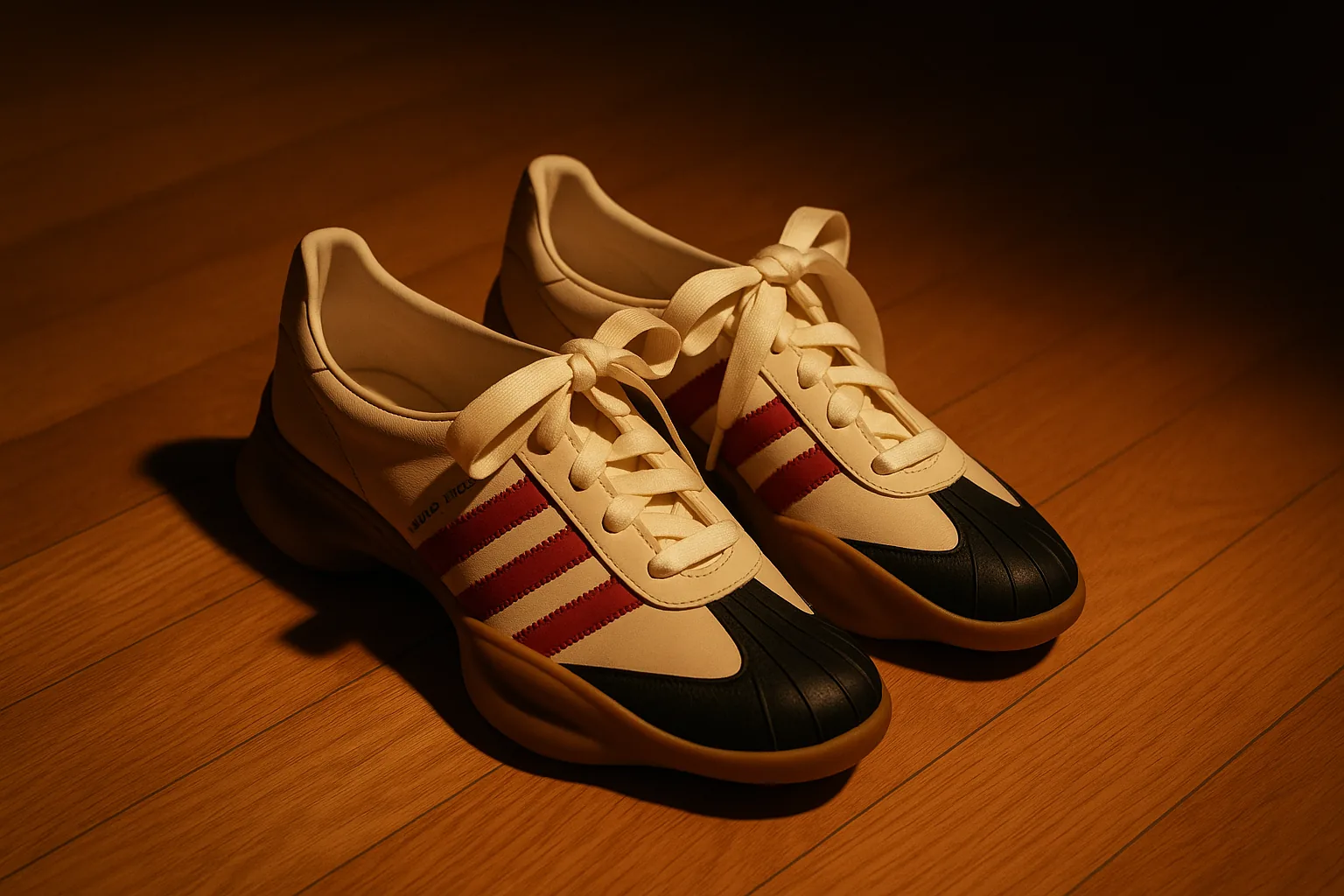
If you need a single collection to crystallize the shift, it’s [Simone Rocha x Adidas](https://www.adidas.com), dropping September 10, 2026. Five women’s-exclusive colorways spanning the Taekwondo Ballerina, the Japan Slip-On, and a Climacool reimagined as a platform wedge. Every piece is offered in women’s sizing only. That’s not an afterthought or a pink-dipped men’s shoe relabeled for marketing purposes—it’s a collection conceived from the ground up for a woman’s foot, a woman’s wardrobe, a woman’s sense of proportion.
The Taekwondo Ballerina is the standout for styling purposes. It’s essentially a martial arts slipper crossed with a ballet flat, wrapped in Rocha’s signature ribbons and pearl detailing. Paper-thin sole. Almost no visual weight. Paired with tailored trousers—think a high-waisted, slightly cropped leg in charcoal wool—it creates an ankle reveal that makes the whole outfit feel deliberate. No cuff needed. No styling trick. The shoe is slim enough that the trouser’s hem does the work.
The Japan Slip-On reads like something you’d wear with a knee-length skirt and a tucked knit. Its low-profile canvas upper and elastic gusset hug the foot without adding visual noise, which means the skirt’s silhouette stays uninterrupted from waist to toe. This is the critical thing about the slim sneaker shift: it’s not just about the shoe being thinner. It’s about the shoe allowing the garment above it to do its job. Chunky sneakers often severed the visual line of a skirt or dress at the ankle, creating a heavy base that made everything above look like it was floating. Slimmer sneakers restore that continuity.
Cecilie Bahnsen x ASICS and the Art of Softness
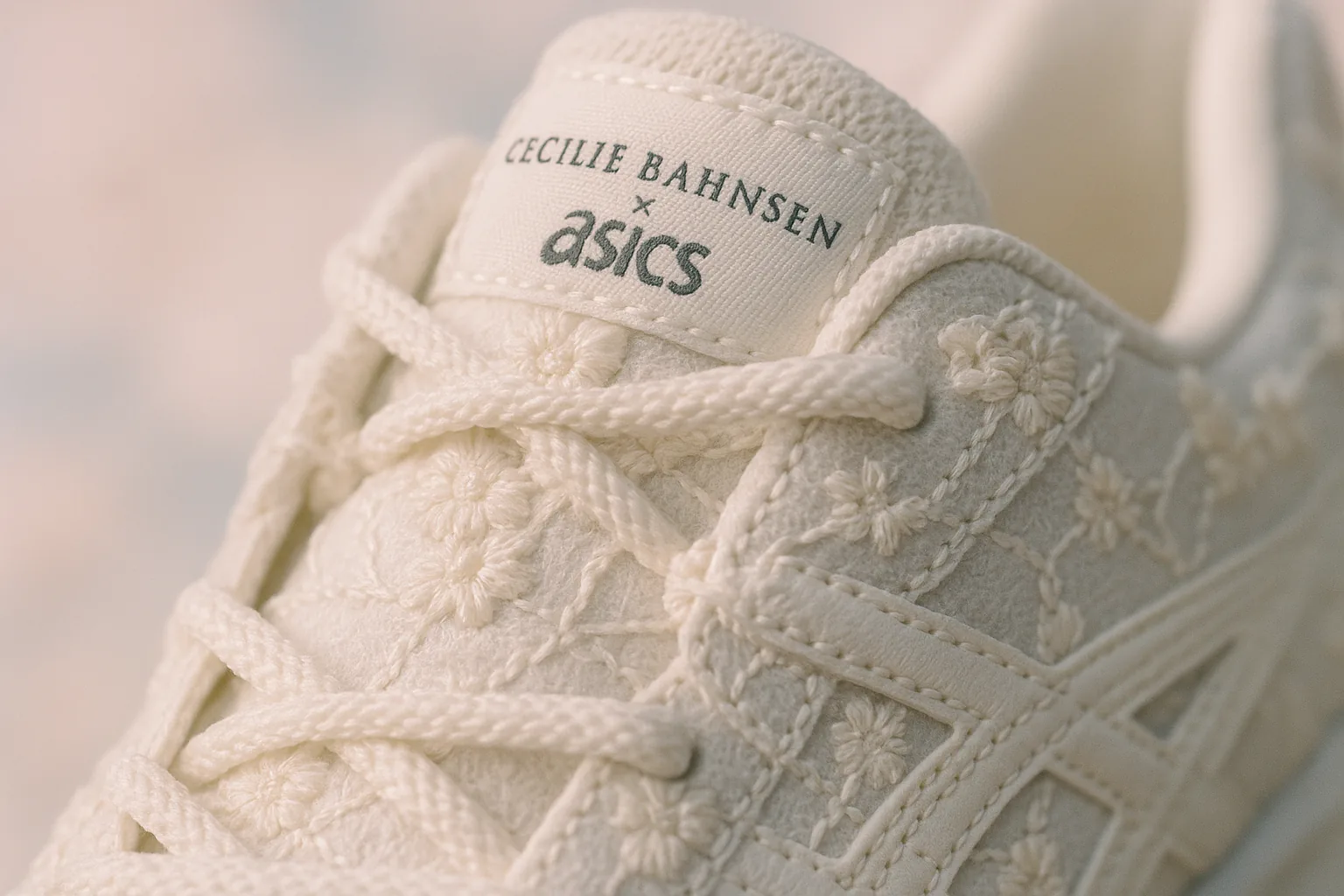
Cecilie Bahnsen has been building toward this moment for years—bridging haute couture’s femininity with athletic footwear’s function. Her [Gel-Kinetic FR with ASICS](https://www.asics.com), which launched first through her own channels on August 28 before selling out and then hitting ASICS on September 12, is the clearest expression yet. The shoe is soft in a way that chunky sneakers never attempted. Scalloped edges. Tonal overlays that look like fabric petals. A midsole that’s present but not performative. It’s a sneaker that wants to be worn with a dress, not in spite of one.
And women responded. The initial drop sold out almost immediately—not because of hype-cycle mechanics or bot-driven resale plays, but because the shoe answered a question women had been asking for years: where’s the sneaker that looks like it was designed by someone who also thinks about hemlines?
“I literally texted my group chat ‘someone finally gets it’ when I saw the scalloped edges,” says Maya Chen, a Brooklyn-based stylist who works with emerging designers and has been vocal about the gap between sneaker design and women’s wardrobes. “I’ve been styling editorial shoots for six years and I always had to fight the shoe. Hide it under a wider hem, or lean all the way into the chunky thing and make it the whole story. The Bahnsen collab was the first sneaker I put on a model where I didn’t have to adjust the outfit around it. The outfit just worked. That never happens.”
The styling takeaway here is texture matching. The Bahnsen x ASICS Gel-Kinetic FR has a tactile, almost craft-like quality that pairs naturally with fabrics that share that sensibility—linen trousers, raw-silk midi skirts, cotton poplin shirt dresses. The mistake would be pairing it with something too technical or too streetwear-heavy, because the shoe’s personality is inherently soft and the outfit needs to meet it there. A pleated skirt in a neutral tone, hemmed just below the knee, with the Gel-Kinetic FR in pearl or blush, creates a look that reads as elevated without trying to be formal. That’s the sweet spot.
Why Tailored Trousers Are the Slim Sneaker’s Best Match
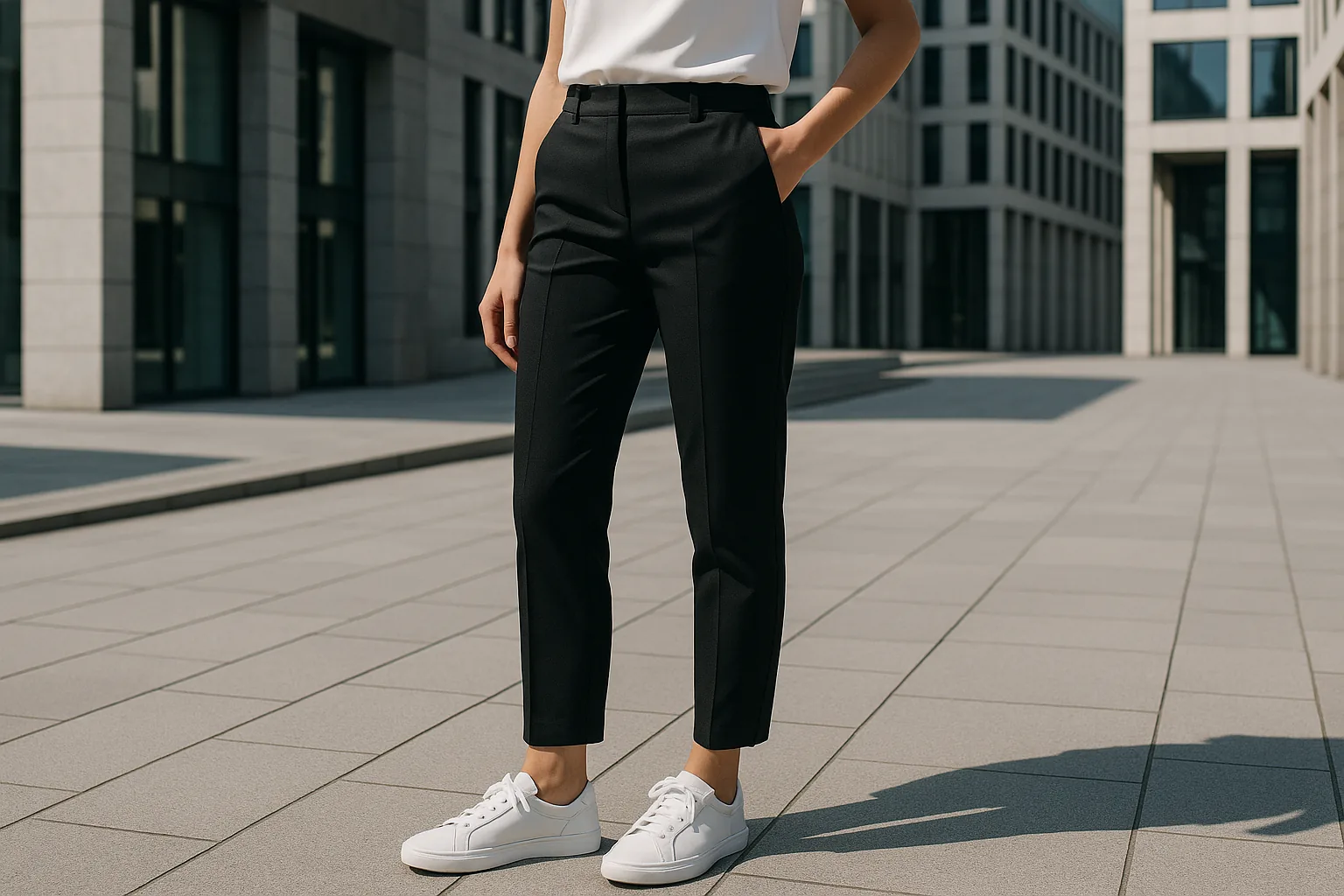
Here’s where the practical knowledge lives. If you’re transitioning from chunky silhouettes to slimmer ones, the single most impactful pairing is a tailored trouser with a slight taper and a clean break at the ankle. Not skinny jeans—those died for good reason. A trouser with structure: pressed creases, mid-to-high rise, a leg that narrows gently from the knee down and stops right at or just above the ankle bone.
This works because the slim sneaker’s proportional advantage is its ability to expose and define the ankle, which in turn makes the entire leg look longer and the outfit look more composed. A chunky sneaker under a tapered trouser creates visual congestion at the foot—too much shoe, not enough breathing room. A slim sneaker under the same trouser opens up space. It lets the trouser’s line resolve cleanly.
The best current pairings women are building right now involve a few specific formulas that feel genuinely modern rather than recycled. A high-waisted, wide-leg trouser in a fluid fabric like crepe or viscose, hemmed to just graze the top of a [Nike Air Rift 2](https://www.nike.com), creates movement and contrast—the trouser flows, the shoe grips. Alternatively, a straight-leg wool trouser cropped to mid-ankle over the Adidas Taekwondo Ballerina from the Rocha collab reads sharp and intentional, almost Parisian, but grounded by the sneaker’s athletic DNA. These aren’t theoretical outfits. They’re what’s showing up in rotation right now on the women shaping the conversation.
Gohar World, MoMA, and Collabs That Think About Outfits
Two more collabs deserve attention because they’re approaching the slim silhouette shift from angles that matter. Gohar World—co-founded by sisters Laila and Nadia Gohar, known for their surrealist food art and sculptural tablescapes—teamed with [ASICS on the GEL-DS TRAINER SP](https://www.asics.com) for September 1, 2026. The GEL-DS Trainer is already one of ASICS’s slimmest retro runners, with a low-stack midsole and a racing-inspired last that tapers naturally. In Gohar World’s hands, the shoe reportedly takes on an artistic, almost gallery-object quality. That’s a sneaker designed to be worn to dinner, not just to the sneaker store.
Then there’s MoMA x Nike Air Rift 2, expected in Fall 2026, offered exclusively in women’s sizing, and carrying the weight of [a museum’s curatorial authority](https://www.moma.org). The original Air Rift was already one of Nike’s most unconventional silhouettes—split-toe design, minimal upper, built for Kenyan distance runners and adopted by Tokyo street style in the early 2000s. A MoMA collaboration elevates it further into the realm of design object. You don’t pair this with joggers and a hoodie. You pair it with a linen shirt dress, or wide-leg trousers and a structured vest, or a midi skirt in a saturated color that lets the shoe’s unusual toe box become a conversation rather than a contradiction.
What connects all of these collabs—Simone Rocha, Cecilie Bahnsen, Gohar World, MoMA—is that they’re led or co-created by women and women-founded teams who think about clothing as a complete system, not just footwear in isolation. That’s the fundamental difference between this generation of slim sneaker collabs and previous slim sneaker moments. In the early 2010s, a slim sneaker was often just a thinner version of a men’s shoe offered in pastel. In 2026, these shoes are being designed with hemlines, fabric weights, and trouser breaks already in the designer’s mind.
Skirts and Dresses Demand a Different Sneaker Conversation
Trousers are the easy win. Skirts and dresses are where the slim sneaker shift gets more interesting—and where the risk of looking forced is highest. The trap most women fall into is treating the sneaker-and-dress combination as inherently cool, as if the contrast alone does the work. It doesn’t. Not anymore. The athleisure era burned through that currency. A dress plus a sneaker in 2026 has to feel considered, not accidental.
The key is length and weight. A heavier, more structured dress—like a cotton twill A-line hitting mid-calf—needs a sneaker with enough visual presence to anchor it, which means the very slimmest ballet-flat-style silhouettes might actually get swallowed. This is where the Climacool wedge from the Rocha x Adidas collection makes sense: it’s slim in profile but has enough height and architectural interest to hold its own against a heavier garment. Conversely, a lightweight slip dress or a gauzy midi skirt doesn’t need that anchor. A Nike Air Rift 2 or a Bahnsen x ASICS Gel-Kinetic FR in a tonal colorway lets the fabric do the talking.
Color coordination matters more with slim sneakers than it did with chunky ones, for a simple reason: there’s less shoe to see, so what you do see registers more sharply. A chunky sneaker in a loud colorway could function as a standalone accessory—it was big enough to carry its own visual narrative. A slim sneaker in the same loud colorway risks looking like a mistake, like you grabbed the wrong pair on the way out. The women getting this right in 2026 are generally staying tonal or working within a tight palette: shoe color echoing one element in the outfit, whether it’s the bag, the belt, or a single stripe in the fabric. The [Air Jordan 11 Retro Low “Mother’s Day,”](https://www.nike.com/jordan) which dropped May 9 in women’s sizing at $195, is an interesting case study here—its soft, muted palette makes it unexpectedly versatile under cropped trousers or alongside a midi skirt in a complementary warm tone, despite being a Jordan, a silhouette most people associate with sportswear.
Sizing Access Still Shapes Who Gets to Style What
No honest conversation about this shift can skip the sizing issue. The Air Jordan 3 “Orange Citrus,” a women’s-sizing-only release, highlighted a persistent tension: women’s-exclusive drops generate excitement but also expose the reality that “women’s sizing” still often caps out at a US 12, leaving a significant number of women unable to access the shoes designed for them. When the MoMA x Air Rift 2 and the Rocha x Adidas collection are offered exclusively in women’s sizing, the question isn’t just whether the shoes are beautiful—it’s whether the size run reflects the full range of women who want to wear them.
This matters for styling because outfit-building starts with the shoe you can actually get on your foot. A woman wearing a size 13 who can’t access these collabs doesn’t get to participate in this particular shift, regardless of how much she understands proportion and fabric and silhouette. Brands that are designing women’s-first collections—and the ones landing in 2026 are genuinely better than anything we’ve seen in previous years—still need to reconcile their design ambition with their size-run reality. The sneaker community has been [saying this for years](/tag/womens-representation). The market is only now starting to listen, and inconsistently at that.
Japan’s Forget-Me-Nots, a women’s sneaker and streetwear store reportedly teasing a Nike collaboration, represents another facet of this conversation: retail spaces built by and for women, where the styling context is already baked in. When a women’s-focused store curates and co-creates a release, the surrounding merchandising, the styling suggestions, and the community conversation all center the woman wearing the shoe, not the shoe in a vacuum. That’s what makes the difference between a sneaker drop and a style moment.
What Comes After the Slim Sneaker Moment
Every silhouette trend has a half-life. Chunky lasted roughly eight years at the mainstream level. The slim sneaker shift won’t last that long—cycles are accelerating, and the women driving this conversation are too creative and too restless to stay in one lane. But here’s what feels different this time: the collabs arriving in 2026 aren’t just offering slimmer shoes. They’re offering a design philosophy that treats women’s sneakers as part of a wardrobe, not a category apart from it.
Jennie’s co-designed [Adidas Originals collection](https://www.adidas.com), launching September 1, and NikeSkims, with its dedicated women’s-geared footwear and training line in development for 2026, both signal that the industry sees this moment as structural, not seasonal. If that holds—if brands continue to invest in women-led design teams, women’s-first sizing, and collabs that think about hemlines as much as midsoles—then the slim sneaker shift becomes less of a trend and more of a turning point. The proportions might change again. The specific silhouettes will evolve. But the principle—that a woman’s sneaker should be designed with her entire outfit in mind—shouldn’t fade.
As Lex Torres put it when she posted her latest rotation—three slim pairs, all from women-led collabs, lined up on her shelf like a sentence she finally knew how to finish: “I don’t have twenty sneakers anymore. I have five that go with everything I actually wear. And honestly? I’ve never felt more like myself.”
Lace up the Gel-Kinetic FR. Slip on the Taekwondo Ballerina. Step into the Air Rift 2. Then build the outfit upward, with intention, with specificity, with the understanding that the most modern thing a sneaker can do in 2026 isn’t shout. It’s fit.