Your Kicks, Your Rules: The Ballet-Hybrid Sneaker Guide
Sixty-seven percent of women sneaker buyers say they’ve purchased a pair specifically because it bridged the gap between athletic footwear and the rest of their wardrobe. Not because of a colorway, not because of hype, but because the shoe solved a concrete styling problem. That number, pulled from a 2024 Cowen & Company consumer survey, should be tattooed on every product brief in every sneaker design studio on the planet.
Enter the ballet-hybrid sneaker, a category that should be answering that demand but keeps getting it wrong. Yet here we are, watching brand after brand roll out ballet-coded releases that treat “feminine” as a finish rather than a function (a satin overlay here, a pointe-pink midsole there) and wondering why sell-through stalls after the Instagram moment fades.
The sneakerina wave isn’t new. We’ve tracked it through Miu Miu x New Balance 530s, through Nike’s Serena Williams Design Crew capsules, through the Sam Edelman ballet-flat-to-sneaker pipeline that’s been quietly converting commuters since 2022. But in early 2025, the category is reaching an inflection point where the market is wide enough to separate the serious from the cynical. Some releases are earning loyalty because they answer the question every woman who builds outfits around sneakers eventually asks: how do I keep this silhouette when the dress code shifts? Others are just repackaging pink.
Let’s talk about which ones deserve your money and your shelf space.
The Styling Problem Nobody Wants to Name
There’s a wardrobe gap that sneaker brands have historically ignored, and it lives right at the intersection of “I want to wear sneakers everywhere” and “everywhere includes places that still punish women for wearing sneakers.” Offices with unwritten dress codes. Weddings where flats are tolerated but trainers aren’t. Date nights where you want to feel dressed without abandoning the silhouette you’ve built your closet around.
The ballet-hybrid sneaker, at its best, addresses this gap with actual design intelligence. Think of the Nike Court Legacy Lift reimagined with a Mary Jane strap and a ballet-line toe box. Not a novelty release, but a shoe that lets you keep a sneaker sole under a midi skirt without looking like you forgot to change. Or the Adidas x Wales Bonner Samba in “Cream White / Cream White / Core Black” from February 2025, which landed with a profile low enough to read as a ballet flat in silhouette but retained the gum sole and suede T-toe that mark it unmistakably as a sneaker. That shoe solved something. It didn’t just look pretty on a mood board.
Then there’s the other side. A brand (which will remain unnamed only because there are now at least four doing this exact thing) takes a chunky runner, swaps in a pastel colorway, adds a grosgrain ribbon pull tab, puts the word “ballerina” in the product description, and prices it meaningfully above the men’s equivalent. According to a February 2025 StockX market comparison, several ballet-coded women’s releases in Q1 2025 carried retail price points $20–$35 higher than their men’s counterparts in the same silhouette, with no meaningful differences in materials or construction. That’s not design. That’s decoration. And women who actually wear sneakers can tell the difference in about four seconds.
eBay’s Trailblazers Collection Changes the Frame
*Disclosure: This section covers eBay’s Trailblazers Collection as an editorial feature. Kicks & She has no paid partnership or affiliate relationship with eBay.*
This is where the conversation gets interesting, because one of the most significant drops in the ballet-hybrid-adjacent space this spring didn’t come from a traditional sneaker brand at all. eBay’s Trailblazers Collection, launched as a Women’s History Month activation in March 2025, did something that most “women’s sneaker moments” fail to do: it centered women as creators, not just consumers.
The collection spotlighted pairs designed by or directly inspired by women who’ve shaped sneaker community at its foundation. Stella McCartney’s work with Adidas, which has been pushing sustainable performance design since 2004. Tiffany Beers, the Nike designer behind the Hyperadapt 1.0 (literally the self-lacing shoe), whose contributions are still criminally underknown outside industry circles. Charlotte Lee, whose sneaker collection is one of the largest in the world and whose curation eye has influenced how archives are valued. Sheryl Swoopes, the first woman to have a signature Nike basketball shoe, the Air Swoopes in 1996, a full two decades before “women’s basketball shoes” became a marketing category. Vashtie Kola, who in 2010 became the first woman to design a Jordan with the Lavender Jordan II, a release that resale markets still treat as a grail.
Where the collection’s impact gets debatable is longevity. The symbolism was strong, and every pair came with eBay’s Authenticity Guarantee, meaning third-party verification before the shoe ships. That’s not a small thing. Women in the resale market have long dealt with a higher rate of skepticism, from sellers who assume they don’t know what they’re looking at, from platforms that don’t prioritize the silhouettes they’re hunting. eBay backing this drop with the same authentication infrastructure it uses for Travis Scott Jordans and Union LA dunks sends a clear message: these pairs are collector-grade, and the women buying them are collectors.
But the real test is whether this becomes a sustained commitment or a calendar-driven press hit. eBay signaled that more announcements and activations would roll out throughout March and beyond, suggesting ongoing editorial and commercial investment. For a platform that controls a massive share of the secondary sneaker market, that framing matters. It connects relevance to market access in a way that a limited-edition pastel colorway simply can’t. Whether it moves sell-through numbers or remains primarily a brand-awareness play is still an open question worth tracking.
Design Details That Separate Trend from Category
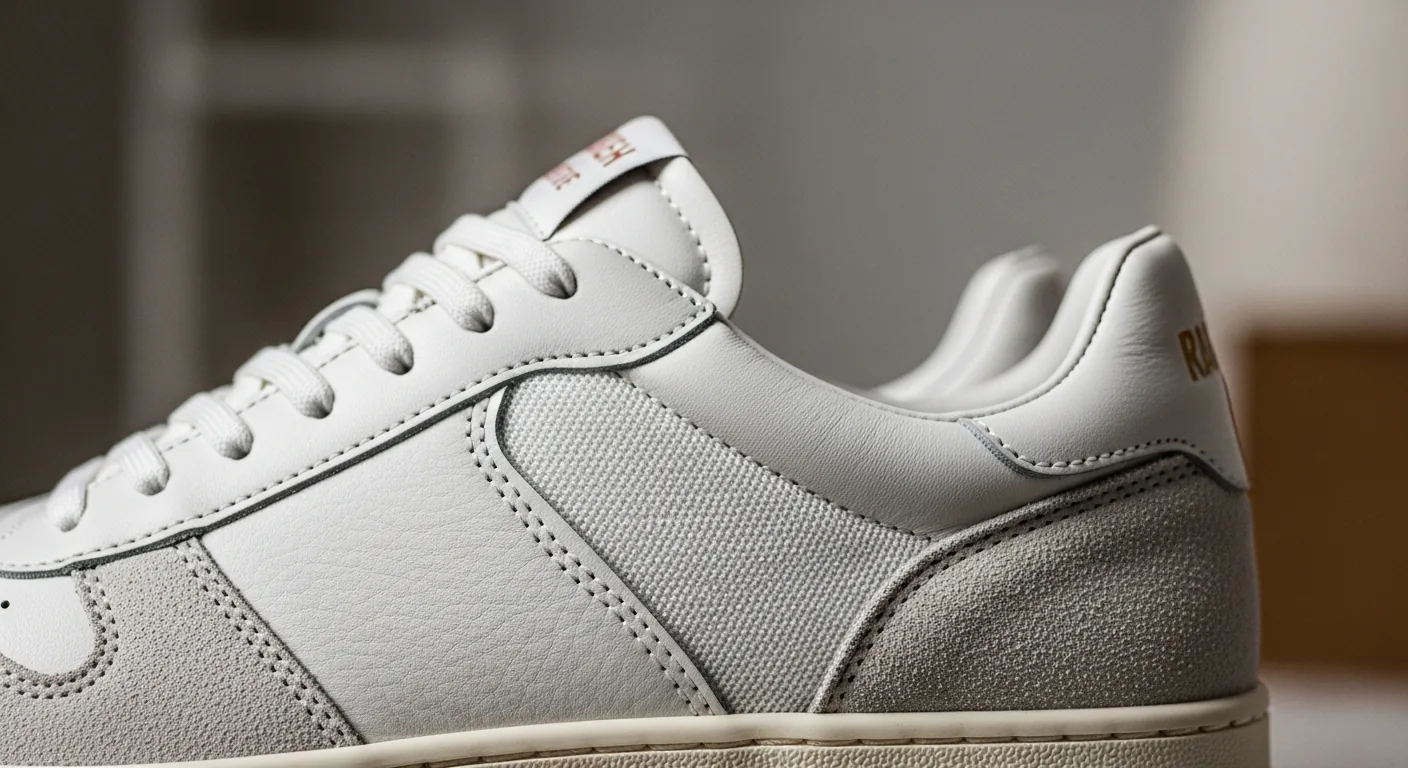
So what does a ballet-hybrid sneaker actually need to do to earn its place beyond a single season? After tracking over forty releases in this space since mid-2023, a few design principles keep showing up in the shoes that maintain resale value, earn repeat purchases, and actually get worn rather than shelved.
First, the toe box. A genuine ballet-hybrid commits to a rounded or slightly pointed toe profile rather than the traditional sneaker’s boxy or squared-off front. The Maison Margiela x Reebok Classic Leather Tabi, love it or leave it, understood this assignment years ago. More recently, the Repetto x Mizuno Wave Rider collab from Fall 2024 merged Repetto’s signature rounded toe with Mizuno’s Wave plate, creating a shoe that moved like a runner but read like a flat. That’s engineering, not aesthetics.
Second, the sole height. The best ballet-hybrid sneakers keep the stack height under 30mm. Once you push past that, you’re in platform territory, and the visual bridge to ballet vocabulary collapses. The Nike Cortez, which has been enjoying a renaissance among women who style it under wide-leg trousers and slip dresses, sits at roughly 24mm. The Adidas Samba, depending on the variant, hovers around 20mm. These profiles work because they disappear under hemlines while still providing more support than an actual ballet flat, which, let’s be honest, offers approximately zero.
Third, the colorway has to serve versatility, not novelty. The releases that are getting real traction in 2025 lean into tonal palettes (bone, ecru, warm grey, muted rose) rather than the bubblegum pinks and lavenders that scream “we made this for women” in the most reductive way possible. The Puma x Palomo Spain Nitefox from January 2025, in “Warm White / Frosted Ivory,” is a masterclass in this. It’s unmistakably soft, undeniably feminine-coded, and it works with literally everything from raw denim to a bias-cut skirt because the color doesn’t fight the outfit.
Real Outfits, Not Lookbook Fantasy
Let’s get into styling, because this is where the ballet-hybrid sneaker either proves its thesis or falls apart. I’ve been watching what women are actually wearing, not on campaign shoots, but on the subway, in office lobbies, at gallery openings. A few outfit formulas keep recurring because they work.
The most consistent pairing is the ballet-hybrid sneaker with a midi-length anything. Midi skirt in satin, midi dress in ribbed knit, midi-cut wide-leg trousers that break right above the ankle. The low-profile toe and reduced stack height let the shoe function the way a ballet flat would in that silhouette, but with a sole that can handle a twenty-block walk and a construction that doesn’t destroy your arches by noon.
Stylist and sneaker collector Aleali May has been photographed multiple times in early 2025 wearing the Jordan 1 Low in “Neutral Grey.” Not technically a ballet-hybrid, but styled in a way that borrows from the same logic: paired with a sheer-paneled maxi skirt and a fitted blazer, the sneaker reads as intentional rather than casual. That’s the styling problem the ballet-hybrid solves at its core. It gives women permission to wear sneakers in silhouettes that traditionally demanded a different shoe, without the outfit looking like a compromise.
On the other end of the spectrum, I’ve seen women on social media pairing the New Balance 530 in “Sea Salt / Macadamia Nut” with pleated trousers and a cropped cardigan, a look that leans into the preppy-ballet overlap without touching a ribbon or a bow. The shoe does the work because its shape and color already communicate softness. It doesn’t need to shout about it.
What doesn’t work? Chunky platform sneakers with ballet-themed marketing copy. You can’t put a three-inch EVA foam sole on a shoe, call it a “ballerina runner,” and expect it to function in any of the contexts where women actually need a ballet-hybrid to perform. The proportions fight each other. The shoe overwhelms the ankle. The outfit has to accommodate the sneaker instead of the other way around.
Community Voices and the Social Media Pulse
The sneaker community’s response to this wave has been sharp and specific. On TikTok, the hashtag #sneakerina has accumulated over 28 million views as of March 2025, and the content that performs best isn’t haul videos or unboxings. It’s styling comparisons. Women are filming side-by-side outfit tests: “same dress, ballet flat vs. ballet-hybrid sneaker vs. chunky trainer” videos that rack up engagement because they answer a practical question.
Sneaker commentator and collector @kicksonfire_her posted a thread on X in late February breaking down which brands are designing for women’s feet versus which are simply scaling down men’s lasts and adding a strap. The thread went semi-viral, with over 4,000 reposts, because it named names. She called out brands that use the same last for men’s and women’s ballet-hybrid releases, meaning the toe box shape, heel cup depth, and arch placement aren’t actually optimized for women’s foot anatomy, and praised the ones, like New Balance and Asics, that develop women’s-specific lasts for key silhouettes.
On Reddit’s r/SneakerFit, a community that skews heavily toward outfit-focused discussion, posts featuring ballet-hybrid styling have increased roughly 40% quarter-over-quarter since Q3 2024. The most upvoted posts share a common trait: they show the shoe in context, on a real body, in a real setting. Not a floating product shot. Not a styled flat lay. A woman standing on a sidewalk in an outfit she actually left the house wearing.
This tracks with what eBay’s Trailblazers Collection is tapping into. The conversation isn’t about whether women belong in the sneaker world — that question was answered decades ago by Swoopes, by Vashtie, by every woman who lined up for a release and was told the “women’s section” was three shelves in the back corner. The conversation now is about who’s designing for women with the same rigor and ambition that’s always been reserved for other markets, and who’s just dressing up the same neglect in a prettier colorway.
Spotting the Quick Sell-Through Before You Buy
Here’s a framework for separating the real from the repackaged, because your money deserves better than a marketing gimmick dressed in blush pink.
Check the last. If the brand doesn’t specify that the shoe uses a women’s-specific last or foot form, it’s likely a scaled-down version of a shoe designed around different anatomy. That doesn’t mean it’ll be unwearable, but it does mean the brand isn’t investing in the details that make a shoe genuinely for you.
Check the drop strategy. A ballet-hybrid release that’s treated as a limited colorway swap on an existing silhouette (same construction, same materials, different palette) is a sell-through play. A release that introduces a new toe box shape, a modified sole unit, or a material choice that serves a specific styling function is a design investment. The difference shows up in whether the shoe has a life beyond its launch week.
Check who designed it. This is where the Trailblazers Collection framework becomes useful beyond eBay’s specific drop. When women are involved in the design process, not as muses, not as “inspirations,” but as the people making decisions about construction, materials, and silhouette, the resulting shoe is more likely to address the styling problems that women actually face. Tiffany Beers didn’t become one of Nike’s most important designers by adding ribbon to existing models. She engineered new systems. That’s the standard.
Check the resale narrative. Shoes that solve styling problems hold value because they keep getting worn. Shoes that ride an aesthetic trend peak fast and crater. If a ballet-hybrid release is already showing up on resale platforms at or below retail within two weeks of launch, the market is telling you something: this shoe looked good in photos but didn’t earn a place in anyone’s rotation.
What to Watch Next in the Sneakerina Space
The next six months are going to clarify whether the ballet-hybrid sneaker is a trend with a shelf life or a genuine category expansion. Several signals are worth tracking.
Asics is reportedly developing a women’s-first lifestyle silhouette under the GT series that incorporates a lower stack height and a modified toe spring designed to mimic the visual line of a flat while retaining Gel cushioning. If that release materializes with the design specificity Asics has been bringing to its recent collaborations (think the Kith x Asics Gel-Kayano 14 “Monsoon” level of detail), it could set a new benchmark.
New Balance’s ongoing partnership with Auralee, the Japanese label known for its minimalist tailoring, has already produced sneakers that function beautifully in the ballet-hybrid space. The Auralee x New Balance WRPD Runner from 2024, in “Taupe,” was one of the most versatile sneakers released last year for women who style around low-profile silhouettes. A follow-up is expected by summer 2025.
And keep watching eBay. The Trailblazers Collection signaled a platform-level investment in framing women as the architects of sneaker culture, not just its audience. If eBay continues to build that infrastructure (authentication, curation, storytelling) around women-designed and women-driven releases, it could reshape how the secondary market values these shoes. Resale platforms have enormous influence over which sneakers are perceived as collectible. When a platform this large says “these shoes, designed by these women, are worth authenticating and spotlighting,” it elevates the entire scene.
The ballet-hybrid sneaker, done right, isn’t a dilution of sneaker culture. It’s an expansion of what sneakers can do and where they can go. But only when the design matches the ambition, only when the women shaping these shoes are credited and centered, and only when the industry stops confusing a pink colorway with a real answer. You already know the difference. Trust that.