She Redesigned the Jordan 1. The Brand Let Her.
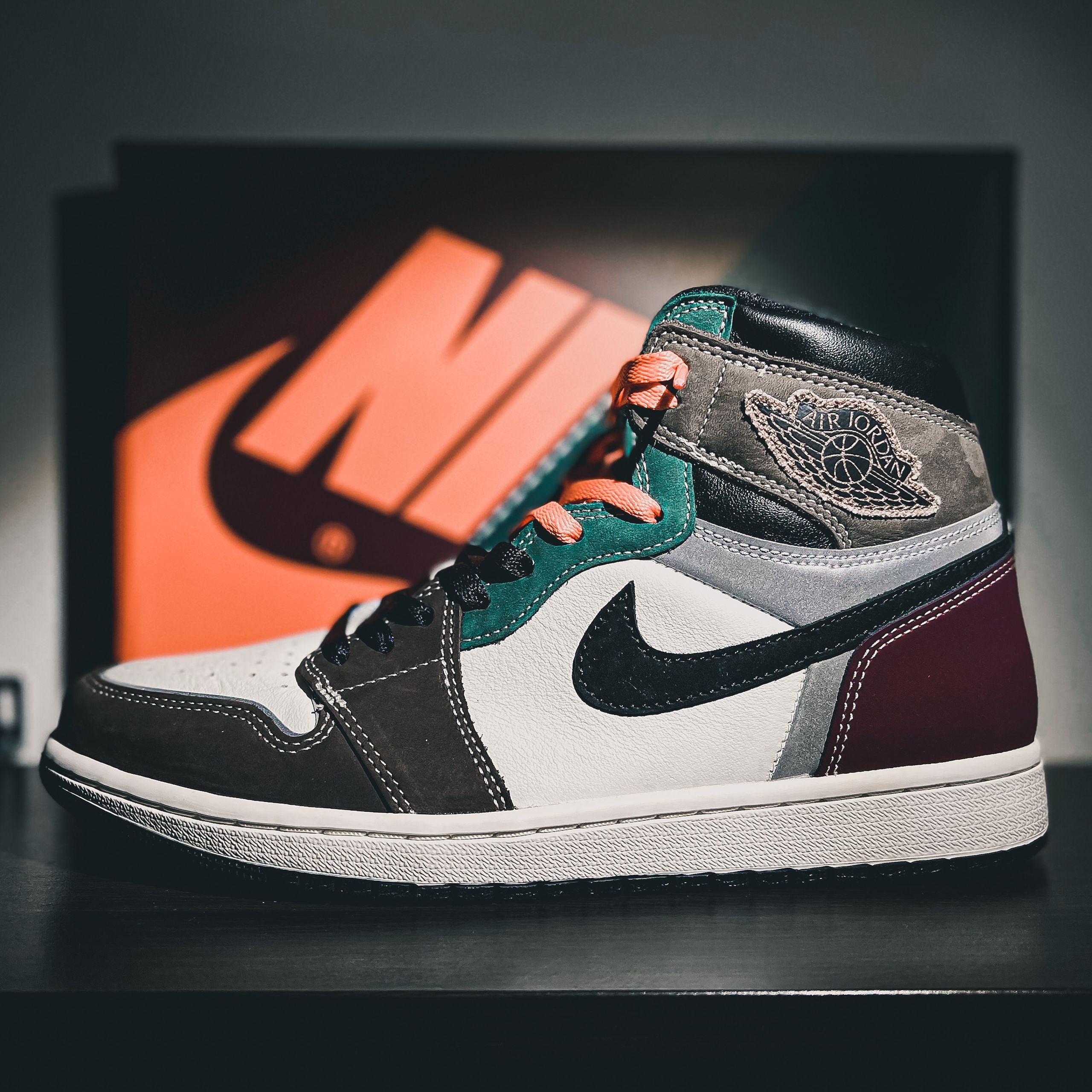
She’s sitting on the edge of her bed at 5:47 AM, phone balanced on one knee, the SNKRS app loaded and waiting. The shoe she’s after is a Jordan 1 Low—but not the one her brother copped last spring. This one was designed by a woman who rethought the collar padding for a narrower heel, swapped the standard leather for a tumbled version with a buttery hand-feel, and chose a colorway pulled from the oxidized copper of her grandmother’s jewelry box. The box hits different. The tissue paper hits different. This is what a women’s collaboration is supposed to feel like. But not every collab gets there.
The Real Question Brands Keep Dodging
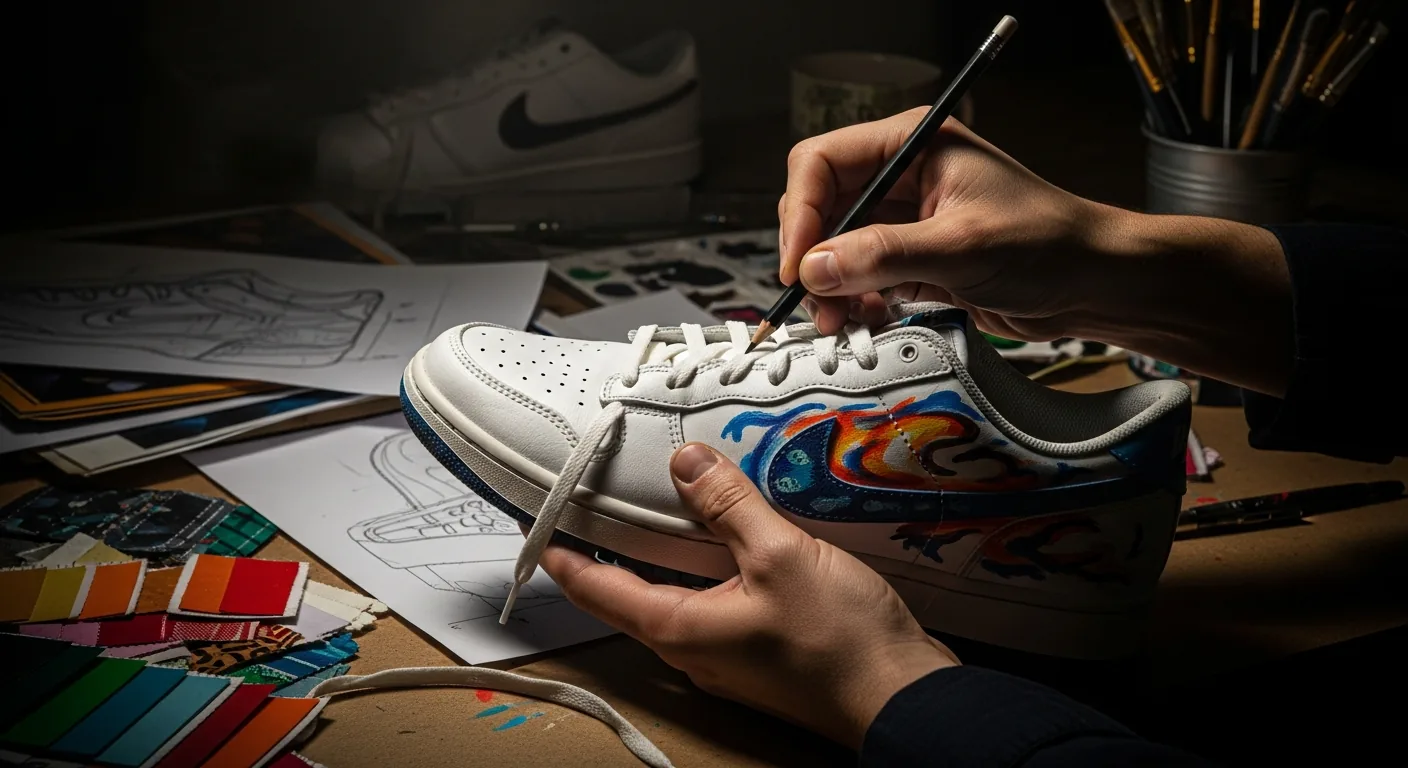
The central tension in women’s sneaker collaborations right now isn’t whether brands are willing to put a woman’s name on a classic silhouette. It’s whether they’re willing to let her actually change it.
Too often, the formula is transparent: take an icon, shrink the size run, add a muted lavender or dusty rose, shoot the campaign, call it a moment. The real moments, the ones that shift culture and sell out not because of hype but because of genuine connection, happen when a collaborator brings lived experience to a silhouette and the brand lets that experience reshape the shoe from the last up. The difference between those two approaches is the difference between access and performance. And the sneaker world, finally, is being forced to reckon with which one it’s actually delivering.
How Women Were Locked Out of Classic Silhouettes
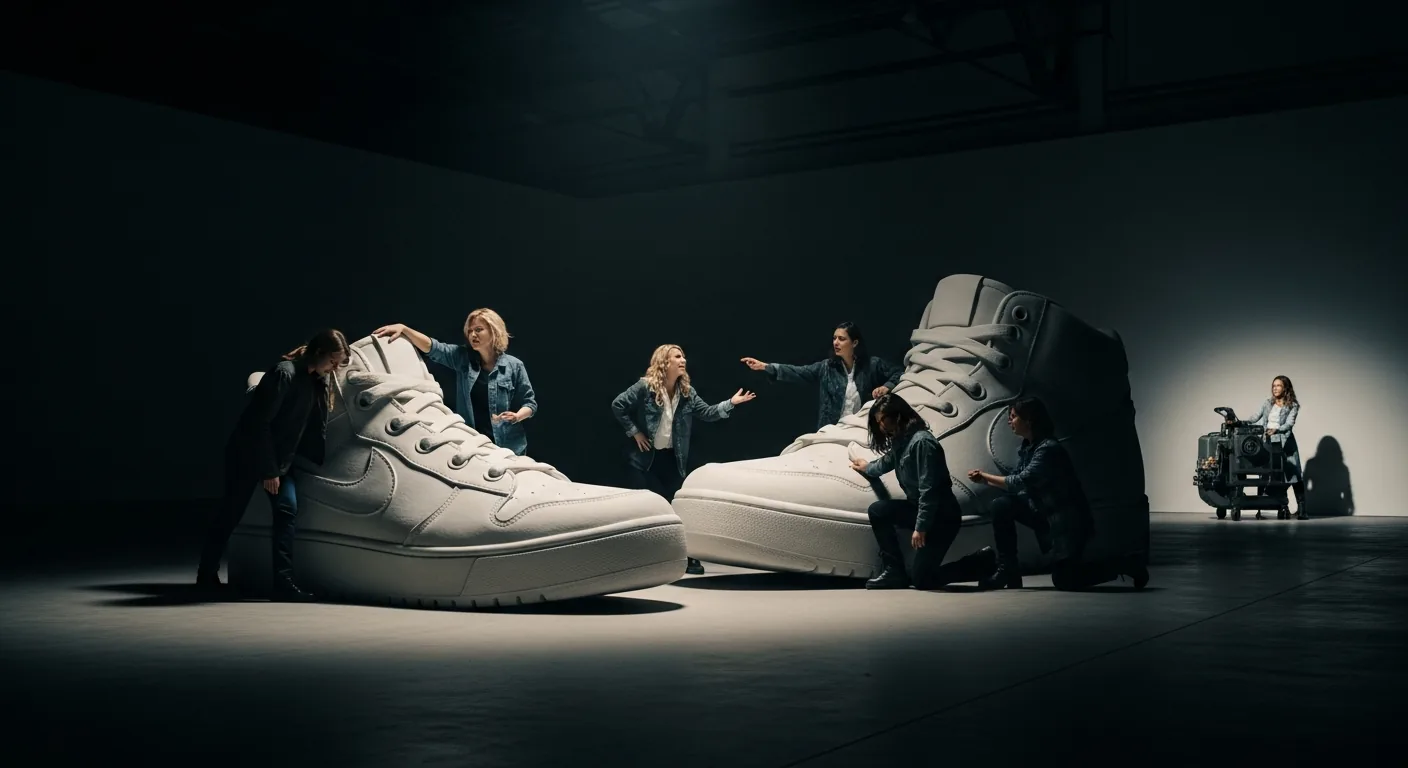
To understand why women’s collaborations matter now, you have to understand the decades of infrastructure failure that preceded them. For most of sneaker history, women weren’t absent from the scene—they were actively excluded from the commerce. Brands didn’t produce enough women’s sizes. They didn’t build women’s lasts. They didn’t allocate women’s inventory to the same tier of retailers that received the most coveted men’s drops. The result was a self-fulfilling prophecy: brands pointed to lower women’s sales numbers as evidence of lower demand, while women who wanted the shoes simply couldn’t buy them. The sizing gap wasn’t a market signal. It was a locked door dressed up as data.
Nike’s own history illustrates this perfectly. The Air Force 1, arguably the most iconic sneaker silhouette ever produced, didn’t receive consistent women’s-specific sizing until well into the 2000s, decades after Bruce Kilgore’s 1982 original became a street staple.
Women who wanted AF1s in the ’90s bought men’s sizes and stuffed the toe box with tissue, or they went without. The Dunk, the Jordan 1, the Air Max 90 all followed similar patterns. Women participated in the community around these shoes long before the industry bothered to make the shoes for them. That history isn’t a footnote. It’s the foundation on which every current women’s collab is built, and it’s the reason a pastel palette swap feels so insulting to the women who waited years just for the right to buy their actual size.
The Collaboration Spectrum: From Lazy to Landmark
Not all women’s collaborations are created equal, and the sneaker community knows it. There’s a spectrum, and it’s worth naming the poles honestly. On one end, you’ve got what might charitably be called the “shrink it and pink it” approach: a brand takes an existing silhouette, produces it in women’s-exclusive sizing, dresses it in a colorway that reads as stereotypically feminine, and attaches a woman’s name or a vague “for her” tagline. The shoe isn’t redesigned. The proportions aren’t rethought. The marketing leans on softness, delicacy, florals. It’s a gendered costume draped over a shoe that was never actually reconsidered.
On the other end, you’ve got collaborations like Aleali May’s work with Jordan Brand. When May first connected with the Swoosh for her Court Luxe Jordan 1 in 2017, she didn’t just pick colors. She introduced a satin upper and a deconstructed aesthetic that drew from her experience straddling streetwear and women’s fashion, a duality she lived daily. The shoe felt like hers. It also felt like ours. That’s the mark of a great collaboration: specificity that becomes universal. Her follow-up pairs, including the 2019 “Califia” Dunk High with its rich brown leather and Cali-inspired narrative, pushed the conversation further. She wasn’t decorating a men’s shoe. She was remaking an icon through her own lens, and the brand gave her room to do it.
Melody Ehsani and the Art of Structural Change
If Aleali May proved that women collaborators could bring narrative depth to classic silhouettes, Melody Ehsani proved they could bring structural innovation. Her Air Jordan 1 Mid SE, released in late 2019, remains one of the most significant women’s-exclusive sneaker drops of the past decade, not because of its resale value, though that spiked dramatically, but because of what it communicated. Ehsani embedded a removable anklet with a nameplate reading “if you knew what you had, you would never lose it” into the shoe’s design, transforming the silhouette into something that functioned as both footwear and jewelry. The colorway, a fearless mix of red, gold, and iridescent patent leather, owed nothing to the muted pastels that brands so often associate with femininity.
Critically, the shoe also addressed fit. Ehsani worked with Jordan Brand to adjust proportions that acknowledged the anatomical differences between men’s and women’s feet without treating those differences as limitations. The result was a shoe that didn’t just come in women’s sizes—it was built for women’s feet. That distinction matters enormously. A size 8 in a women’s shoe isn’t simply a size 6.5 in a men’s shoe with a different label. The width at the ball, the arch support, the heel counter geometry all vary, and when a collaboration accounts for them, you can feel it on foot. Ehsani’s Jordan 1 felt like it was made for the person wearing it. That shouldn’t be revolutionary. But in an industry that spent decades treating women’s sizing as an afterthought, it was.
What Happens When Brands Get It Wrong
The failures are instructive too, because they reveal how shallow the commitment often remains. When a major brand drops a “women’s exclusive” colorway of a classic silhouette and the only differences are the color palette and a reduced size run, with no adjusted last, no redesigned collar, no collaborator with genuine creative authority, the community notices. And they talk. Social media has made it impossible for brands to slide a lazy drop past an audience that can instantly compare it to what came before.
Consider the pattern that emerged across multiple brands in 2022 and 2023: a flood of women’s-exclusive Dunks and Jordan 1 Lows in pastel colorways that moved product but didn’t move the conversation. Many of these shoes sat on shelves or hit outlets, a rarity in the post-2020 hype era, because the community recognized them for what they were: inventory plays disguised as representation. Women sneakerheads didn’t reject the silhouettes. They rejected the lack of effort. There’s a difference between a brand saying “this is for you” and a brand proving it by investing in design, storytelling, and the kind of creative partnership that produces something you couldn’t have predicted.
The backlash also surfaced a deeper frustration: when brands flood the market with uninspired women’s drops, they dilute the perceived value of women’s sneakers as a category. Retailers start to associate “women’s exclusive” with “sitting on shelves,” and that association makes it harder for genuinely innovative women’s collaborations to get the retail support and marketing investment they deserve. It’s a vicious cycle, and the brands creating it are often the same ones claiming to champion women in sneakers.
The Collaborators Rewriting the Playbook Right Now
The good news is that the collaborators doing the most interesting work are impossible to ignore. Beyond May and Ehsani, there’s a growing roster of women who are treating classic silhouettes not as sacred objects to be gently recolored but as raw material for something new.
Vashtie Kola’s place in this conversation is historically significant. Her 2010 Air Jordan II Retro made her the first woman to design a Jordan shoe, a full thirty-five years before some brands even acknowledged that women wanted Jordans at all. The lavender colorway she chose was deliberate, a reclamation of a shade too often dismissed as “girly” rather than celebrated as bold. Kola didn’t shy away from femininity; she wielded it. That distinction still resonates.
More recently, designers like Chitose Abe of sacai have reinterpreted Nike icons—the LDWaffle, the Blazer, the Cortez—through a lens that doubles layers, deconstructs proportions, and refuses conventional silhouette boundaries. While Abe’s collaborations haven’t been exclusively women’s drops, her design philosophy inherently challenges the notion that a sneaker’s “classic” form is untouchable. Her stacked midsoles and layered overlays on the 2019 LDWaffle didn’t just look different; they proposed a fundamentally different relationship between foot and shoe. The fact that her work has become some of the most sought-after in the sneaker market, irrespective of gender, proves that women-led design doesn’t need a “women’s” qualifier to resonate.
And then there’s the quieter, community-rooted work happening through platforms and collectives. Women like Shaniqwa Jarvis, whose photography has shaped the visual language of sneaker campaigns, and curators like the team behind the “Out of the Box: The Rise of Sneaker Culture” exhibition, are ensuring that the stories behind women’s collaborations don’t evaporate after the drop date. Documentation is its own form of design. When a collaboration is contextualized within a larger narrative, when people understand why a particular woman chose that particular material or referenced that particular moment, the shoe becomes more than product. It becomes artifact.
Sizing Access Still Defines the Real Conversation
For all the progress in collaboration, the sizing question remains the industry’s most revealing blind spot. A women’s collaboration means nothing if the size run doesn’t actually serve the women who want to buy it. And the data here is still frustrating. Many women’s-exclusive drops top out at a US women’s 12, leaving women with larger feet completely shut out. Conversely, women with smaller feet often can’t access “unisex” or men’s drops that start at a men’s 7 (women’s 8.5), creating a dead zone where neither category serves them.
This isn’t a niche complaint. It’s a market failure. When Nike released the “Lucky Green” Jordan 1 in 2023 as a women’s exclusive, the shoe was widely praised for its colorway and quality, but women outside the available size range had no path to purchase. The resale market, predictably, filled the gap with inflated prices. A shoe designed to expand access to women ended up reinforcing the same scarcity dynamics that have always marginalized women in the sneaker space. The irony was not lost on anyone.
Some brands are doing better. New Balance, particularly through its collaborations with designers like Aimé Leon Dore’s Teddy Santis and independent creatives like Joe Freshgoods, has pushed for extended size runs that blur the line between men’s and women’s categories entirely. The 550, which surged in popularity partly through its adoption by women stylists and fashion editors, became available in a range that stretched from a men’s 4 to a men’s 14, effectively covering most women’s and men’s feet without requiring separate “gendered” releases. That approach, expanding the size run rather than segregating it, might be the most genuinely progressive move a brand can make.
Style as Proof That Women Don’t Need Permission
The styling conversation is where women’s sneaker community flexes hardest, and it’s where the gap between brand perception and community reality is most visible. Brands still tend to market women’s sneakers in contexts that emphasize athleisure or casual wear: leggings, oversized tees, brunch settings. The actual women wearing these shoes are doing something far more complex and interesting.
Look at the way a Jordan 1 Low shows up in street style now: under the cuffed hem of wide-leg trousers, paired with sheer socks and a tailored blazer, or worn sockless with a vintage slip dress and a structured bag. The shoe becomes a pivot point in an outfit that refuses to choose between feminine and athletic, between hard and soft. That kind of styling isn’t accidental. It’s intentional, skilled, and deeply personal, a form of expression that treats the sneaker as a design element rather than a category.
Women sneakerheads have been doing this for decades, of course, long before brands noticed or cared. What’s changed is visibility. Instagram, TikTok, and community-driven platforms have made it possible for a woman in Atlanta to see how a woman in Tokyo is wearing the same Dunk, and for both of them to draw inspiration from a woman in Lagos who’s doing something neither of them imagined. That cross-pollination of styling ideas is building a visual language for women’s sneaker style that exists independently of anything brands produce. The collaborations that succeed are the ones that tap into this existing language rather than trying to dictate a new one.
What a Genuine Women’s Collaboration Actually Requires
So what separates a collaboration that matters from one that’s just marketing? After tracking dozens of women’s-exclusive and women-led drops over the past five years, a few patterns emerge, not as a checklist, but as a set of principles that the best collaborations share.
The collaborator has genuine creative authority. She’s not selecting from a pre-approved palette; she’s involved in material sourcing, last selection, and design direction. The shoe reflects her specific perspective, not a generalized idea of what women want. Aleali May’s insistence on satin, Melody Ehsani’s integration of jewelry, Chitose Abe’s doubled silhouettes: these are authorial choices that couldn’t have come from a brand’s internal design team working from a brief titled “Women’s Drop Q3.”
The sizing serves the audience. If the size run tops out at a women’s 10 or 11, the brand is telling a significant portion of its potential customers that they don’t matter. Extended runs aren’t charity; they’re market intelligence.
The storytelling has depth. A colorway inspired by “spring” tells nobody anything. A colorway inspired by the rust and sage of the collaborator’s childhood home in the Southwest, or the neon signage of the block where she first fell in love with sneakers, creates connection. Specificity is generosity.
The marketing treats women as experts. Campaign imagery that shows women in motion, creating, curating, deciding, rather than passively modeling reads differently and resonates more deeply. The community can tell when a campaign was conceived by people who understand the space versus people who are observing it from outside.
The Path Forward Isn’t Separate—It’s Integrated
Here’s where the conversation gets most interesting, and most contentious. Some voices in the sneaker community argue that women’s-exclusive drops are themselves a form of segregation, that the goal should be a single, inclusive product line with size runs broad enough to serve everyone. Others counter that women’s-exclusive releases create space for women-led storytelling and design that would otherwise get absorbed into a supposedly “unisex” framework that still centers men’s aesthetics and proportions.
Both arguments hold weight. The ideal future probably isn’t one or the other but a combination: broad size runs on mainline silhouettes, eliminating the need for women to size-convert or settle, alongside genuinely creative women’s collaborations that exist because they have something specific to say, not because they fill a demographic quota on a release calendar.
The brands that get this right in the next five years will be the ones that treat women not as an adjacent market but as a central one. Women account for a growing share of sneaker purchases globally, and their influence on trends, resale values, and cultural relevance far outpaces their representation in brand leadership and design teams. The math doesn’t lie, even when the org charts do.
What we’re watching for, at Kicks & She, isn’t just the next women’s collab announcement. We’re watching for who has real authority. We’re watching for size runs that don’t stop short. We’re watching for colorways that couldn’t exist without the specific woman who chose them. We’re watching for the moment a brand hands a woman the keys to a classic silhouette and doesn’t hover over her shoulder while she drives.
That moment, when it comes, won’t need a press release. You’ll feel it the second you slide the shoe on and nothing gaps, nothing pinches, and everything about the design says: this was made by someone who knows exactly what it’s like to stand in your shoes. Because she’s been standing in them all along.