Satin, Mary Janes, and Ballet Lines: Trend or New Category?
I was standing in the back of a packed sneaker meetup in Brooklyn last October when a woman walked in wearing the Nike Air Rift wrapped in a dusty-rose satin upper she’d customized herself. The room—full of collectors who could rattle off Jordan 1 colorway histories like birthdays—went silent for half a beat. Then the questions started. Where’d you source the fabric? Is that a dye job or a full re-panel? Did Nike actually drop that? They hadn’t. She’d made it because no brand had given her exactly what she wanted: something that felt like a sneaker but moved like a ballet slipper. That moment stuck with me, not because it was unusual, but because it confirmed something I’d been tracking for months. Women weren’t waiting for brands to blend femininity into performance footwear. They were already doing it themselves. And now, finally, the industry is catching up—or at least trying to.
The Numbers Behind Feminine Sneaker Silhouettes
Let’s start with what the data says, because the data is loud. According to Circana’s 2024 U.S. footwear report, women’s sneaker sales grew 7% year-over-year, outpacing the men’s market for the third consecutive quarter. Within that growth, a subcategory that analysts are loosely calling “hybrid feminine silhouettes”—sneakers incorporating ballet-flat profiles, Mary Jane strap closures, or satin and silk textile uppers—saw a 23% spike in sell-through at major retailers between Q2 and Q4 of 2024. StockX noted that searches for “ballet sneaker” jumped 184% in the same period. Puma’s Suede Mary Jane, released in March 2024, sold out in under 48 hours in women’s exclusive sizing. Adidas’s Sambae, a feminized rework of the classic Samba featuring a pointed toe and a slightly lifted sole, became the brand’s most-searched women’s silhouette on Google globally by July. These aren’t niche numbers. They’re market signals.
But numbers only tell you *what* is selling. They don’t tell you *why* a woman reaches for a sneaker that borrows from the vocabulary of pointe shoes and Sunday-school Mary Janes. They don’t capture the feeling of lacing up something that’s finally designed around how *you* want to move through the world. And they definitely don’t answer the question that keeps surfacing in every group chat, subreddit, and comment section I follow: is this a genuine new buy category—a permanent shelf in the sneaker store—or just a seasonal cycle that’ll evaporate the second designers get bored?
Why Ballet-Inspired Sneakers Hit Different
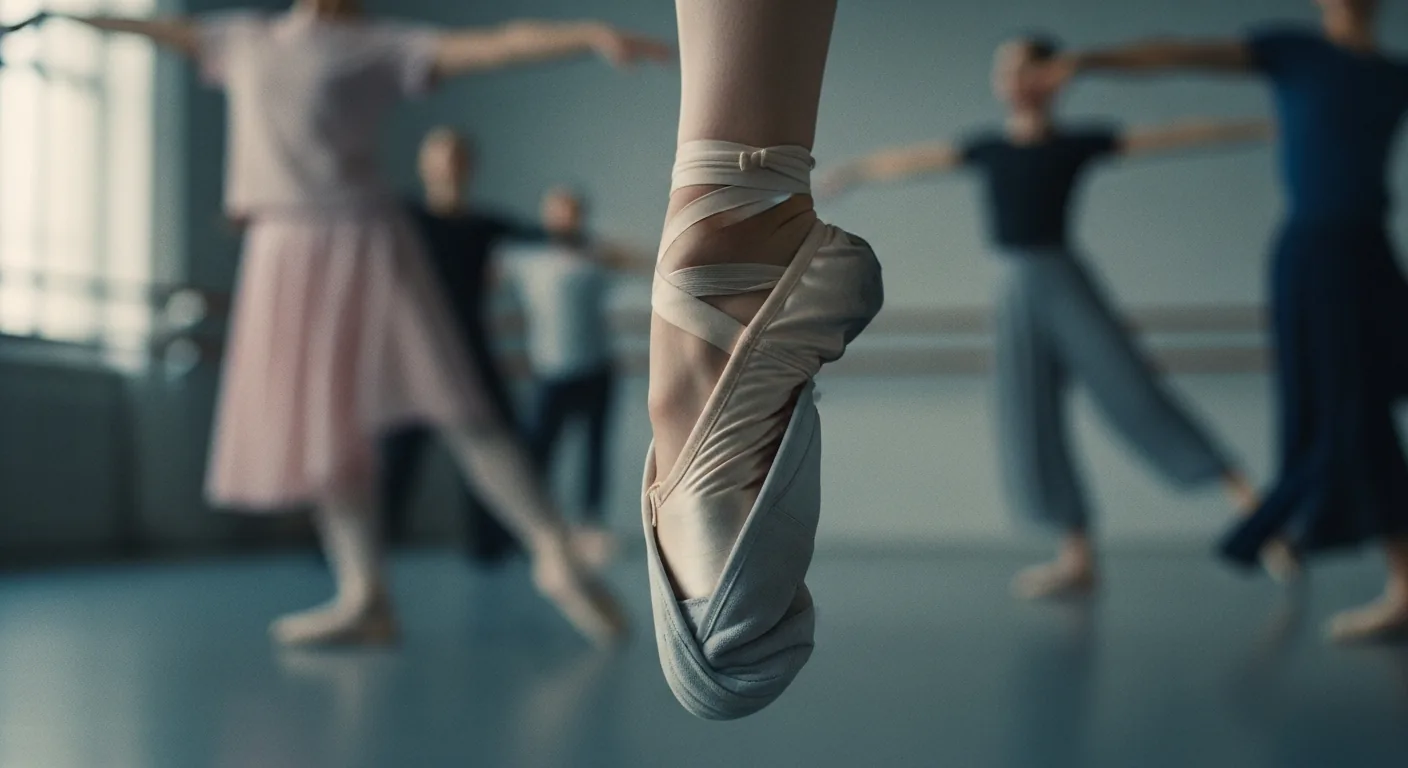
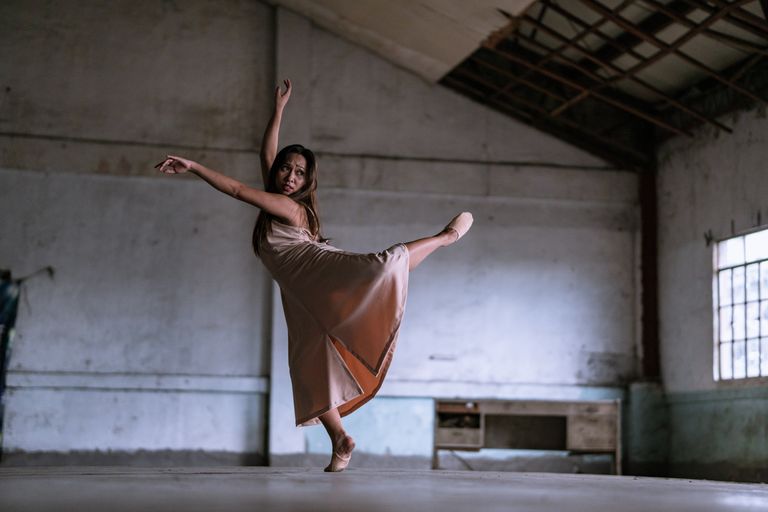
To understand the pull of the ballet-flat sneaker hybrid, you have to understand what it’s reacting to. For years, “women’s sneakers” largely meant one of two things: a men’s shoe shrunk down and offered in pastel, or a maximalist chunky runner styled to be as aggressively sporty as anything on the men’s wall. Both of those lanes are fine. Both of those lanes are also incomplete. The ballet-inspired silhouette fills a gap that isn’t about daintiness—it’s about vocabulary. It says you can reference grace, softness, and precision without sacrificing the structural DNA of a sneaker: cushioned midsoles, durable outsoles, sneaker-grade materials.
Nike’s partnership with Jacquemus in late 2023 was a turning point. The collaboration produced the Humara LX in a “Light Bone” colorway with an angular, almost sculptural silhouette that read more like a deconstructed ballet flat than a trail runner. Simon Porte Jacquemus talked openly about wanting the shoe to feel like “something a dancer would wear to rehearsal if rehearsal happened on concrete.” That line resonated because it named a feeling women had been circling for years. The shoe sold out instantly in women’s sizes, and resale prices climbed to roughly $380 against a $180 retail within two weeks.
Then came the Miu Miu x New Balance 530 SL, with its satin overlays and ribbon-like lacing system, blending athletic heritage with runway theatricality in a way that didn’t feel like costume. It felt like conviction. What these collaborations share isn’t just an aesthetic—it’s a willingness to treat femininity as an *engineering* brief, not a marketing afterthought.
Mary Jane Sneakers and the Strap That Changed Everything
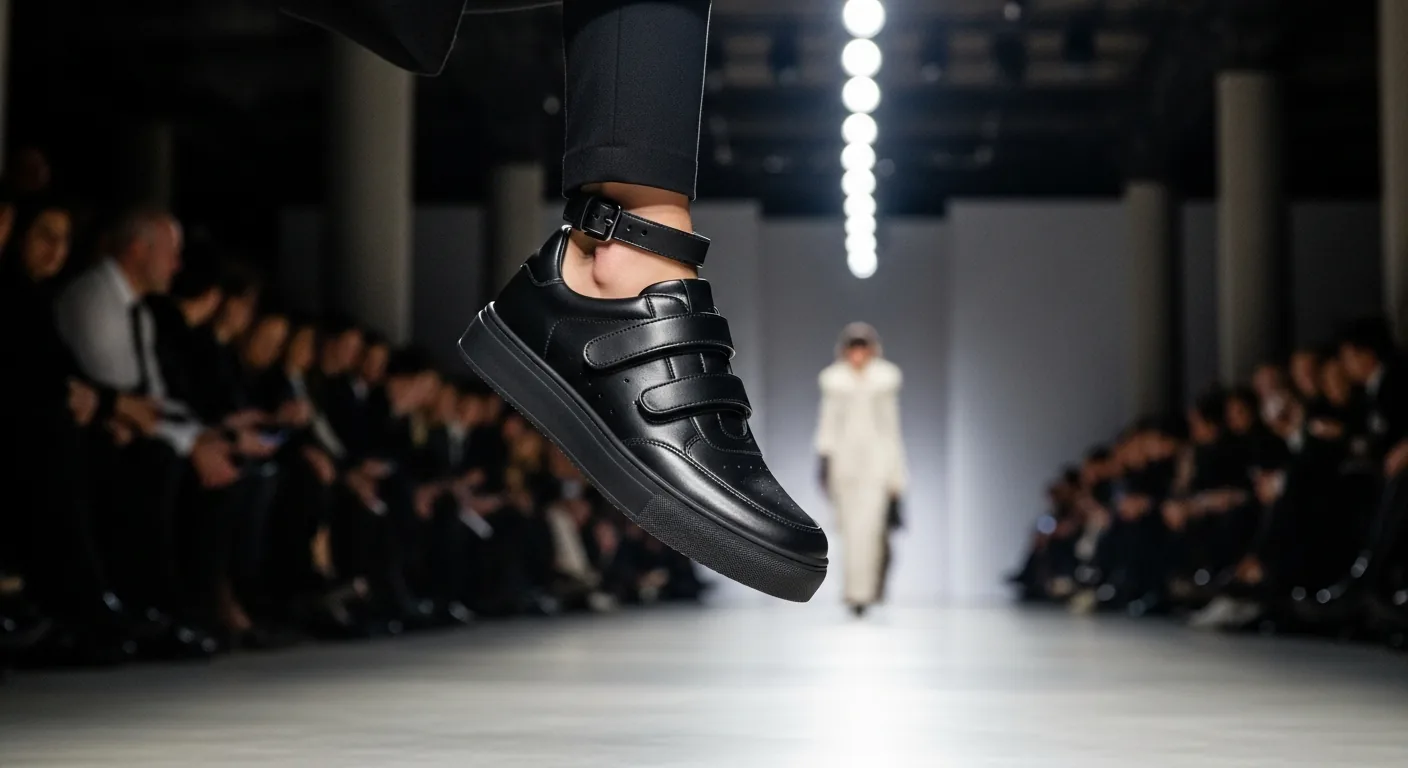
The Mary Jane strap on a sneaker is, structurally, a small thing. A single bar across the instep. But symbolically, it’s enormous. It signals a deliberate reference to girlhood, to vintage femininity, to a silhouette that predates sneaker culture by a century. And the way women are responding to it suggests it’s tapping into something deeper than nostalgia.
Puma’s Suede Mary Jane dropped in a “Warm White/Frosted Ivory” colorway with a wide instep strap and a slightly thicker gum sole. It was women’s-exclusive from the jump—no men’s counterpart, no “unisex” hedge. The design team, led by creative director June Ambrose, talked about the shoe as a “style bridge” for women who want sneaker comfort without sneaker bulk. Social media response was immediate and polarizing, which in sneaker culture usually means you’ve done something right. Some collectors called it a fashion shoe cosplaying as a sneaker. Others pointed out that the same crowd celebrated the Birkenstock Boston as a “sneaker-adjacent” silhouette without the same gatekeeping energy.
Dr. Martens, not traditionally a sneaker brand, entered the conversation with their Mary Jane platform sneaker hybrid in Fall 2024, featuring a vulcanized sole, canvas upper, and that unmistakable single strap. It sold well enough to earn a Spring 2025 follow-up in three new colorways, including a patent-leather “Oxblood” that’s already sitting at the top of my personal want list. What’s happening here is a slow-motion genre merge. The Mary Jane isn’t replacing the Air Force 1. It’s carving out adjacent shelf space, and brands that recognize that adjacency as permanent—not promotional—are the ones winning.
Satin Details Are More Than a Surface Finish
Satin on sneakers isn’t new. The Air Jordan 1 “Satin Bred” dropped in 2016 as a women’s exclusive, and it immediately became one of the most coveted Jordans of that year, men’s or women’s. But for a long time, satin was treated as a *special edition* texture—a surprise, a deviation, a one-off. What’s changed in 2024 and into 2025 is that satin and silk-adjacent materials are being integrated into mainline releases, not just capsule collections.
New Balance’s 1906R “Silk” pack, released in January 2025, featured three colorways—”Moonbeam,” “Rose Shadow,” and “Sea Salt”—with satin paneling across the midfoot and heel. These weren’t positioned as limited drops. They sat on shelves at Foot Locker and JD Sports, available in full women’s size runs, priced at $149.99. That’s a signal. When a brand puts satin in its general-release pipeline and commits to full-size production, it’s not treating the material as a gimmick. It’s treating it as a category assumption—the same way suede is a category assumption for the Puma Suede or leather is for the Stan Smith.
The styling implications are massive. Satin catches light differently. It changes how a sneaker photographs, which matters enormously in an era where half of sneaker culture lives on Instagram and TikTok. Content creators like Aleali May, who’s been vocal about wanting sneakers that complement evening and transitional looks, have pointed out that satin sneakers eliminate the “outfit compromise” women often face—the moment where you love everything about your look except that your shoes feel disconnected from the rest. A satin sneaker under wide-leg trousers or a slip dress doesn’t look like you’re “dressing down.” It looks like a choice.
A Key Figure Redefining the Feminine Sneaker Space
If there’s one person who embodies this shift, it’s Melody Ehsani. The Los Angeles-based designer and creative director of Foot Locker Women’s has been quietly—and sometimes loudly—pushing the industry to treat women’s sneaker design as its own discipline rather than a derivative exercise. Her Air Jordan OG SP collaboration, released in 2023 in the “Rust Pink” colorway, featured a hidden locket in the heel, a removable ankle strap (there’s that strap again), and a heart-shaped charm on the lacing system. It was unabashedly feminine. It was also one of the highest-resale Jordans of the year, peaking at over $500 on StockX.
Ehsani’s philosophy is worth quoting directly because it cuts to the core of this conversation. “Femininity isn’t a downgrade,” she said during a 2024 panel at ComplexCon. “When people see satin or a Mary Jane strap on a sneaker and call it ‘not serious,’ they’re telling on themselves. They’re saying femininity isn’t serious. And every woman who’s ever collected sneakers knows that’s wrong.” Her influence extends beyond her own collaborations. She’s been instrumental in shaping Foot Locker’s women’s buying strategy, advocating for dedicated women’s floor space and for treating women’s-exclusive releases with the same hype-building infrastructure—countdown timers, SNKRS-style drops, influencer seeding—that men’s releases receive as standard.
The *She Kicks* encyclopedia, published by Studio 96, further cements this visibility. Described as the first-ever women’s sneaker encyclopedia, it documents the changemakers, designers, and community leaders who’ve shaped women’s sneaker culture from the margins into the mainstream. Its existence alone is a statement: this culture has enough history, enough depth, and enough protagonists to fill a book. That’s not a seasonal trend. That’s an archive.
Cultural Implications for Women in Sneaker Culture
Here’s where the conversation gets complicated and, honestly, more interesting. The rise of feminine-coded sneaker silhouettes is not universally celebrated within women’s sneaker communities. There’s a real tension, and it’s worth sitting in rather than glossing over.
On one side, you have women who’ve spent years building credibility in a space that often demanded they prove their knowledge by conforming to traditionally masculine aesthetics. For these collectors, the move toward ballet lines and satin feels uncomfortably close to the industry saying, “Okay, *now* we’ll pay attention to you—but only if you perform femininity the way we understand it.” That’s a legitimate concern. eBay’s “Trailblazers Collection,” which spotlights sneakers designed or inspired by influential women, is a step toward visibility, but the framing matters. Are brands celebrating women’s contributions to sneaker *culture*, or are they celebrating women’s contributions to sneaker *fashion*? Those aren’t the same thing, and conflating them risks flattening the range of what women bring to the table.
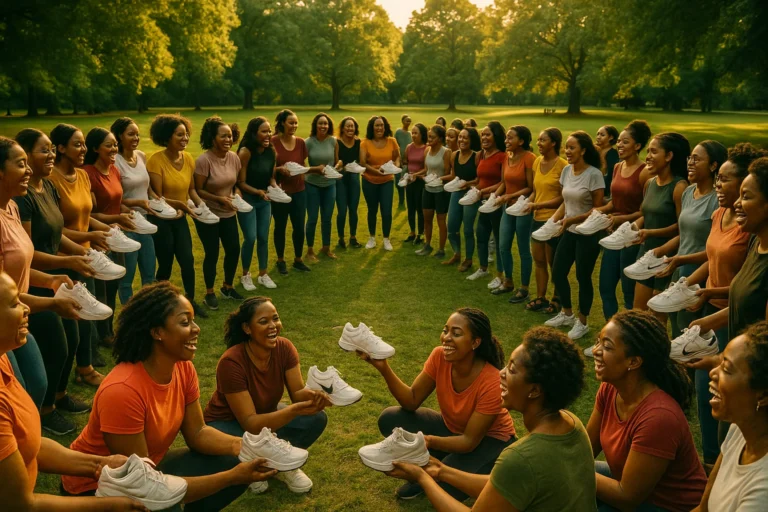
On the other side, there are women who’ve been waiting for exactly this—for the industry to stop assuming that every woman who wants a sneaker wants a downsized Air Max 90 in “Barely Rose.” The three sneakerhead sisters profiled in the “Chicks with Kicks” story, who auctioned more than 2,200 rare pairs through eBay with an estimated collection value of roughly $1 million, represent a buying power that demands diverse product. Their collection included everything from vintage Dunks to obscure Japanese-market exclusives, proving that women’s sneaker taste isn’t monolithic. A Mary Jane Puma and a Travis Scott Jordan can sit in the same rotation. They aren’t contradictions. They’re range.
The real cultural question isn’t whether feminine silhouettes are valid. Of course they are. The question is whether the industry will treat them as a permanent product category with year-round investment—dedicated design teams, consistent size runs, equitable marketing budgets—or whether it’ll ride the wave for three seasons and then pivot to the next thing. History suggests caution. We’ve seen “women’s moments” in sneaker culture before, and too many of them ended with clearance racks and “well, the demand wasn’t there” excuses from executives who never built the demand infrastructure in the first place.
The Verdict on Whether This Is a Lasting Category
I’ve been covering sneakers long enough to know that “trend vs. category” isn’t a binary. It’s a spectrum, and where a silhouette lands on that spectrum depends almost entirely on whether the community adopts it as *theirs*. The chunky dad shoe was a trend until women made it a wardrobe staple and brands committed to year-round production. The platform sneaker was a novelty until Converse and Superga started offering it as a permanent SKU.
Feminine-coded silhouettes—ballet lines, Mary Jane closures, satin textiles—have three things working in their favor that previous “moments” didn’t. First, the infrastructure is stronger. Women’s sneaker communities like WNBA Kicks, founded in 2018, have built sustained platforms that drive conversation year-round, not just when a campaign drops. These communities create demand continuity, which gives brands the confidence to invest beyond a single season. Second, the resale market validates the interest. When a women’s-exclusive Mary Jane sneaker holds or gains value on the secondary market, it sends a concrete financial signal that this isn’t disposable product. Third, and most importantly, the women designing these shoes are often the same women buying and wearing them. That feedback loop—designer-as-consumer—produces silhouettes that feel authentic rather than performative, and authenticity is what separates a category from a costume.
My honest take? We’re watching a category form in real time. It won’t look the way men’s sneaker categories look because it shouldn’t. It’ll be messier, more fluid, more willing to borrow from fashion traditions that sneaker culture historically kept at arm’s length. And that’s exactly what makes it exciting. The ballet flat didn’t die when sneaker culture boomed. The Mary Jane didn’t disappear when streetwear took over fashion. These silhouettes survived because they speak to something enduring. Putting them in conversation with sneaker engineering—cushioning, traction, support—doesn’t dilute either tradition. It expands both.
So the next time you see a satin-paneled New Balance or a strapped-up Puma and wonder whether it’s “really” a sneaker, ask yourself a different question. Ask who gets to decide what a sneaker looks like—and whether the answer has ever actually included you. If it hasn’t, maybe this is the moment it starts. If it has, maybe it’s time to make room on your shelf. Either way, the conversation is happening, and Kicks & She is where it lives. Drop your take. We want to hear it.