Female Sneakerheads Are Rewriting the Resale Playbook
Meta description: Women sneakerheads are building collective intelligence networks reshaping the resale market. Inside the group chats, spreadsheets, and communities changing the game.
—
I was standing in line at SneakerCon in Cleveland last October, watching a woman in a pair of barely-there-creased Air Jordan 4 “Shimmer” pull out her phone, open a group chat, and photograph a pair of Off-White Dunks on a vendor’s table with the kind of precision usually reserved for forensic evidence. She was one of a growing wave of women sneakerheads who aren’t just snapping pics to flex. She was sending it to her circle, fifteen women deep, who would collectively analyze the stitching pattern, the font weight on the medial text, and the foam density of the midsole before she handed over a single dollar. Within four minutes, someone in the chat had flagged a misaligned ghost-stitching detail. She put the shoes down, thanked the seller, and walked away. No drama. No burn. Just the quiet, devastating efficiency of a community that had decided it was done getting played.
[*Image: Close-up of Air Jordan 4 “Shimmer” with visible stitching detail and midsole texture, photographed under natural lighting. Alt text: Air Jordan 4 Shimmer sneaker showing detailed stitching pattern and foam midsole, worn with minimal creasing.*]
That moment stuck with me because it crystallized something I’d been noticing across Discord servers, private Instagram accounts, and TikTok comment sections for months: women sneakerheads aren’t just learning the resale game individually anymore. They’re building collective intelligence networks that rival anything the broader market has ever seen. And the culture is better for it.
The Numbers Only Tell Half the Resale Story
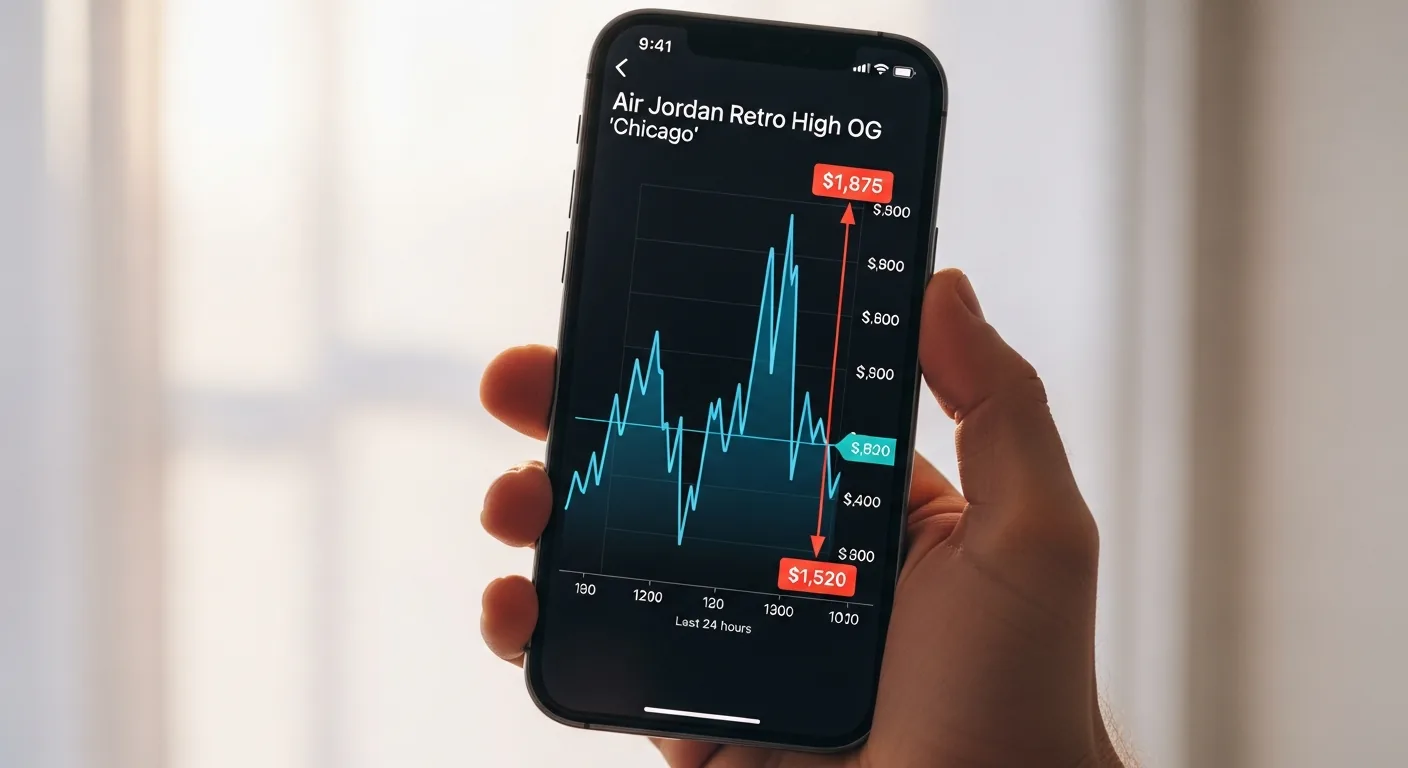
Let’s talk data for a second. Women’s sneaker sales on platforms like StockX, GOAT, and eBay have surged over the past three years. StockX [reported](https://stockx.com) that women’s sneaker trade volume grew by over 80% between 2020 and 2023, with the Nike Dunk Low and New Balance 550 consistently ranking among the most-traded silhouettes in women’s sizing. [GOAT’s 2023 year-end report](https://goat.com) highlighted that the fastest-growing buyer demographic was women between 22 and 35—a group that’s not just buying retros for nostalgia but actively seeking out limited collaborations and archival re-releases with investment-grade taste.
But Data Doesn’t Capture What’s Really Happening
Those numbers are real, and they matter. But they only tell you volume and velocity. They don’t tell you about the three-hour voice chat in a women-only sneaker Discord where members dissected the differences between a real and replica pair of the A Ma Maniére Jordan 3 “Raised By Women,” pointing out the shade variance in the violet suede and the weight of the hang tag. They don’t tell you about the spreadsheet—yes, an actual shared Google Sheet—circulating among a group of women collectors in Atlanta that tracks resale price fluctuations on over forty silhouettes across five platforms, updated weekly, color-coded by buy window. They don’t tell you about the Instagram Stories where women post side-by-side comparisons of packaging details from authorized retailers versus suspect sellers, with arrows and annotations that would make a quality-control inspector nod in respect.
[*Image: Screenshot example of a color-coded Google Sheet tracking sneaker resale prices across platforms. Alt text: Shared spreadsheet tracking resale price fluctuations for women’s sneaker silhouettes across StockX, GOAT, eBay, Alias, and Tradeblock, color-coded by optimal buy window.*]
The data says women are buying more sneakers on the secondary market. The story is that they’re rewriting the rules of how that market gets navigated—together.
From How to Cop to How to Buy Smarter
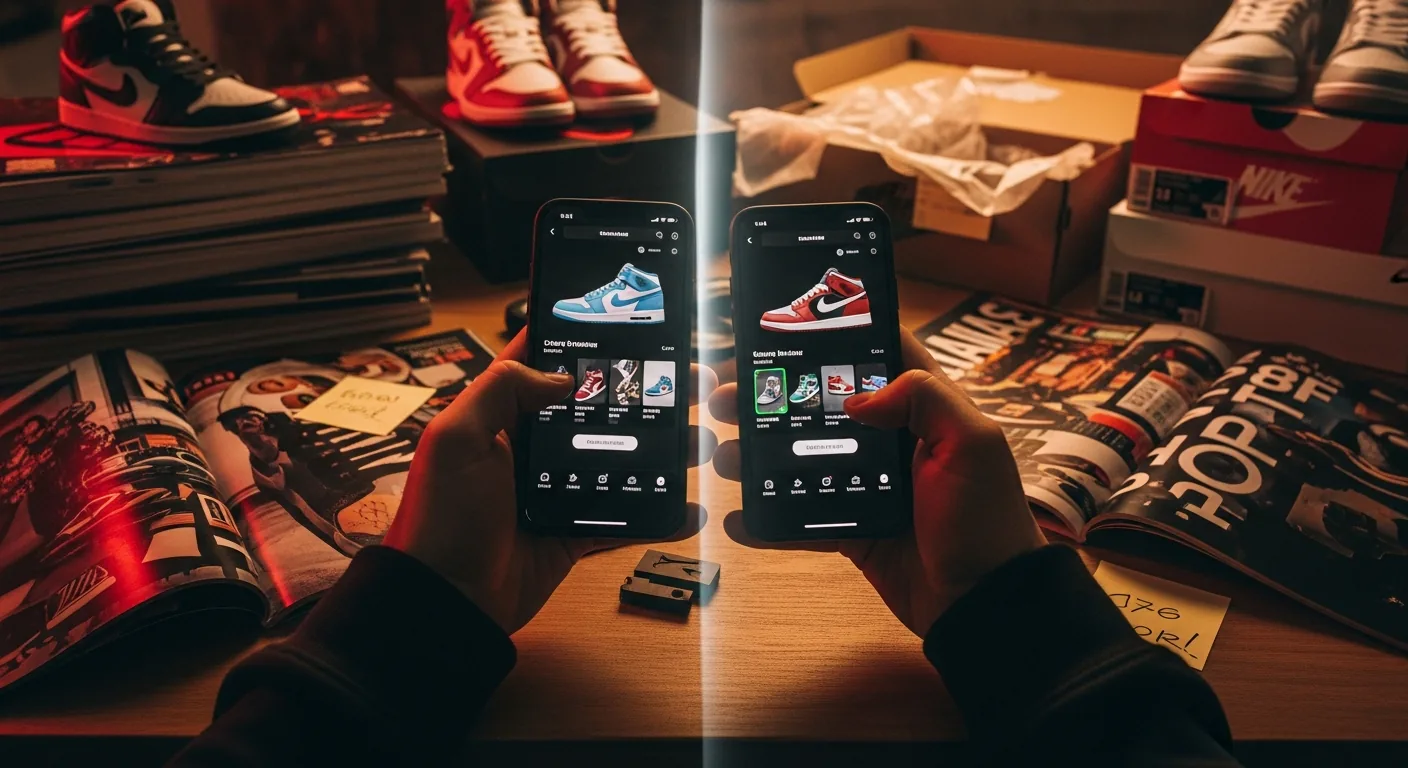
For years, the dominant conversation in sneaker culture orbited around one question: how do you cop? How do you beat the bots? How do you hit on SNKRS? Which raffle should you enter? The focus was on acquisition at retail, and if you missed the drop, the secondary market was this murky, anxiety-laced afterworld where you either overpaid or got scammed. Sometimes both.
The Question Has Evolved
That conversation hasn’t disappeared, but among women sneakerheads, it’s evolved into something more sophisticated and more useful. The question isn’t just “how do I get them?” anymore. It’s “how do I get them at a fair price, in my actual size, without getting a pair of reps passed off as authentic?” And crucially, it’s being asked and answered communally.
Take the example of the Nike Air Force 1 Low “Blue Tint” that dropped in women’s exclusive sizing in early 2024. Retail was $120, and within a week, resale prices on major platforms ranged from $160 to $280 depending on size. A Kicks & She community member named Deja, who runs a small sneaker account out of Houston, posted a thread breaking down why the price disparity was so extreme. It wasn’t just demand; it was sizing scarcity. Nike produced women’s sizes 6 and 7 in significantly lower quantities, which inflated those specific size runs on resale. Her advice was blunt and practical: if you wear a 7, wait three to four weeks for the hype cycle to cool and set price alerts on multiple platforms. Don’t panic-buy at peak. She was right. Within a month, those sizes stabilized around $175.
[*Image: Nike Air Force 1 Low “Blue Tint” in women’s sizing, side view on white background. Alt text: Nike Air Force 1 Low Blue Tint women’s exclusive colorway featuring pale blue leather upper with white midsole and matching blue outsole.*]
This kind of granular, experience-driven intelligence is everywhere in women’s sneaker communities right now. It’s not theoretical. It’s born from getting burned and deciding that nobody else in the circle should have to go through the same thing.
Spotting Red Flags Like a Collective Expert
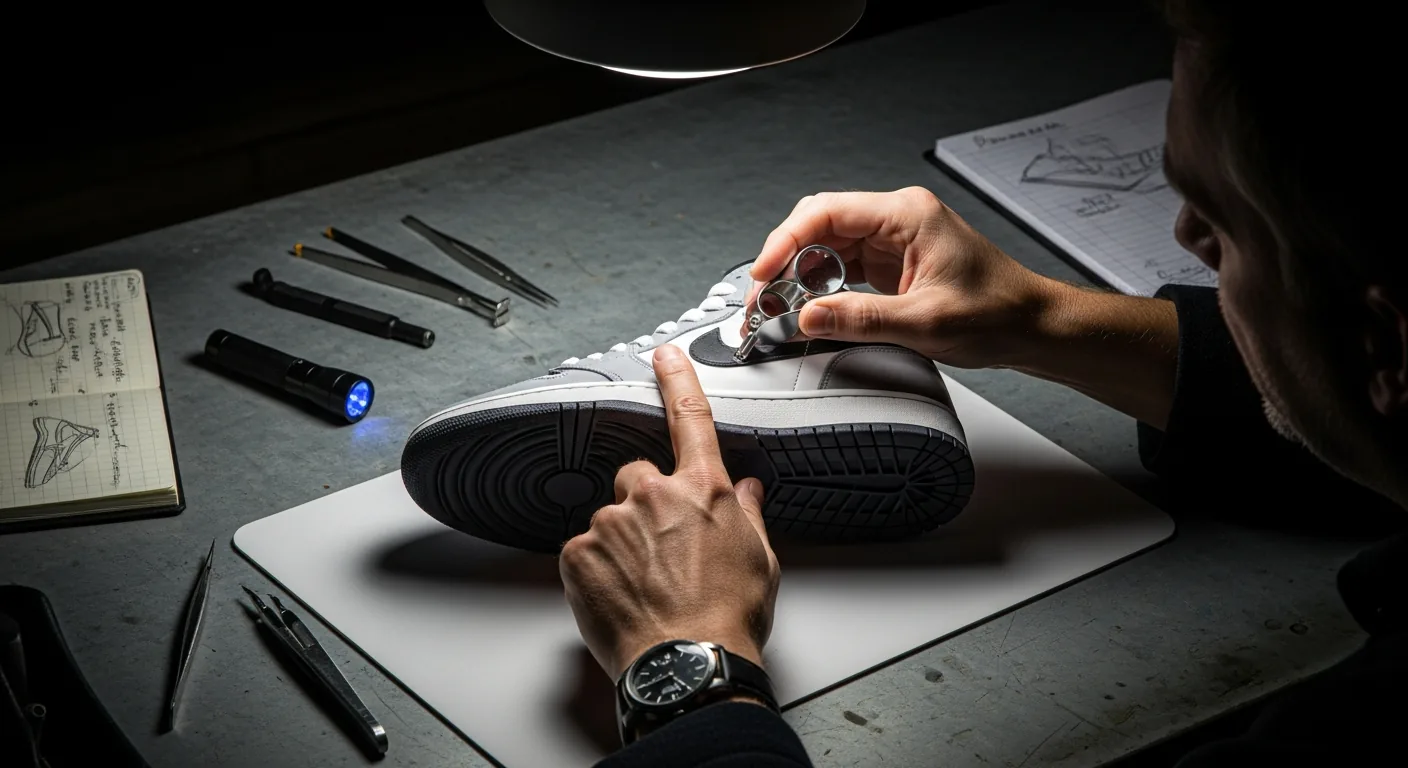
Authentication is one of the scariest parts of buying on the secondary market, and it’s an area where women’s sneaker communities have become remarkably sharp. Not because women are inherently more cautious—that’s a lazy narrative—but because the stakes feel different when your size run is already underproduced and the margin for error is thinner.
The Replica Market Has Caught Up (Almost)
The replica market has grown disturbingly sophisticated. A fake pair of the Aleali May Jordan 14 “Fortune” in a women’s 8.5 can look nearly indistinguishable from the real thing in photos. The quilted leather, the lipstick-red outsole, the gold lace deubré: all replicable at a surface level. But communities of women collectors have developed sharp eyes for the tells that separate a $220 authentic pair from a $60 replica dressed up with a convincing box and tissue paper.
[*Image: Side-by-side comparison of authentic versus replica Aleali May Jordan 14 “Fortune,” focused on quilted leather texture and outsole color. Alt text: Comparison showing authentic Aleali May Jordan 14 Fortune with correct quilted leather depth and lipstick-red outsole next to replica pair with flatter quilting and slightly off-tone red.*]
One of the most detailed guides I’ve encountered came from a woman named Priya, who moderates a sneaker authentication channel on a Discord server with over 4,000 members. She built a visual reference library containing hundreds of photos organized by silhouette, showing common replica flaws. For the Jordan 1 “Satin Bred,” it’s the sheen of the satin upper under natural versus artificial light. For the New Balance 993 in women’s sizing, it’s the depth of the “N” logo embroidery on the lateral side. For Dunks, she swears by the tongue tag: retail pairs from Nike have a specific thread count and alignment that most reps can’t quite replicate.
Why Women’s Product Gets Different (and Worse) Fakes
What makes this different from the authentication content that already exists on YouTube and Reddit is the specificity to women’s product. Replica manufacturers often focus their precision on men’s sizing because that’s historically where the resale volume has been highest. Women’s exclusive colorways and women’s size runs of unisex releases sometimes get less meticulous replica treatment, which means the tells can be different, and the mainstream authentication guides don’t always catch them. Women’s communities are filling that gap themselves, creating knowledge that doesn’t exist anywhere else.
Budget Strategies That Actually Respect Your Wallet
There’s a persistent myth in sneaker community circles that if you want heat, you have to be willing to hemorrhage money. Women’s communities are actively dismantling that myth with strategies that are as creative as they are disciplined.
The Rotation Trade
One approach that’s gained traction is what some collectors call “the rotation trade.” Instead of buying a grail at peak resale, you trade a pair from your collection that you’ve outgrown stylistically but that holds value in the market. Several women-run sneaker trading groups have emerged on platforms like Facebook and Poshmark, with strict verification protocols and community-enforced accountability. A woman in Denver traded a pair of worn-twice Nike Dunk Low “Rose Whisper” for a deadstock pair of Adidas Samba OG in “Cloud White” with no cash exchanging hands. Both parties posted verification photos, both confirmed satisfaction, and the group documented the trade for its records. It’s a barter economy built on trust, and it works because the community self-polices.
Platform Arbitrage (the Practical Kind)
Another budget strategy circulating in these spaces is platform arbitrage—not in the Wall Street sense, but in the practical sense of knowing which resale platform offers the best price for a specific shoe at a specific time. GOAT and StockX might have the same pair listed, but seller fees, buyer fees, and shipping structures differ enough that the final out-of-pocket cost can vary by $20 to $40. Women in these communities share real-time screenshots comparing total costs across platforms, including lesser-known options like Alias and Tradeblock, so that members can make informed decisions rather than defaulting to the first listing they see.
The 90-Day Rule
And then there’s the patience game. Several community leaders advocate for what they call “the 90-day rule.” Unless a shoe is a true limited release with confirmed low production numbers, wait 90 days after the drop before buying resale. The hype tax almost always deflates. The Nike Air Max 90 “Valentine’s Day” 2024 release is a perfect case study: resale peaked at $195 within the first two weeks, then settled to $135 by April. Patience saved sixty dollars. That’s another pair of socks, a sneaker cleaning kit, or the start of a fund for the next pickup.
[*Image: Nike Air Max 90 “Valentine’s Day” 2024 in women’s sizing, showing heart-motif details on heel and tongue. Alt text: Nike Air Max 90 Valentine’s Day 2024 women’s release featuring pink and red color blocking with embroidered heart details on the heel tab.*]
Priya Mehta and the Art of Community Authentication
I want to linger on Priya Mehta for a moment because her work represents something bigger than one person’s expertise. Based in Chicago, Priya started collecting seriously in 2019 with a pair of Air Jordan 1 “Tie Dye” that she bought off GOAT. She was hooked by the colors, that chaotic, beautiful swirl of teal, yellow, and fuchsia across the upper, and by the feeling of wearing something that felt distinctly hers, not borrowed from a men’s rotation.
A $240 Lesson in Fakes
But her second resale purchase was a disaster. She paid $240 for a pair of Nike Dunk Low “Coast” from a seller on a social media marketplace, and when they arrived, the leather was wrong. Not obviously wrong—subtly wrong. The tumbling was too uniform, the heel tab stitching was slightly off-center, and the insole printing smudged when she ran her thumb across it. She’d been sold replicas, and the seller had already disappeared.
Instead of retreating from the secondary market, Priya got angry in the most productive way possible. She started studying. She bought retail pairs and replica pairs side by side, spending her own money on known fakes so she could document the differences. She photographed everything under consistent lighting, measured sole thickness with calipers, and catalogued her findings in a Notion database that she eventually shared publicly.
From Group Chat to Infrastructure
Her Discord server, which started as a group chat among eight friends, now has authentication request channels where members can submit photos and get community feedback within hours. Priya doesn’t charge for this. She sees it as infrastructure—the kind of resource that should exist for women navigating a market that wasn’t built with them in mind.
“I got burned so you don’t have to” is how she puts it. Simple. Direct. And exactly the kind of ethos that’s making women’s sneaker communities some of the most valuable spaces in the scene right now.
[*Image: Screenshot of a Discord authentication channel showing submitted sneaker photos with community feedback comments. Alt text: Discord server authentication channel displaying user-submitted photos of Nike Dunk Low with community members providing feedback on stitching alignment and tongue tag details.*]
Why This Reshapes Women in the Sneaker Space
The implications here go beyond saving money or avoiding fakes, though both of those things matter enormously. What’s happening in women’s resale communities is a fundamental shift in who gets to define expertise in sneaker culture.
Redefining What Expertise Looks Like
For a long time, expertise was coded in a very specific way: it looked like encyclopedic knowledge of Jordan release dates, access to insider information about upcoming drops, and a collection deep enough to fill a storage unit. That expertise was real, but it was also gatekept—concentrated among people who’d been in the community for decades and who often didn’t see women as peers in the conversation.
Women’s resale communities are building a different kind of expertise. It’s distributed rather than centralized. It’s collaborative rather than competitive. And it’s grounded in practical knowledge, the kind that helps you avoid a $200 mistake on a Tuesday afternoon, rather than trivia that impresses strangers at a sneaker event.
Shifting the Power Dynamic
This matters because it’s changing the power dynamics of the secondary market itself. When thousands of women share information about fair pricing, authentication tells, and platform strategies, they collectively become harder to exploit. Sellers who rely on information asymmetry—knowing more than the buyer about what a shoe is worth or whether it’s real—lose their edge when the buyer has a community backing her up in real time.
It also matters because it’s creating space for women to participate in sneaker culture on their own terms. The secondary market has historically felt hostile or at least indifferent to women buyers. Sizing confusion between men’s and women’s runs, authentication guides that only reference men’s product, resale platforms that until recently didn’t even have robust women’s categories: all of these friction points communicated that women were an afterthought. By building their own knowledge ecosystems, women sneakerheads are making the market work for them, whether the market intended to include them or not.
The Conversation Is Yours Now
This is bigger than any single tip or trick. It’s a movement dressed in heat. Women aren’t waiting for resale platforms to build better tools for them, aren’t waiting for authentication services to study women’s product with the same rigor they apply to men’s, aren’t waiting for anyone’s permission to be experts in a space they’ve always belonged in.
If you’re reading this and you’ve been lurking in those group chats, absorbing the knowledge without contributing—jump in. Share the red flag you spotted on your last purchase. Post the price comparison screenshot. Tell someone about the 90-day rule. The strength of these communities isn’t in any single member’s expertise; it’s in the collective intelligence that emerges when women who love sneakers decide to have each other’s backs.
And if you’ve never joined one of these communities, now’s the time. Search for women’s sneaker groups on Discord, look for authentication threads on Reddit’s r/Sneakers and r/WomensSneakers, follow accounts like Priya’s that are doing the unglamorous, essential work of documenting what real versus fake actually looks like in women’s sizing. The information is out there because women put it there.
The secondary market isn’t going anywhere. It’s only getting bigger, more complex, and more central to how we build our collections. The question isn’t whether you’ll participate—it’s whether you’ll do it alone or with a community that’s already figured out the playbook.
You know where to find us.