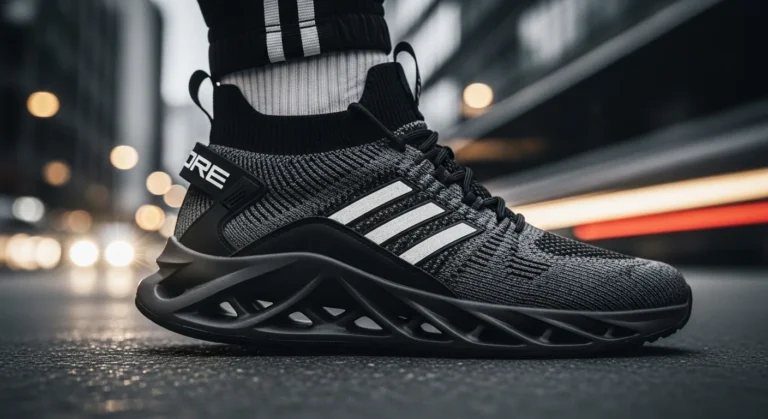
Fit Check: Which Ballet Sneakers Earn It in 2025?
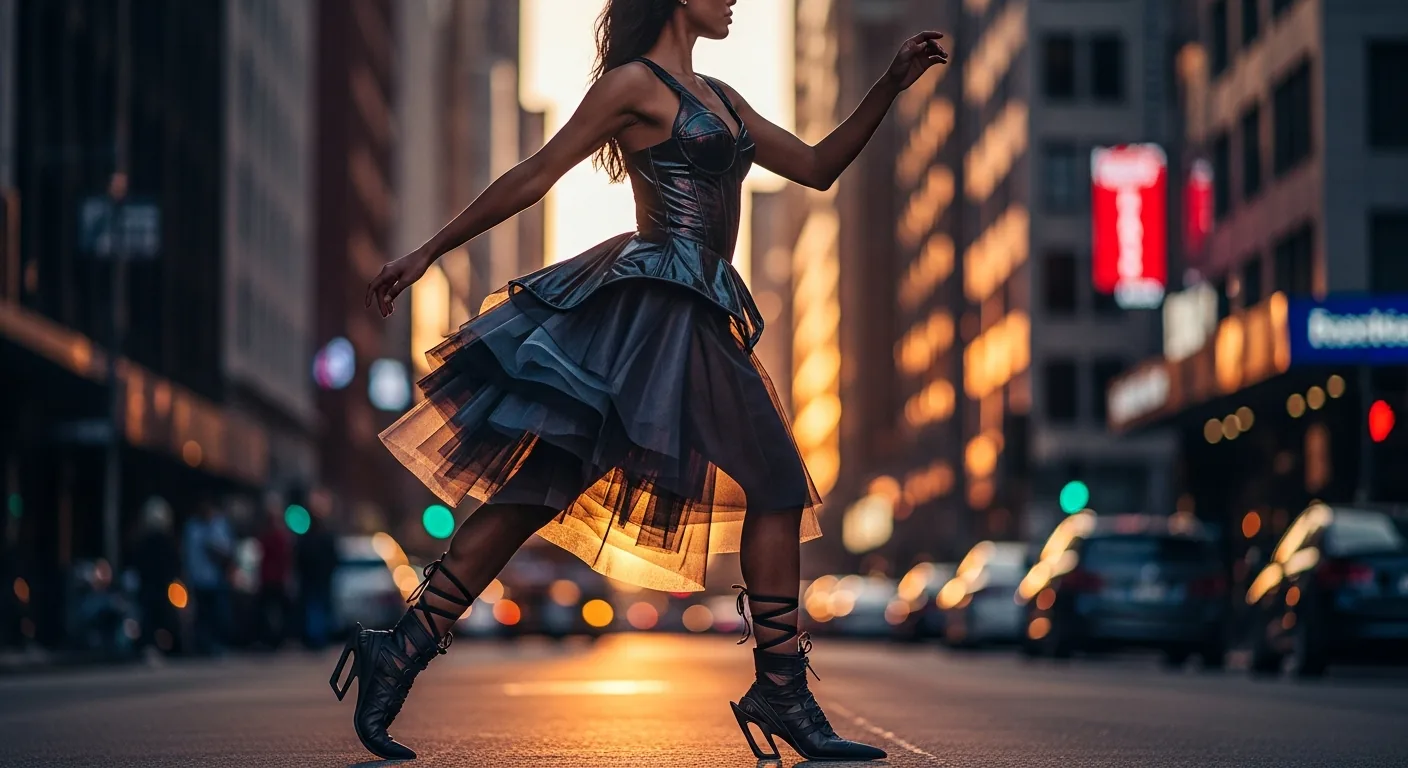
Women don’t need another pretty shoe that doesn’t fit.
That’s the line being drawn right now across sneaker culture as ballet-hybrid silhouettes flood the market with satin uppers, ribbon lacing, and promises of femininity reimagined. Spring 2025 has delivered at least a dozen launches explicitly aimed at women, from Nike’s Cortez Ballerina to Puma’s Tendu, from Adidas’s Studio Pointe to smaller labels like Maye and Hobes trying to carve out a niche with made-for-her engineering. The aesthetic is undeniable. Flat, sculpted soles. Soft, glove-like collars. Colorways that range from blush to obsidian to metallic pewter. But beneath all that design language sits a question that women in sneakers have been asking for decades, long before this trend had a name: does it actually work for my foot?
The answer depends entirely on who made it and whether they listened.
The Ballet-Sneaker Wave Hits Different This Time
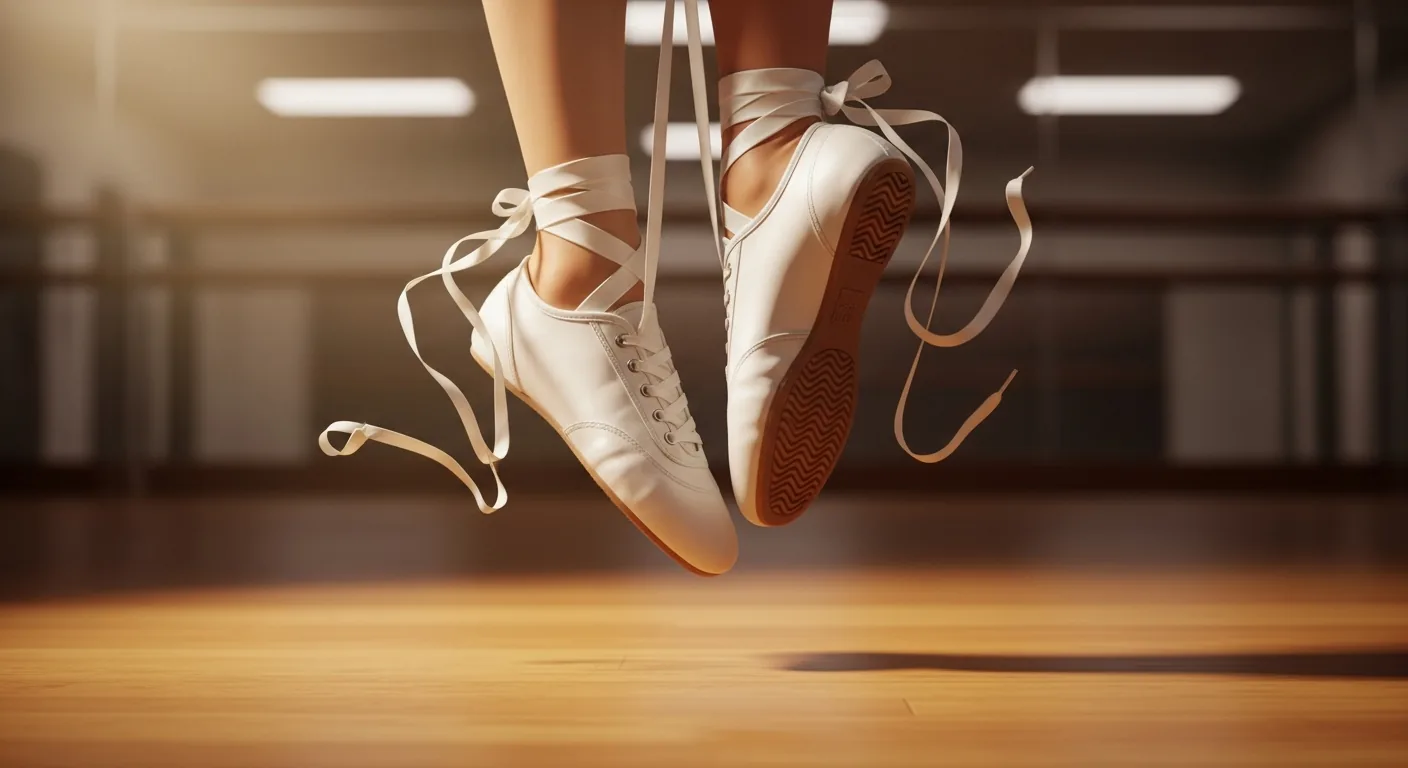
This isn’t the first time sneaker brands have flirted with ballet. In 2017, Puma dropped the Fierce with Kylie Jenner’s face attached to it, and Nike experimented with the Studio Wrap around the same period. Both sold. Neither stuck. The difference in 2025 is context. Women now represent roughly 40 percent of the global sneaker market by revenue, and that number’s been climbing steadily since the pandemic reshaped how everyone thinks about footwear. More critically, women aren’t just buying. They’re designing, reviewing, reselling, and building the communities that determine which shoes matter and which ones collect dust on shelves.
So when brands announce a ballet-sneaker hybrid “designed for women,” the scrutiny is immediate and specific. It’s not enough to shrink a men’s last, wrap it in pastel mesh, and call it innovation. Women who’ve been collecting for years, who know what a proper heel cup feels like, who’ve worn through enough thin insoles to spot cost-cutting from a product shot: they’re the ones setting the terms now.
And the terms are simple. Fit me correctly, support me honestly, and don’t insult my intelligence with a marketing campaign that says “for her” while delivering a shoe that was clearly an afterthought.
Which Brands Are Earning Women’s Trust
Let’s get specific, because specificity is what separates credibility from noise.
Nike’s Cortez Ballerina, which dropped on March 14 in three colorways (Phantom/Sail, Black/Gum, and a Valentina Rose exclusive to SNKRS) has generated the most conversation. The silhouette uses a modified Cortez last that Nike says it developed using 3D foot-scan data from over 12,000 women. That’s a meaningful claim; Kicks & She has not independently verified this figure, but early reviews from sneaker communities suggest the fit reflects genuine research: a slightly wider forefoot than the standard Cortez, a lower-profile heel counter, and a flexible outsole pattern that mimics the articulation of a ballet flat. The Phantom/Sail colorway sold out in under nine minutes on SNKRS, and resale on platforms like GOAT is hovering around $165 against a retail of $120. More importantly, sizing runs from a true women’s 5 through 12, with half sizes throughout. That full range matters. It’s not universal, but it’s better than what most competitors are offering.
Puma’s Tendu, designed in collaboration with choreographer and movement artist Aya Sato, takes a different approach. Released April 2 in Warm White/Rosé Gold and Puma Black/Silver, the Tendu is built on an entirely new last, not borrowed from an existing men’s or unisex silhouette. Puma’s design team in Herzogenaurach reportedly spent 18 months on fit testing with dancers and everyday wearers across five countries. Kicks & She has not independently verified this claim, but the result speaks for itself: a shoe with an internal arch band that adjusts tension as the foot flexes, almost like a built-in resistance band. It’s a genuinely novel engineering choice, and women who’ve tried it describe the sensation as “snug without squeeze.” At $140, it’s priced competitively, and the sizing extends to a women’s 13, a rarity that hasn’t gone unnoticed.
Then there’s the other end of the spectrum.
Aesthetic Hype Without the Engineering to Match
Adidas’s Studio Pointe, released in late February in Chalk White/Almost Pink and Core Black/Lucid Blue, looks stunning in photos. The knit upper drapes like jersey fabric, the sole is razor-thin, and the overall profile photographs beautifully on social media. It has generated enormous engagement on Instagram and TikTok, with the hashtag #StudioPointe pulling over 28 million views in its first month. But dig into the comments and a different story emerges. The shoe runs narrow. Painfully narrow, according to multiple reviewers. The sizing stops at a women’s 11 with no half sizes above 9.5, effectively cutting out a significant portion of the women’s market. The insole is a basic EVA foam with no contouring, and several wearers report heel slippage after just a few hours.
This is the gap that women in the scene are done tolerating. A shoe can be gorgeous. It can photograph like a dream. But if it doesn’t fit the actual diversity of women’s feet, if it treats sizing as an afterthought and comfort as optional, it’s not a women’s shoe. It’s a women’s-shaped marketing exercise.
The Smaller Labels: Maye and Hobes Under the Microscope
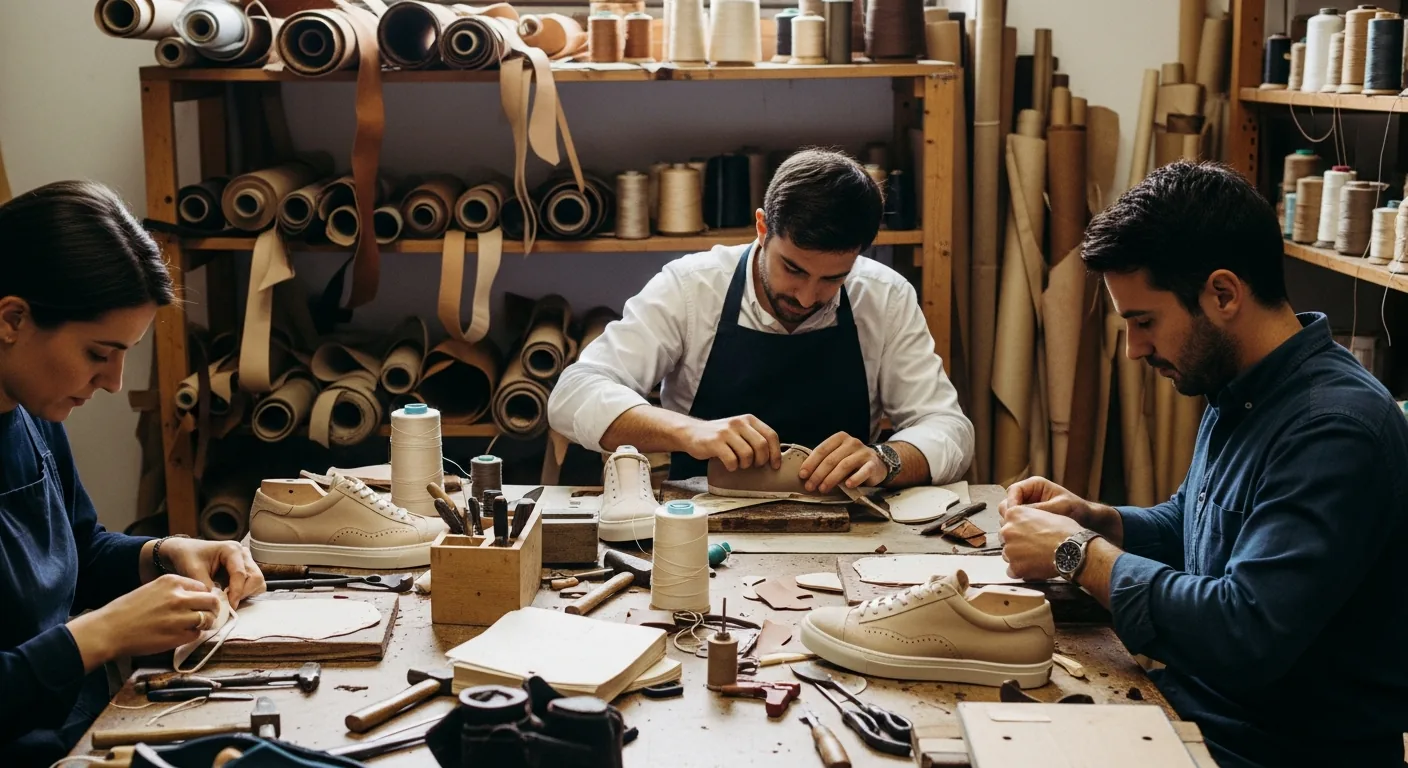
Smaller brands haven’t been immune to the same criticism, and two names that surfaced early in the ballet-hybrid conversation deserve a closer look.
Maye, a DTC label out of Los Angeles that launched its Relevé runner in January, earned early praise for its inclusive campaign imagery and its stated commitment to wide-width options. But when the shoes shipped, multiple customers reported that the “wide” option was barely distinguishable from the standard width. The brand issued a public apology on Instagram and offered free returns, but the damage to credibility was real and fast. In this community, you get one chance to prove your sizing claims. Miss it, and people remember.
Hobes, a Berlin-based studio brand, took a quieter approach with its Demi Pointe silhouette, released in March in limited quantities through its own site and select European stockists. The shoe is built on a women’s-specific last with a notably rounded toe box and a dual-density midsole that Hobes says was informed by podiatric consultations. The sizing runs from EU 36 through 44, which translates to roughly a women’s 5.5 through 12.5 in US sizing, and the brand offers two width options at no additional cost. Early wearers have praised the arch support and the quality of the suede-and-mesh upper, though the limited distribution and a €160 price point (roughly $175 USD) have kept it under the radar compared to the Nike and Puma releases. Hobes doesn’t have the marketing budget to compete on visibility, but the product itself suggests a brand that prioritized the shoe over the campaign. That’s worth noting.
What Women’s Sneaker Sizing History Tells Us
None of this frustration exists in a vacuum. The sneaker industry’s relationship with women’s sizing is a story of decades-long neglect punctuated by occasional, often reluctant, progress. The first modern sneaker designed specifically for women didn’t arrive until 1982, and that shoe, Nike’s Air Force 1 in women’s sizing, only came about after pressure from female athletes and labor activists who’d been pushing for equitable access to athletic footwear. Before that, brands told women to size down in men’s shoes or make do with what was available, a practice that persisted in sneaker culture well into the 2010s.
The “shrink it and pink it” era of the 2000s formalized this indifference. Brands would take a men’s silhouette, reduce the measurements by a standard ratio, swap the colorway to something pastel or floral, and position it as a women’s release. No independent last development. No fit testing on women’s feet. No acknowledgment that women’s foot anatomy—wider forefeet, narrower heels, different arch profiles—demands its own engineering.
That history is why women respond so viscerally when a brand gets it right and so sharply when a brand fakes it. The ballet-sneaker wave of 2025 is, in many ways, a referendum on whether the industry has actually learned anything. The aesthetic is just the entry point. The real test is what’s underneath.
Community Voices Are Shaping the Conversation
Social media hasn’t just amplified this moment. It’s structuring it. The conversation around ballet-sneaker launches is happening in real time across platforms, and women aren’t waiting for brand messaging to tell them how to feel.
On TikTok, creator @solesisterhood (Dani Okonkwo, 340K followers) posted a side-by-side try-on of the Nike Cortez Ballerina, Puma Tendu, and Adidas Studio Pointe that’s been viewed over 4.2 million times. Her verdict was blunt: “Nike did the homework. Puma did extra credit. Adidas turned in the assignment late and incomplete.” The comment section became a de facto review forum, with hundreds of women sharing their own fit experiences, posting photos of their feet in each shoe, and debating whether the Studio Pointe’s aesthetic justified its functional shortcomings. The consensus was clear: it didn’t.
On Reddit’s r/SneakHers community, a thread titled “Ballet hybrids: rank them by FIT not looks” gathered over 1,200 comments in 48 hours. The top-voted response, from user PacificNWsole, laid out a detailed comparison of heel width, toe box volume, and insole responsiveness across seven different ballet-sneaker releases. That kind of granular, experience-driven analysis used to live exclusively in men’s sneaker forums. Now women are building their own knowledge bases, and brands that ignore that data do so at their own risk.
Twitter and Threads have been louder and more political. Sneaker journalist Gia Torres (@kicks_gia) sparked a thread that gained over 9,000 reposts by writing: “The ballet-sneaker trend is a litmus test. If your brand can’t offer a women’s 12 in 2025, you’re not designing for women. You’re designing for a marketing deck.” That sentiment resonated deeply, and several brand accounts responded, some with concrete sizing commitments, others with vague promises that only deepened the skepticism.
Styling the Ballet Sneaker Beyond the Obvious
Here’s where the ballet-sneaker hybrid earns its place in a wardrobe, and where women are proving they don’t need a lookbook to figure out what works.
The most predictable styling—ballet sneakers with a flowy midi skirt or wide-leg trousers—is everywhere, and it works fine. But the more interesting outfits are coming from women who refuse to let the shoe’s femininity dictate the rest of the look. Stylist and sneaker collector Naya Park, who’s been documenting her outfits on Instagram (@nayaparkstyled), wore the Puma Tendu in Warm White/Rosé Gold under raw-hemmed baggy denim, an oversized vintage motorcycle jacket, and nothing else fussy. The contrast between the shoe’s delicacy and the outfit’s toughness made the sneaker look intentional rather than precious. That tension is the whole point.
On the opposite end, content creator Mika Liang paired the Nike Cortez Ballerina in Black/Gum with a tailored charcoal suit and no socks, letting the shoe’s low profile and gum sole create a visual anchor that read as sharp without trying too hard. It’s a look that works in a meeting or a gallery opening, and it’s exactly the kind of versatility that justifies a $120 price point.
The Studio Pointe, for all its fit issues, has found a styling niche among women who wear it as a going-out shoe rather than an all-day sneaker. Paired with sheer tights, a slip dress, and a structured bag, it photographs as a fashion object, and several women have been transparent about treating it that way: beautiful for two hours, painful for four. That honesty matters. It’s not a condemnation of the shoe. It’s a clear-eyed acknowledgment that aesthetics and function serve different needs, and women are allowed to choose both on their own terms.
Real Fit Means Real Commitment From Brands
What separates a credible women’s sneaker launch from a performative one comes down to three things that aren’t glamorous but are non-negotiable: last development, size range, and width options.
Last development means the shoe was built on a foot form shaped by women’s anatomical data, not a scaled-down version of a men’s last. Nike and Puma have both made verifiable investments here, and the results show in how their ballet hybrids fit across different foot shapes. Adidas, despite its resources, hasn’t made the same case with the Studio Pointe, and the community has noticed.
Size range is the most visible indicator of who a brand is actually designing for. If your women’s shoe stops at size 10 or 11, you’ve excluded millions of potential wearers. Puma’s extension to women’s 13 with the Tendu is a statement, not just a logistical choice. It says: we know you’re here, and we made room. Nike’s range to women’s 12 with full half-sizing is solid but not extraordinary. Adidas’s cap at women’s 11 with limited half sizes is, in 2025, indefensible for a brand of that scale.
Width options remain the industry’s biggest blind spot. Most ballet-sneaker launches offer a single width, which means women with wider feet, a disproportionate segment of the market, especially among Black and Latina consumers, are once again left to “make it work” or pass entirely. Maye’s fumbled wide-width launch underscores how easy it is to promise inclusivity and how hard it is to deliver it. Hobes’s quiet inclusion of two width options at no upcharge is the kind of move that builds long-term loyalty. The brands that figure out width will own this category. The ones that don’t will keep losing trust with every release.
What Comes Next for Women’s Ballet Sneakers
The ballet-sneaker hybrid isn’t a flash trend. The convergence of athleisure’s staying power, the broader cultural fascination with ballet aesthetics (thank Natalie Portman’s resurgent influence and the ballet-core wave that’s now in its third year), and women’s growing purchasing leverage in sneakers means this category has legs. The question is whether brands will treat it as a real product line or a seasonal capsule they can abandon when the next aesthetic cycle rolls around.
Three things to watch in the next 90 days. New Balance is rumored to be developing a ballet-inspired silhouette under designer Aimé Leon Dore creative director Teddy Santis, with a reported release window in late Q3 2025. If New Balance brings its 990-level fit obsession to a ballet hybrid, it could reset the standard for the entire category. ASICS has filed a trademark for “Pliésole,” which suggests a ballet-adjacent launch is in development, and ASICS’s reputation for technical fit could make it a serious contender. And Nike’s second drop of the Cortez Ballerina, expected in June with two new colorways including a rumored collaboration with a female designer whose name hasn’t been confirmed yet, will test whether the brand can sustain momentum or whether the first drop was a one-off win.
Meanwhile, the women driving this conversation aren’t waiting for permission or product announcements. They’re reviewing, styling, collecting, critiquing, and building the infrastructure of taste and knowledge that makes this space worth caring about. The ballet-sneaker wave is just the latest stage where that work becomes visible. The shoes are the artifact. The community is the women who decide what they mean.
Watch this space. And watch your size.