The Meetup Is the Marketplace Now
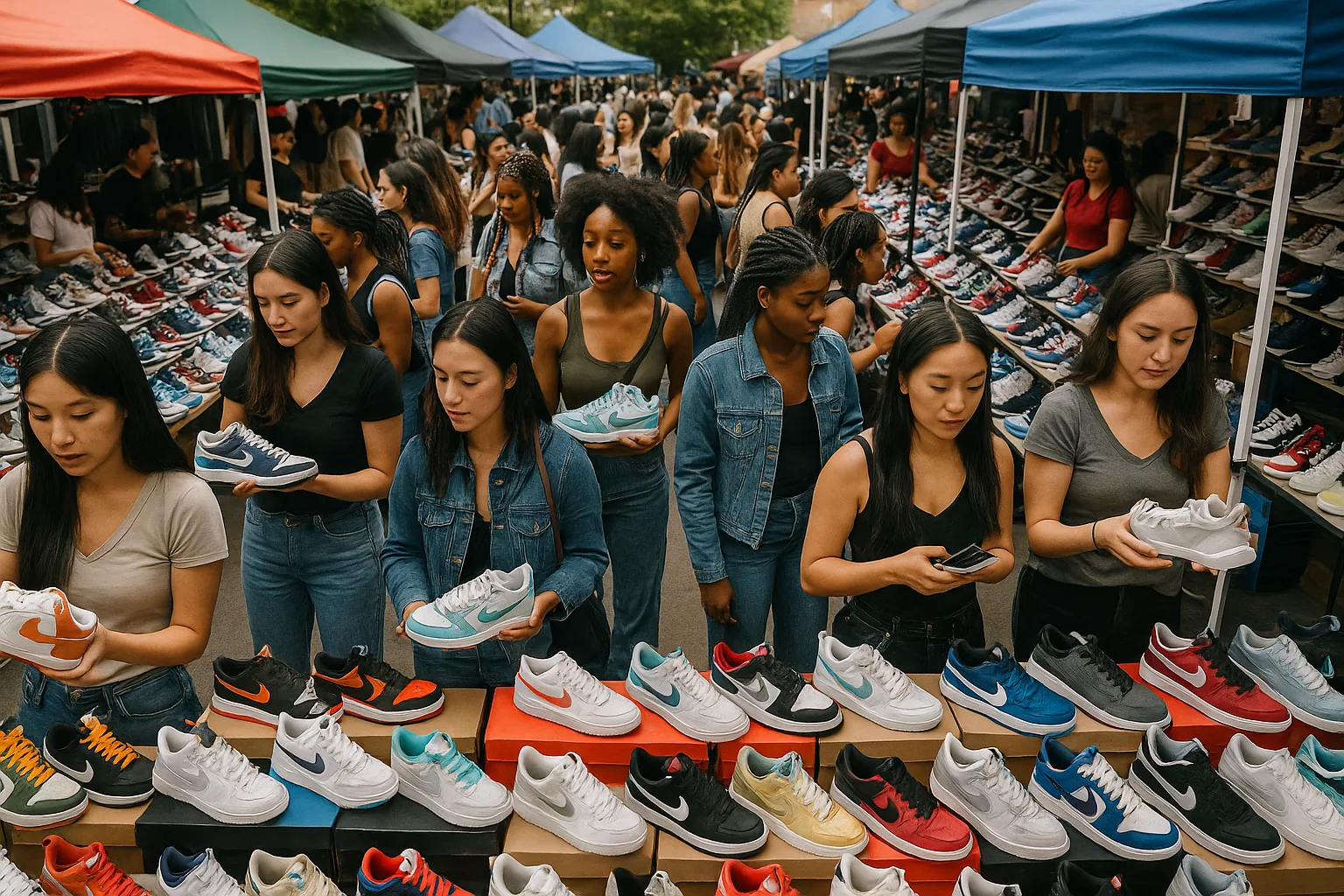
Female sneaker buyers are expanding at a 12.4% compound annual growth rate, making them the fastest-growing segment in the resale market—yet men still dominate overall revenue by a wide margin. That gap between momentum and share tells you something important. It tells you this isn’t just a story about entering the sneaker market. It’s a story about entering it against structural friction: fewer releases in the right sizing, less representation on resale platforms, and a long history of being treated as an afterthought rather than an audience. And the most interesting response to that friction isn’t happening online. It’s happening in person, in cities across the country and beyond, where sneakerheads are building their own infrastructure from scratch.
IRL gatherings are becoming the connective tissue of a new kind of sneaker culture. Meetups. Swap events. Walk-through style sessions. Pop-ups with a community backbone. These spaces don’t wait for a brand to extend an invitation. They treat access, knowledge, and style as things to be shared, not hoarded. This is the next phase of community power, and it belongs to the people making it real.
Why the Numbers Only Tell Half the Story
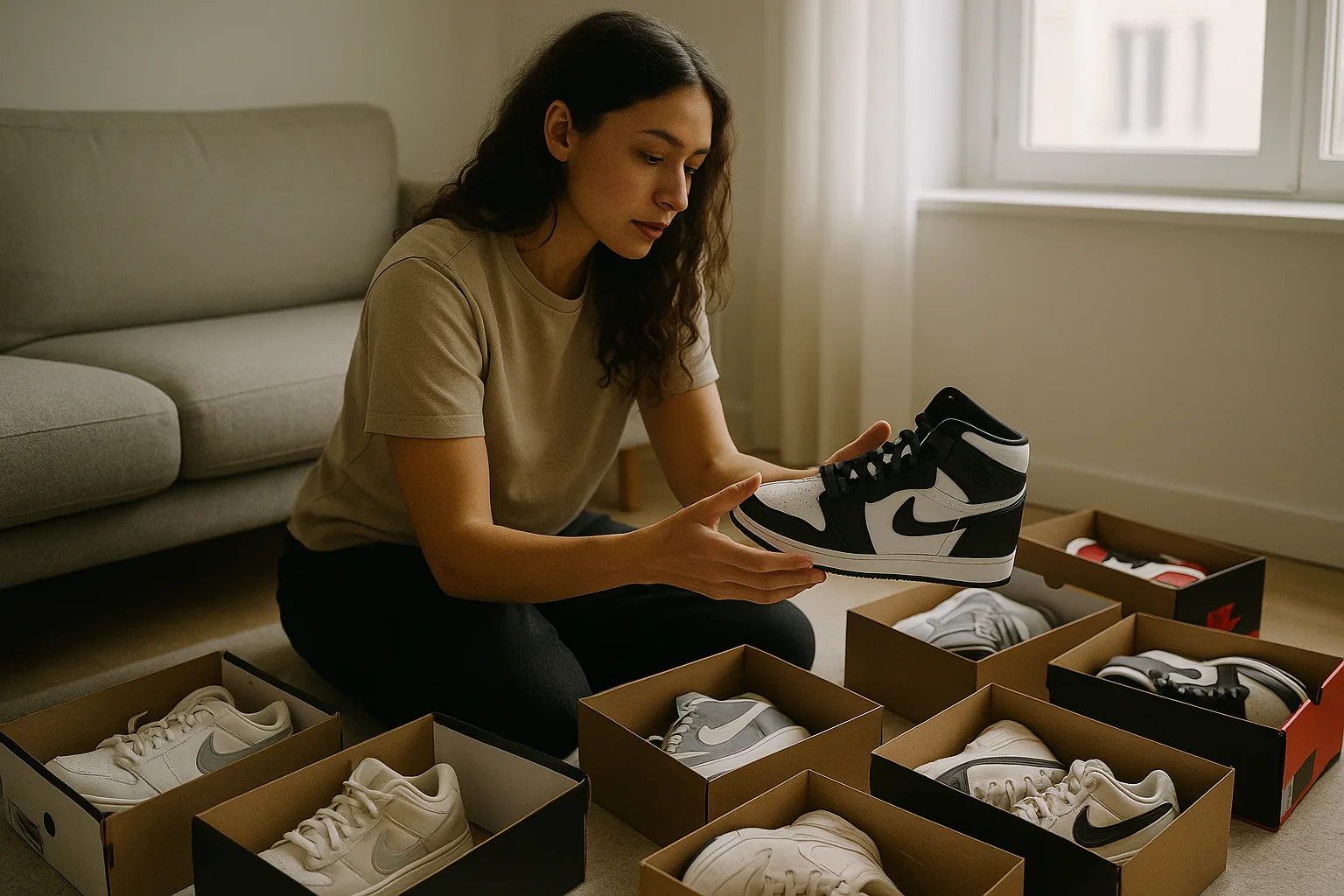
That 12.4% CAGR is striking, but here’s what it obscures. Growth rates measure velocity, not volume. Female collectors are accelerating faster than any other demographic in sneaker resale, but they’re accelerating from a smaller base, within an ecosystem that wasn’t designed with them in mind. Most resale platforms still organize inventory around men’s sizing first. Most authentication guides still center men’s silhouettes. Most hype cycles still revolve around men’s drops.
The real accelerant isn’t just “more women buying sneakers.” It’s more specific than that. Market analysts point to women’s-specific colorways, collaborations with female designers and athletes, and marketing that actually speaks to collectors rather than condescending to them. When the product is right and the messaging respects the audience, they show up. Hard. But right means more than a pastel palette slapped onto a men’s mold. It means design-led, culturally rooted, and available in actual women’s sizing without compromise.
The resale landscape in 2026 reinforces this. Profit margins have narrowed across the board, with the real upside concentrated in scarce collaborations and culturally anchored drops rather than broad-release hype. That’s exactly where collector demand from this segment is strongest: at the intersection of culture, scarcity, and design. Think the Nike Air Force 1 Low “Clueless,” a women’s-exclusive that turns a 1995 pop culture reference into wearable nostalgia. The upcoming MoMA x Nike Air Rift 2, expected this fall in women’s sizing only, carries a similar charge—a design-forward statement tied to one of the most respected cultural institutions in the world. These aren’t afterthoughts. They’re main events. And they’re creating the kind of collector energy that fuels community.
Meetups Aren’t Just Social—They’re Strategic
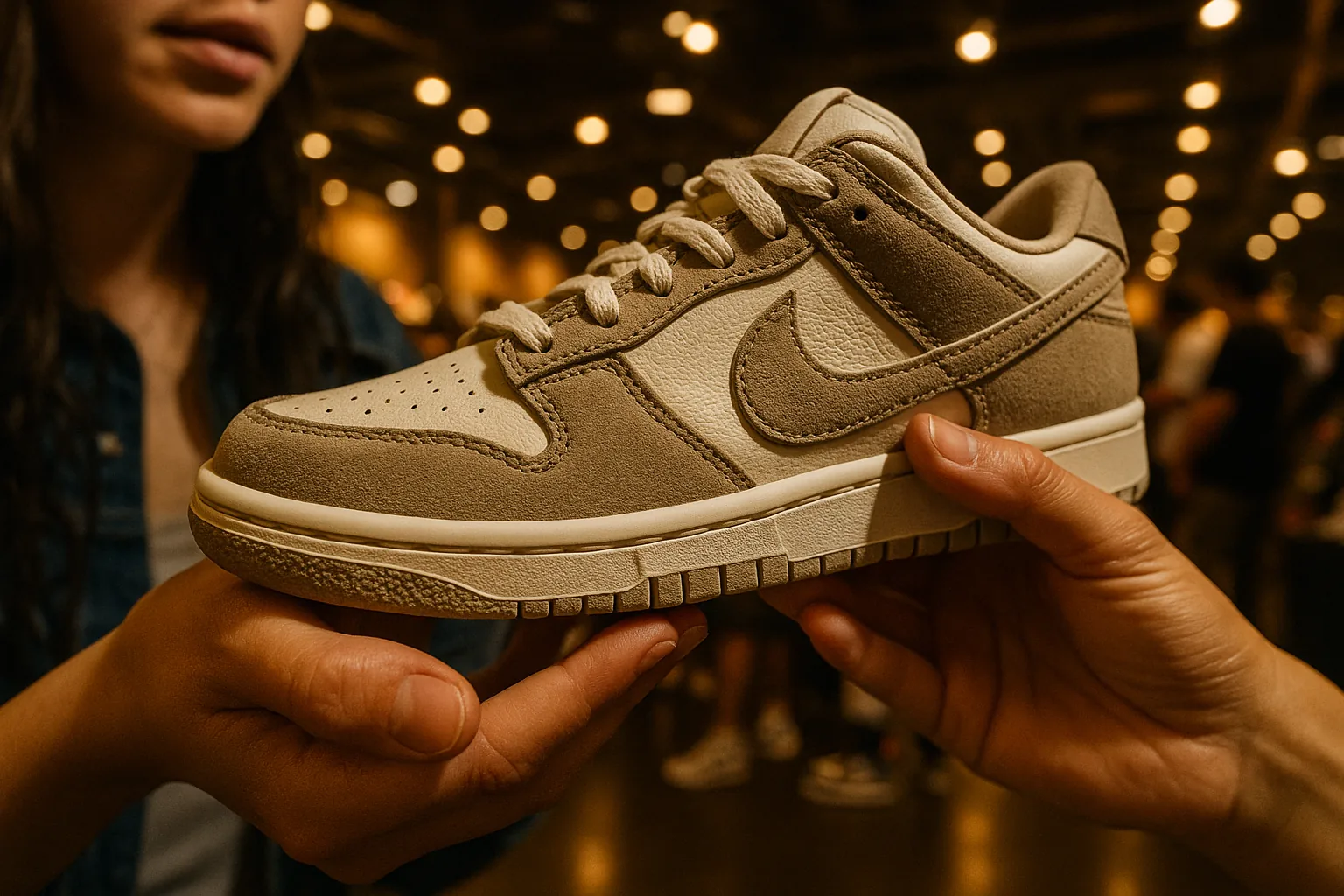
Here’s what the data can’t capture: the texture of a room full of people who know their silhouettes, who can identify a Climacool wedge from across the venue, who bring pairs to trade not because they need to flip for profit but because they want their collection to tell a better story. Women-led sneaker meetups aren’t side quests anymore—they’re the main storyline. They’re engines for resale access, for cultural exchange, for the kind of brand relationships that used to be reserved for a small circle of male influencers and shop owners.
In cities like Atlanta, Los Angeles, Chicago, Houston, and Philadelphia, women-organized sneaker events are drawing anywhere from thirty to three hundred attendees. Some are structured as swap meets, where pairs change hands at fair prices without the markup of a middleman app. Some are styled as walk-throughs, where attendees show up in full fits and the gathering doubles as a living lookbook. Others blend both, layering in panels, DJ sets, and brand activations that give the afternoon a festival energy without losing the intimacy that makes these spaces matter.
The swap format is particularly powerful. It addresses one of the core frustrations in sneaker culture: access. When a women’s-exclusive drop sells out in seconds—and it does, because inventory is almost always thinner for these releases—the secondary market becomes the only option. But resale platforms can feel impersonal, and the markup often feels punitive, especially on pairs that retailed under $180. Swaps bypass that entire dynamic. You bring what you’ve outgrown or what didn’t fit the way you hoped. You leave with something someone else loved. Money might change hands, but it’s governed by community norms, not algorithmic pricing.
“I stopped checking apps for restocks,” said Deja, a collector in Philadelphia who’s attended six swap events since March. “At a swap, I’ve gotten pairs I’d been hunting for months—at retail or below. And the person selling actually cared where the shoe was going.”
How Brand Relationships Are Shifting Ground
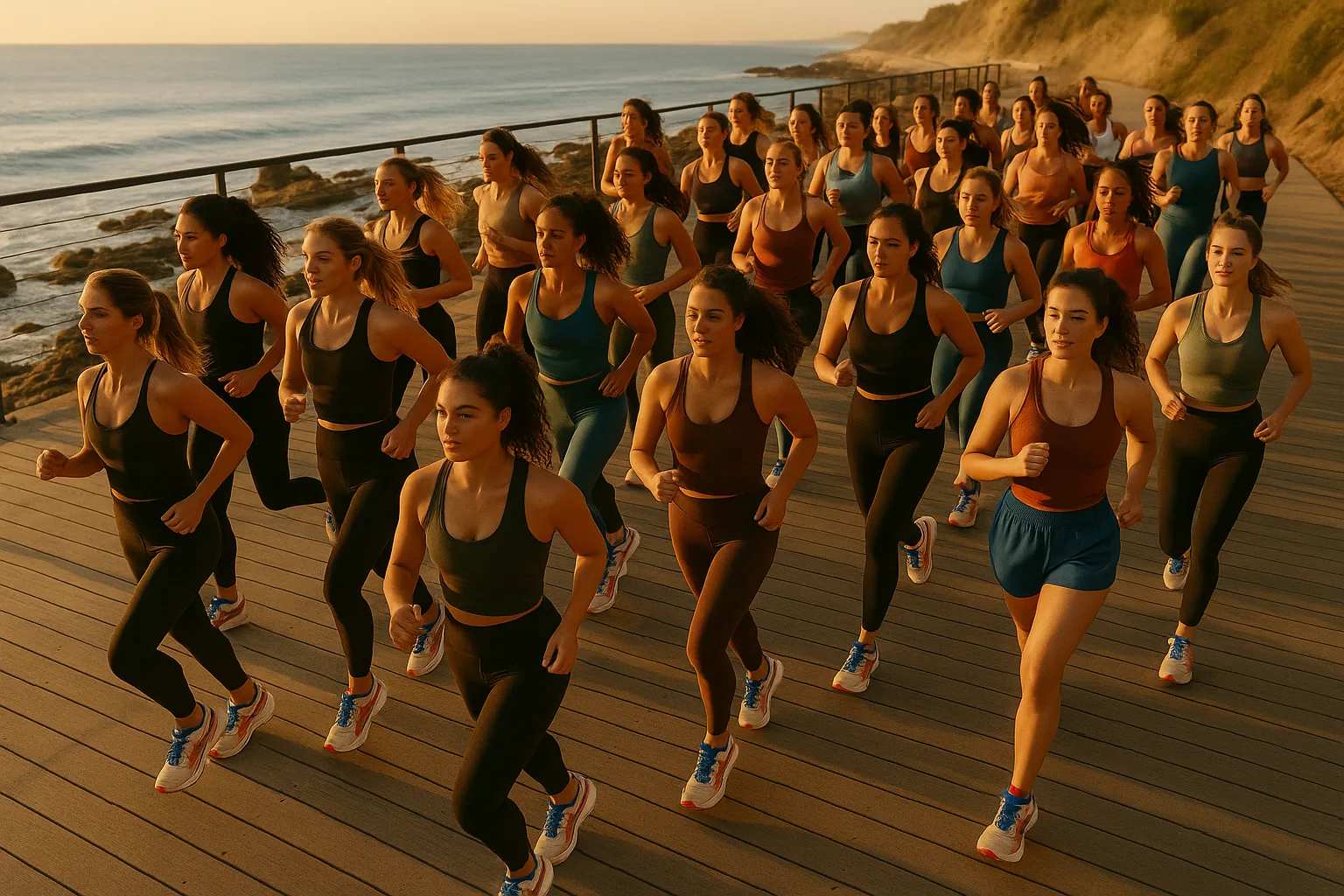
Brands are paying attention. Not all of them, and not fast enough, but the smart ones are recognizing that women-led community spaces are worth more than a sponsored Instagram post. FP Movement and ASICS launched their first footwear collaboration in July 2026, a collection built around the idea of supporting women from “morning miles to evening matches.” That kind of lifestyle framing—athletic but not exclusively athletic, performance-informed but style-conscious—reflects the way sneakers actually get worn. And it’s the kind of product that finds its strongest audience through community channels, not through a countdown timer on a brand’s website.
The Simone Rocha x adidas collaboration, set for September 10, 2026, sends an even louder signal. Five women’s-exclusive colorways spanning the Taekwondo Ballerina, Japan Slip-On, and a Climacool wedge, all in women’s sizing. The Taekwondo Ballerina features Rocha’s signature pearl and ribbon detailing reinterpreted through adidas’s athletic framework—sculpted soles paired with satin uppers that read as dancewear from one angle and streetwear from another. The Climacool wedge pushes further, stacking a performance mesh upper onto a platform that nods to early-2000s club culture. This isn’t a shrunk-down men’s shoe with a feminine marketing spin. It’s a collection conceived from a design perspective that centers its audience, rooted in Rocha’s sculptural aesthetic, offered in silhouettes that range from balletic to avant-garde. When drops like this hit, they don’t just generate sales—they generate conversation. And that conversation is richest in the spaces built specifically for it.
Some organizers are leveraging this dynamic deliberately. They’re approaching brands not as supplicants asking for free product, but as partners offering something brands can’t manufacture on their own: authentic community trust. A meetup organizer in Houston told me she pitched a major sportswear label by showing them attendance data, social engagement metrics, and—crucially—the demographic breakdown of her events. “I told them, your target customer is already in my room,” she said. “You can either be part of the conversation or hear about it later.” The brand sent product. They sent a rep. They sent a photographer. The images from that event ended up in a regional campaign.
The Style Conversation That’s Already Ahead of the Curve
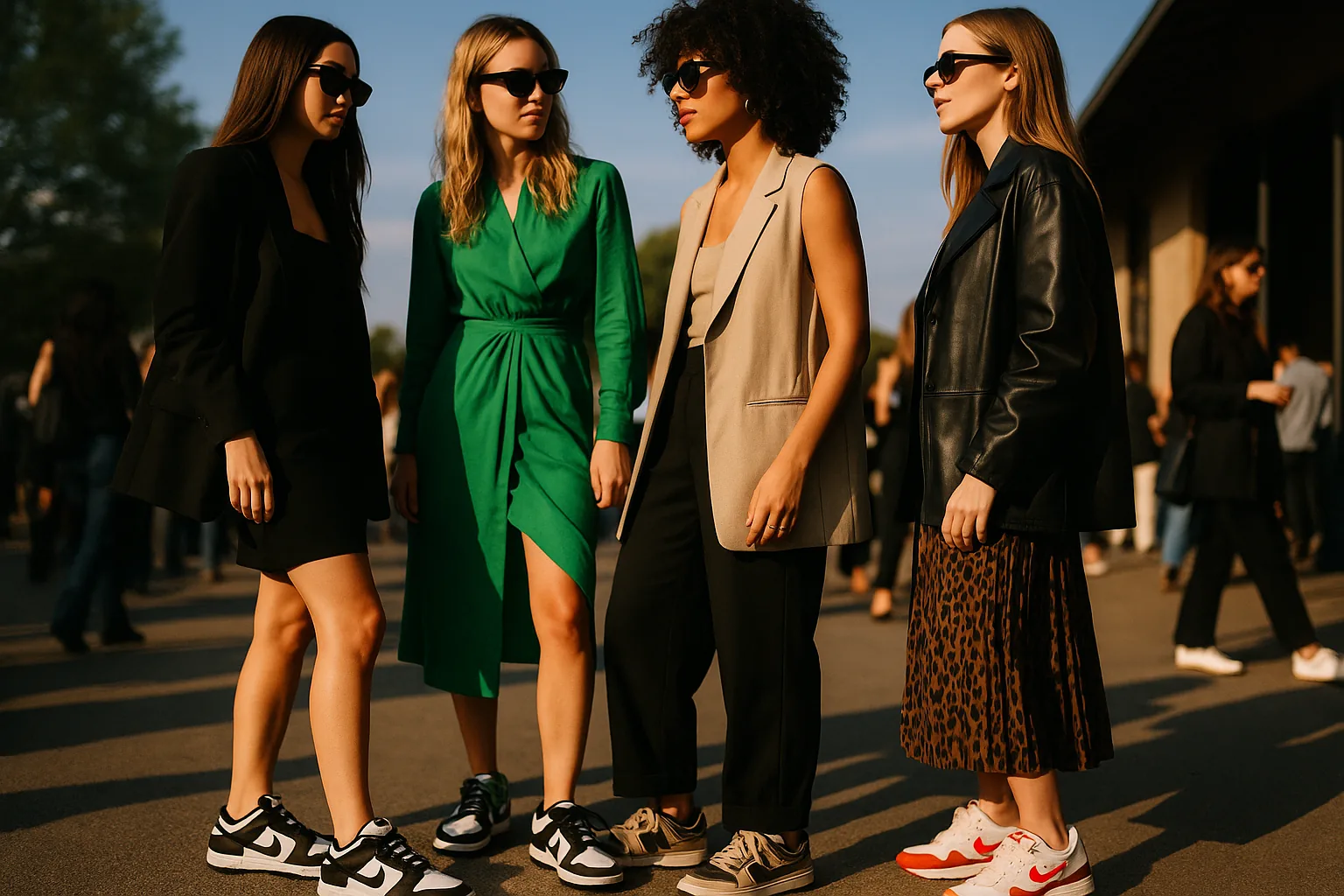
Walk into one of these gatherings and you’ll see the styling trends that fashion media is just starting to catch up to. The Mary Jane sneaker moment—driven by silhouettes like the adidas Samba Jane, the Puma Speedcat Ballet SD, rhinestoned adidas Superstar IIs, and Nike Air Rift variants—isn’t just a runway observation. It’s a street-level reality. Attendees are pairing ballet-inflected sneakers with wide-leg trousers, layered socks, and tailored shorts. They’re wearing Climacool wedges with midi skirts. They’re treating performance silhouettes as fashion canvases and fashion silhouettes as everyday wearables.
This isn’t new behavior. Sneaker styling with intention and creativity has been happening for decades. What’s new is the visibility—and the validation. When you’re in a room of seventy people and half of them are wearing some version of a ballet-sneaker hybrid, it stops feeling like a trend piece and starts feeling like a movement. The experimentation is bold. One collector in Chicago, who goes by @silhouette.diary on social media, has been documenting what she calls “silhouette diaries”: a week of outfits built around a single pair, showing how the same Samba Jane moves from brunch to studio to evening. “I wanted to prove that one pair can carry a whole week if you actually think about your wardrobe as a system,” she told me. Her following has tripled since January.
The styling conversation at these events is also a knowledge-sharing conversation. Newer collectors learn about colorway histories, about the difference between a Japan Slip-On and a standard canvas slip-on, about why a Simone Rocha collaboration carries different cultural weight than a celebrity endorsement. This is mentorship disguised as hanging out. It’s expertise passed sideways, from peer to peer, without the gatekeeping that’s historically plagued sneaker culture.
Resale Access Through Community, Not Algorithms
The resale implications of women-led networks deserve their own attention. In a market where margins are thinning and the real value is in scarce, culturally significant releases, access is everything. Who gets early information about a drop? Who knows which sizes run small? Who has a plug for a pair that sold out regionally but sat on shelves in another market? These questions used to be answered by networks that excluded most of this audience—group chats dominated by men, shop relationships built over years of male-centered hype culture, resale platforms where women’s sizing was an afterthought buried in filters.
Women-led meetups and their associated group chats are rewriting that script. A swap event isn’t just a chance to trade pairs. It’s a node in an information network. Attendees share drop calendars, sizing notes, and restock alerts. They flag when a women’s-exclusive is about to hit a specific retailer. They coordinate pickups so that a crew of ten can cover five stores in a single morning. This kind of collective intelligence has always existed in sneaker culture. The difference is that these networks are now purpose-built, tuned to specific needs, rather than requiring anyone to elbow their way into spaces that weren’t designed for them.
The MoMA x Nike Air Rift 2 is a perfect example of where community intelligence meets collector opportunity. A women’s-exclusive, design-forward release tied to one of the most respected cultural institutions in the world—that’s exactly the kind of drop where advance knowledge, sizing intel, and coordinated effort make the difference between securing a pair at retail and paying double on the aftermarket. The collectors who are plugged into these networks will have an advantage. And that advantage was built through showing up, through organizing, through doing the work of community in real life.
Profiles in Community: The Organizers Building Networks
Behind every thriving meetup is someone who decided to stop waiting. In Atlanta, a collector who started hosting bimonthly swaps in a borrowed gallery space in late 2025 now runs events that draw attendees from across the Southeast. She keeps a waitlist. She vets sellers to ensure authenticity. She negotiates with brands for exclusive activations. Her events have become a proving ground for emerging sneaker photographers, stylists, and content creators who use the gatherings as both portfolio opportunities and networking hubs.
In Los Angeles, a former retail manager launched a “walk-and-talk” format—a group walk through a neighborhood, ending at a sneaker shop for a curated shopping session and styling workshop. The walks attract a mix of hardcore collectors and newcomers just getting started, and the format breaks down the intimidation factor that can keep people out of traditional sneaker spaces. “I wanted something that felt like hanging out with your smartest friend who happens to know everything about sneakers,” she explained. The format has been replicated in San Diego, Portland, and Denver by attendees who experienced the LA originals and brought the idea home.
These organizers aren’t doing this for charity. They’re building platforms, audiences, and influence. Some have parlayed their community work into consulting gigs with brands. Others have launched small businesses—curated resale shops, styling services, content studios—that grew directly out of the trust they’d built through in-person events. The line between community organizer and entrepreneur is blurring, and that’s not a contradiction. It’s a natural evolution. When you create something people value, economic opportunity follows.
What This Means for the Culture
The implications stretch further than meetups and swaps. When communities build their own networks, they change the power dynamics of the entire ecosystem. Brands start designing for underserved audiences not because it’s good PR but because there’s a visible, organized, vocal community that will hold them accountable for lazy product. Resale platforms start prioritizing women’s sizing in their UX because the data shows this segment is a growth engine, and the community is loud about what’s broken. Media—including us, at Kicks & She—has a richer, more diverse set of stories to tell because the stories are being lived in public, in community, in real time.
The September 10 Simone Rocha x adidas drop will be a test case. Five women’s-exclusive colorways. A designer with a clear vision. Silhouettes that range from the Taekwondo Ballerina to a Climacool wedge. This is the kind of release that will move through community channels before it ever hits a mainstream sneaker blog’s radar. The collectors who secure pairs will disproportionately be the ones connected to networks—local, digital, or both—where information flows freely and access is shared.
The same is true for the Nike Air Force 1 Low “Clueless,” for the MoMA x Air Rift 2, for the FP Movement x ASICS collection, and for whatever women’s-exclusive drops are still unannounced for the back half of 2026. The collector market is rewarding specificity, cultural resonance, and scarcity. Women-led communities are where all three of those qualities are understood most deeply.
Join the Network or Build Your Own
If you’re reading this and you’ve never attended a women-led sneaker event, find one. Check local sneaker shops, search social media for your city plus “sneaker swap” or “women’s sneaker meetup,” or ask in our comments. If you’ve looked and there’s nothing in your area, that’s not a dead end. That’s an opening. The organizers profiled in this piece all started with the same impulse: I want this to exist, so I’ll make it exist.
Bring a pair you’re ready to let go of. Bring a friend who’s been curious about sneakers but didn’t know where to start. Bring your questions—about the Samba Jane’s fit, about whether the Climacool wedge runs narrow, about how to style the Air Rift with fall layers. Bring your knowledge, too. Someone in the room is waiting to hear what you know about a colorway’s backstory or a designer’s archive.
The infrastructure being built right now—meetup by meetup, swap by swap, group chat by group chat—isn’t just social. It’s structural. It’s the foundation of a sneaker culture that reflects the full range of who actually cares about this stuff. The numbers say this is the fastest-growing segment. The reality is richer than that. This isn’t just market growth. It’s a reshaping, from the ground up, in rooms built by the people who refused to wait for an invitation.