Pearls, Bows, and Gum Rubber: What 2026 Collabs Get Right
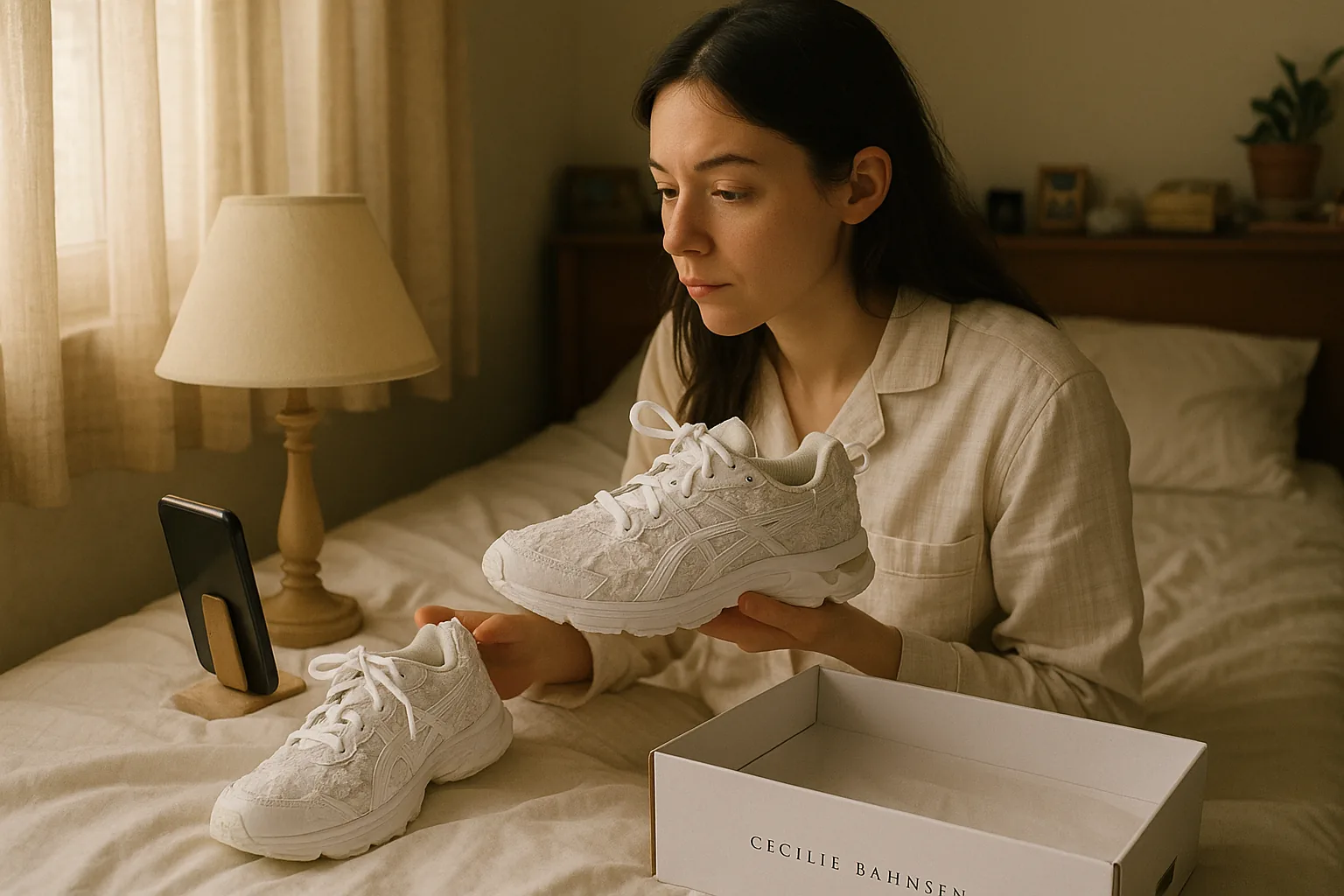
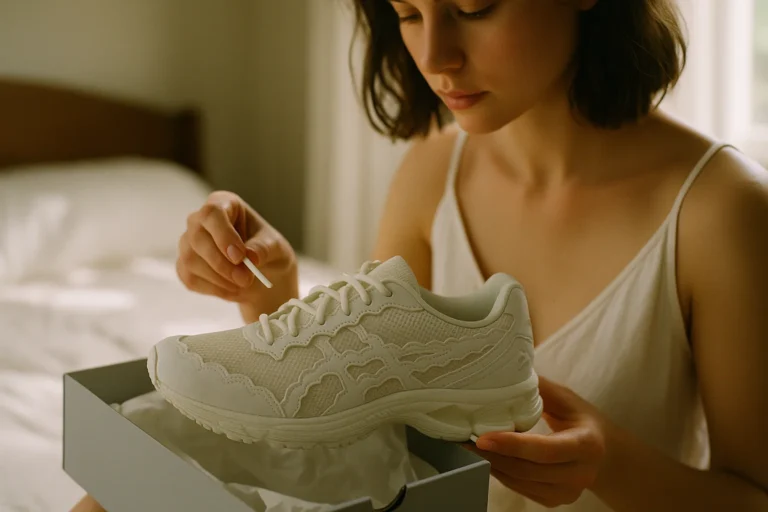
She’s sitting on the edge of her bed at 5:47 AM, phone propped against the lamp, SNKRS loaded, one thumb hovering. We’ll call her “every woman who’s been here before” — because this moment doesn’t belong to one person. It belongs to every sneakerhead who’s weighed hype against wearability in the dark before a drop. In her other hand: the Cecilie Bahnsen x ASICS GT-2160, still in the box, tissue paper peeled back just enough to reveal that organza bow stitched over the mudguard. She runs a finger across the mesh upper. It’s softer than she expected. The rubber outsole has actual traction grooves. She slides her foot in. It fits — not like a sculpture you’re afraid to scuff, but like a shoe that wants to hit pavement. And that’s the moment the question lands: is this a fashion piece or a sneaker? In 2026, the most interesting women’s sneaker collabs are daring you to stop asking.
Women-Led Collabs Are Setting the Standard — Not Following It
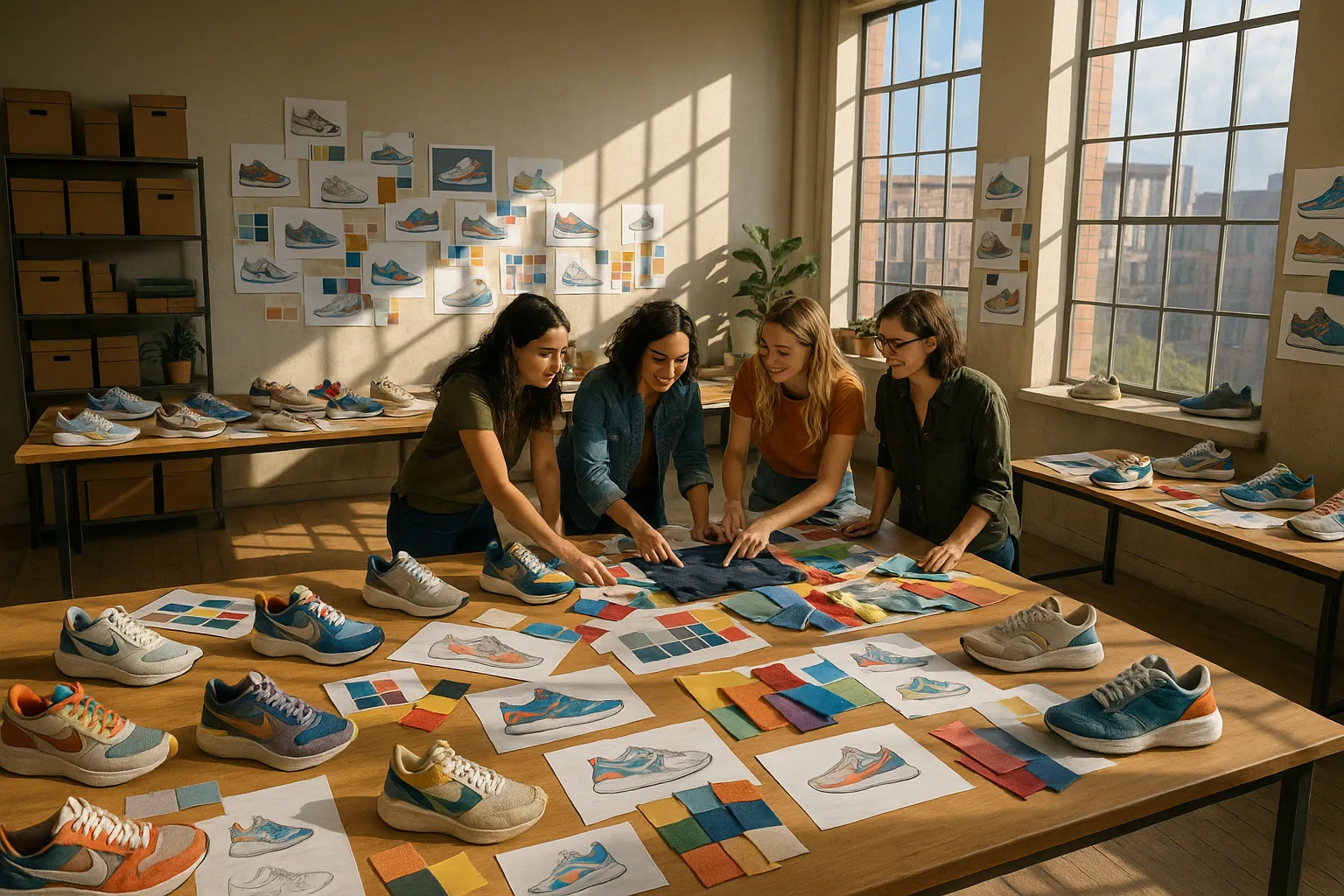
For years, the formula was predictable. A luxury house or independent designer would partner with a sportswear brand, drape a classic silhouette in unexpected materials, shoot a dreamy campaign, and release the shoe in extremely limited quantities — often in men’s sizing first, with a women’s run as an afterthought. The result was beautiful. It was also, frequently, unwearable. Stiff embellishments that dug into ankles. Paper-thin soles dressed up as “minimalism.” Colorways that showed dirt after a single commute. The shoe existed for the lookbook, not for life.
But something’s shifted. The current class of women-led collabs — Simone Rocha x adidas, Cecilie Bahnsen x ASICS, and Jacquemus x Nike chief among them — is forcing a conversation about utility that the industry avoided for too long. These aren’t capsule collections built to generate Instagram impressions and then evaporate. They’re full-range releases with multiple silhouettes, women’s-specific sizing, and a genuine tension between high-fashion ambition and functional design. That tension isn’t a flaw. It’s the entire point. And it’s arriving at a moment when the broader sneaker market is finally, grudgingly, treating women’s releases as permanent fixtures rather than seasonal charity.
Jordan Brand’s 2026 calendar is stacked with women’s-exclusive drops — the Air Jordan 3 “Sports Renaissance” for Summer, the Air Jordan 5 “Sunset” reviving a 2006 women’s exclusive for Fall, the Air Jordan 4 “Sierra Red” and “Pink Thunder” in women’s sizing, the Air Jordan 11 Low “Mother’s Day” released with matching preschool and toddler runs. The volume alone signals that women’s pairs aren’t novelty anymore; they’re infrastructure. But volume and vision are different things. The Jordans are retros — beloved, significant, but ultimately reworkings of existing designs. The 2026 designer sneaker drops from fashion collaborators are where new language gets written.
Simone Rocha x adidas Rethinks What “Delicate” Means
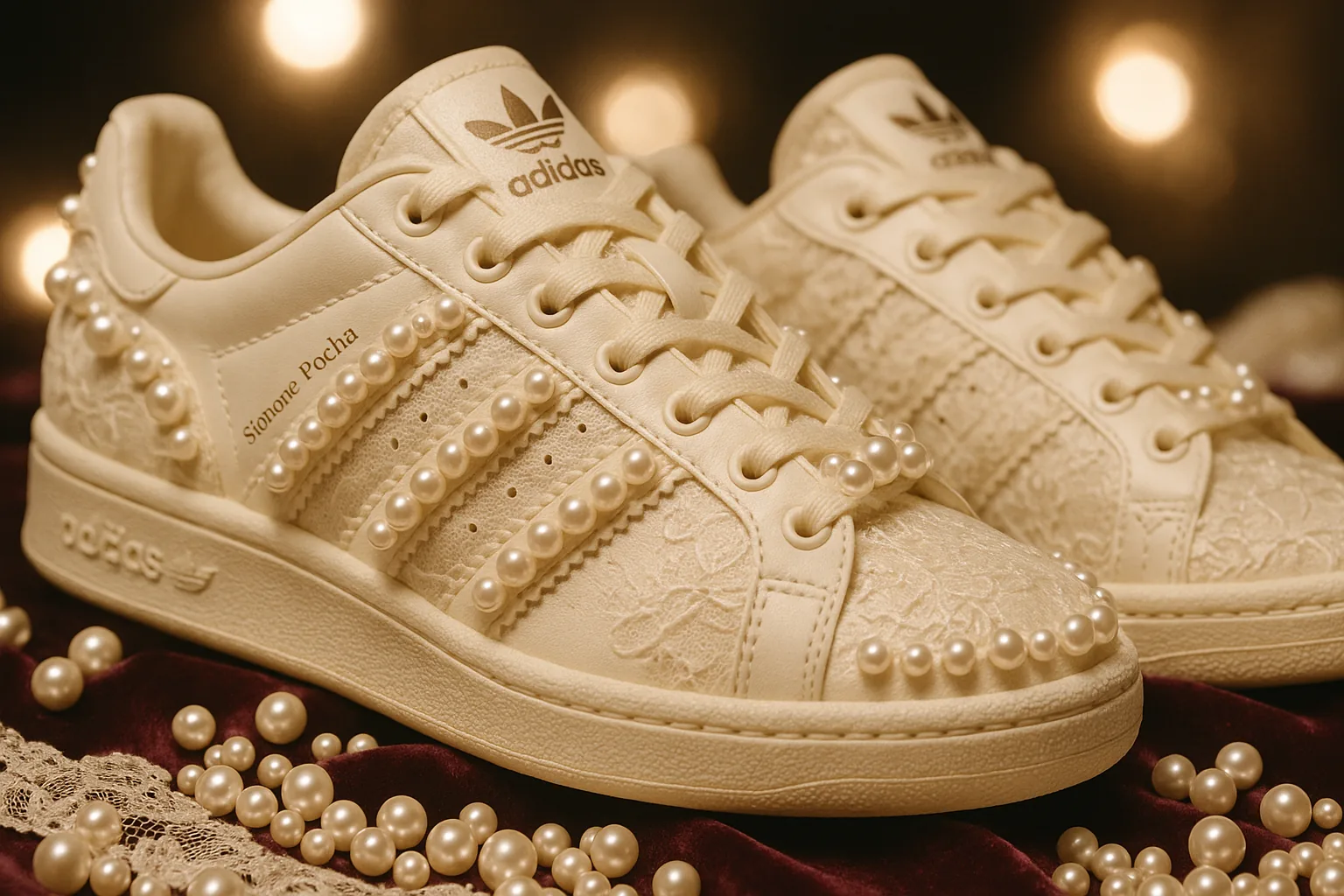
The Simone Rocha x adidas collection, dropping September 10, 2026, is the one that’s been generating the most community heat — and the most debate. Rocha, the London-based designer known for her pearl-encrusted, romantically aggressive aesthetic, has built a women’s-exclusive range across multiple adidas silhouettes, including reworks of the Samba and a modified Campus. The signature Rocha touches are all there: tonal ribbon lacing, padded collars that evoke ballet flats more than court shoes, and a palette that moves from bruised plum to pale bone. At first glance, it looks precious. At second glance, it’s tougher than it appears.
Here’s what matters: the soles are standard adidas gum rubber, not some experimental resin that’ll crack after ten wears. The uppers use treated leather and reinforced suede. The pearl detailing — the thing everyone fixated on from the first leaked images — is stitched into recessed panels rather than surface-mounted, meaning it sits flush instead of catching on every bag strap and jacket hem you encounter. Rocha reportedly pushed for this during development, insisting that ornament shouldn’t create fragility. That’s a design philosophy, not a marketing line. And it matters because women sneakerheads have been burned before by collabs that looked incredible on a shelf and fell apart on a subway platform.
The sizing is another quiet revolution. The full run extends from a women’s 5 to 13, built on women’s-specific lasts from the start — not a men’s run with extended small sizes tacked on. The width profiles reflect women’s foot shapes. The insoles are contoured differently. None of this is radical engineering; it’s basic respect for the customer. But in an industry that spent decades telling women to “size down” from men’s releases and deal with the resulting heel slip, it reads as a statement. (Worth noting: adidas has not confirmed whether wide-width options will be available in this run. If that changes, we’ll update.)
Cecilie Bahnsen x ASICS: The Bow That Actually Works
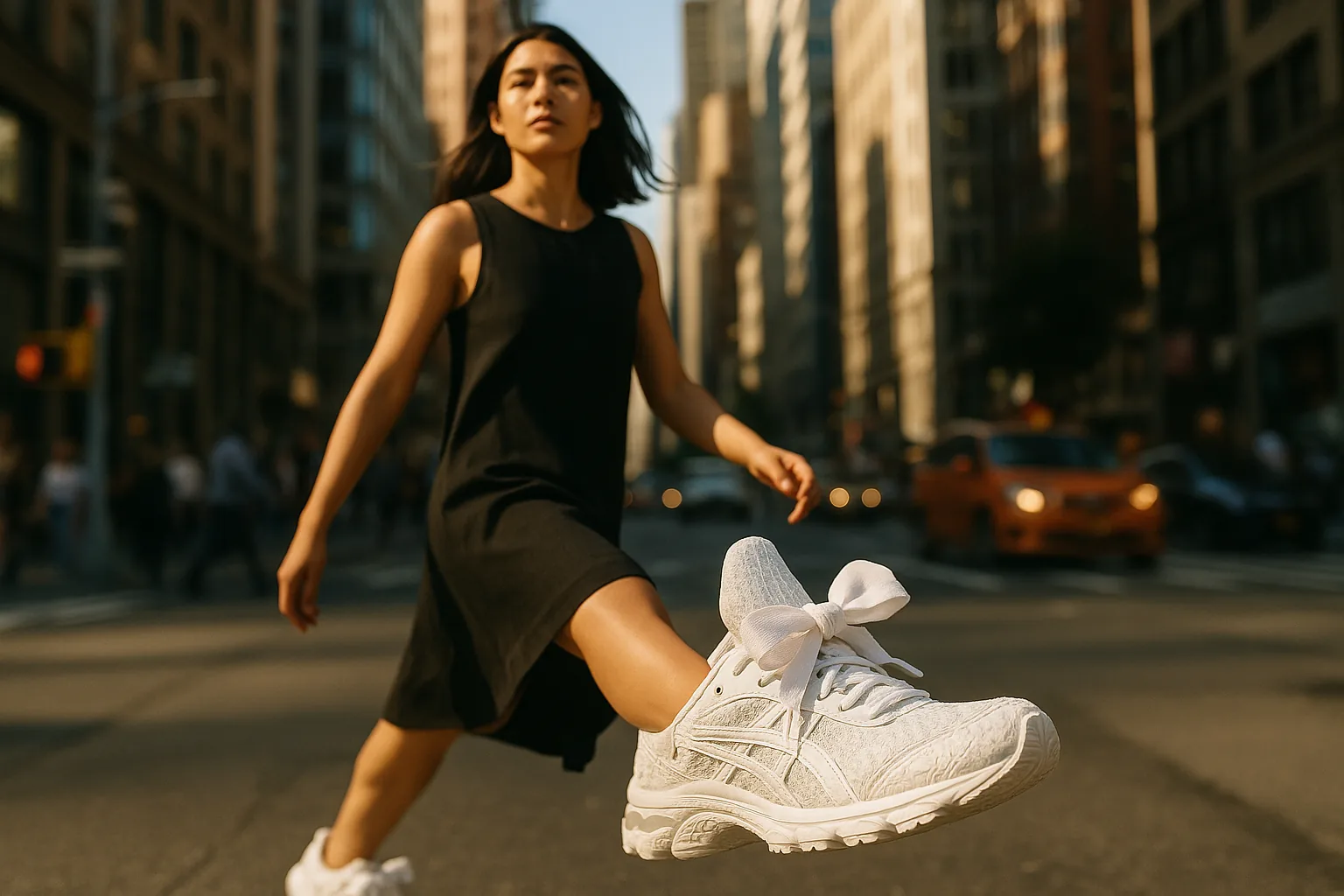
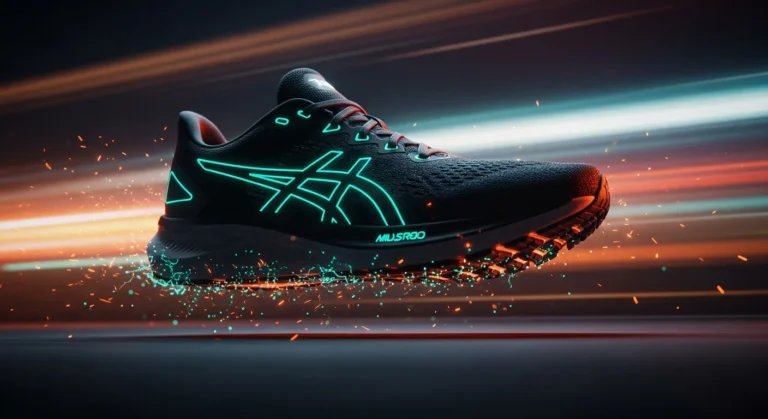
If Rocha’s approach is romantic brutalism, Cecilie Bahnsen’s ongoing work with ASICS is something more unexpected: functional prettiness. The Danish designer, whose runway collections traffic in voluminous organza and architectural quilting, first linked with ASICS in 2023 on a GT-2160 that shocked people by being genuinely comfortable. The 2026 continuation deepens that relationship. The latest GT-2160 iteration and a new Gel-Kayano 14 collaboration both retain ASICS’s GEL cushioning technology intact — the actual performance insert, not a cosmetic facsimile.
Bahnsen’s signature organza bows appear on the GT-2160’s lateral side, but they’re constructed from a treated nylon blend that resists fraying and repels water. The quilted overlays on the Gel-Kayano 14 add a millimeter of padding without meaningfully increasing weight. The colorways — a dusty lavender with silver accents, a chalk white with tonal cream — are deliberately chosen to patina rather than stain. Bahnsen has spoken in interviews about wanting her sneakers to age like her garments: acquiring character, not damage.
That’s where it gets interesting. Bahnsen isn’t pretending the shoes aren’t fashion objects. They absolutely are. The bows are a statement. The quilting is ornamental. But she’s refusing to let ornamentation become an excuse for disposability. The shoe is built on ASICS’s most proven platforms for a reason. You can run errands in these. You can stand for hours at a gallery opening. You can walk twenty blocks without thinking about your feet. That shouldn’t be remarkable, but in the context of women’s fashion sneaker partnerships, it is.
Jacquemus x Nike Plays a Different Game Entirely
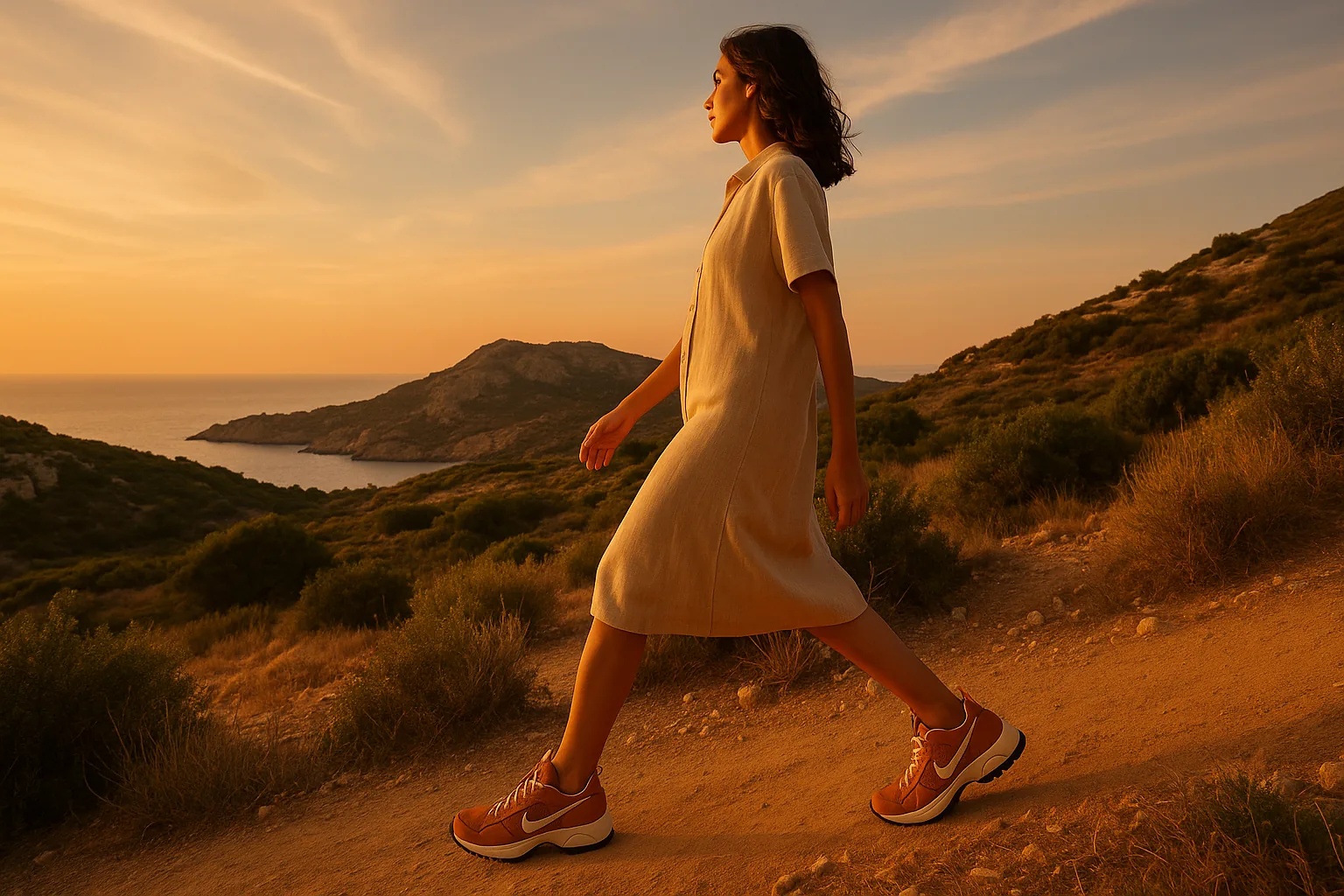
Then there’s Jacquemus x Nike, which occupies a different quadrant of this conversation altogether. Simon Porte Jacquemus, the French designer whose brand has become a shorthand for sun-drenched Mediterranean minimalism, has been collaborating with Nike since 2022. The 2026 capsule leans into the Air Humara silhouette — a trail shoe — dressed in terracotta, off-white, and a deep olive that recalls dried herbs. The aesthetic is impeccable. The campaign imagery, shot in the south of France with models actually hiking in the shoes, is the most convincing lifestyle marketing Nike has produced in years.
But here’s where it gets complicated. The Jacquemus x Nike Air Humara is available in full-size-run unisex — which sounds inclusive until you realize the last is built on a men’s fit profile. Women buying at the low end of the range are getting a shoe that’s proportionally wider and flatter than it needs to be. The insole is generic. The heel counter doesn’t account for a narrower women’s heel. In a year when Simone Rocha and Cecilie Bahnsen are demonstrating what women’s-specific construction looks like, Jacquemus x Nike’s approach feels like a step sideways — beautiful from the outside, indifferent on the inside.
Nobody’s saying the Jacquemus drop is the problem. The Air Humara is a strong silhouette, and the colorways are genuinely wearable. Jacquemus has been one of the most visible forces bringing sneakers into high-fashion conversation, and his ability to make a trail shoe feel at home on a cobblestone street is a real skill. But the comparison to what Rocha and Bahnsen are doing underscores a divide that women sneakerheads notice immediately and that industry coverage often glosses over: the difference between a collab that centers women in the concept and a collab that includes women in the sizing.
The Community Knows the Difference Instantly
Talk to anyone who’s been in women’s sneaker culture for more than a minute and you’ll hear the same refrain: we can tell. We can tell when the shoe was designed for us versus when it was adapted for us. We can tell when the collaboration started with a woman creative’s vision versus when it started with a brand’s quarterly diversity metric.
Mia Torres, a Dallas-based sneaker collector with over 400 pairs and a following built on meticulous wear-testing reviews, put it bluntly in a recent community thread. Mia’s known for her side-by-side breakdowns — she’ll split a collab shoe in half next to the general-release version and photograph the cushioning stack, the insole contour, the stitching density. She did exactly that with the Bahnsen GT-2160 and came away impressed. “I bought it expecting to display it. I’ve worn it thirty-two times. The cushioning is identical to a stock Kayano. The bow hasn’t frayed. That’s not an accident — someone fought for that in a product meeting.” She contrasted it with a previous luxury collab she’d purchased — a shoe she described as “gorgeous for exactly one photo and then it lived in the box forever.” She’d passed on the second colorway of that collab entirely. The Bahnsen, she bought in both.
Keisha Adams, who co-runs a women’s sneaker exchange in Atlanta — an in-person meet-up and trading community of around 200 members that vets sizing accuracy before every group buy — raised a related point about the Jordan Brand drops flooding 2026. Keisha’s exchange had recently organized a group purchase of the Air Jordan 5 “Sunset” reissue, and the sizing conversation alone took up an entire thread. “I love that we’re getting women’s-exclusive Jordans. The Air Jordan 3 ‘Sports Renaissance’ colorway is beautiful. The AJ5 ‘Sunset’ reissue matters to me personally because I missed it in 2006 — I was fifteen and couldn’t get my size. But these are still Michael Jordan’s shoes remade in our sizes. The fashion collabs are something different — they’re shoes that started with a woman’s creative brain. Both are important. They’re not the same thing.”
That distinction — between representation through access and representation through authorship — is one the sneaker industry is still learning to articulate. The Jordan releases are necessary and overdue. Women deserve their own colorways of iconic silhouettes in proper sizing. But the Simone Rocha, Cecilie Bahnsen, and Jacquemus collaborations are testing a different proposition: what happens when a woman’s design language isn’t just applied to a sneaker’s surface but integrated into its construction, its marketing, and its intended audience from the first sketch?
Luxury and Utility Don’t Have to Be Enemies
The old binary — fashion or function — has always been a false choice, but it’s one the sneaker industry leaned into because it was commercially convenient. Performance shoes were sold on technology specs. Fashion shoes were sold on exclusivity and aesthetics. The two lanes rarely overlapped, and when they did, the result was usually a performance shoe with a luxury price tag and no performance benefit, or a fashion shoe that happened to use a sneaker silhouette as a canvas.
What Rocha and Bahnsen are proving in 2026 is that the overlap doesn’t have to be a compromise. A shoe can have pearl detailing and a gum rubber sole that lasts. A shoe can feature organza bows and GEL cushioning that absorbs impact. The tension between beauty and utility isn’t resolved by choosing one; it’s resolved by refusing to sacrifice either. That’s harder. It takes longer in development. It costs more in materials. It requires a brand partner willing to let the collaborating designer into the engineering side of the process, not just the colorway-picking side.
This is also where the economics get real. The Simone Rocha x adidas Samba retails at approximately $180 — a premium over the standard Samba’s $100 tag but substantially less than most luxury-collaboration sneakers, which routinely clear $250. The Bahnsen x ASICS GT-2160 sits around $200. These aren’t budget shoes, but they’re priced within reach of sneakerheads who actually intend to wear them, not just collectors chasing resale margins. That pricing tells you something about who the brands think the customer is: a woman who wants the shoe on her feet, not under glass.
What Women-Led Collabs Signal for the Road Ahead
Zoom out and the pattern becomes legible. In 2026, women sneakerheads are operating in a market that’s offering more than it ever has — more exclusive colorways, more women’s-specific sizing, more collaborations led by women designers. The Air Jordan 4 “Pink Thunder” in women’s sizing, the Air Jordan 11 Low “Mother’s Day” with family-size matching, the Rocha x adidas women’s-exclusive lineup, the Bahnsen x ASICS continuation — the calendar is dense with product that acknowledges women as a primary audience rather than a secondary market.
But density isn’t the same as depth. The question hanging over all of this product is whether the industry is building toward genuine parity in design, pricing, and creative investment, or whether it’s in a volume cycle that could contract the moment quarterly targets shift. Women’s sneaker culture has seen boom-and-bust cycles before. The early 2000s had a wave of women’s-exclusive Air Maxes that quietly disappeared by 2008. The mid-2010s saw a surge in women’s collaborations that thinned out when the chunky-sneaker trend cooled. Sustainability of commitment matters more than any single season’s drop list.
The collaborations that will endure — in cultural impact and in consumer trust — are the ones doing what Rocha and Bahnsen are doing: treating women’s sneakers as a design challenge worth solving fully, not a colorway exercise worth announcing loudly. That means women’s-specific lasts. It means performance technology that doesn’t get stripped out to cut costs. It means pricing that respects the customer’s intelligence. It means campaign imagery that shows the shoe in motion, in weather, in real life, not just on a pedestal with soft lighting and a sans-serif logo. And it means publishing actual size-run data — confirming whether that “full range” goes to a 12W or a 13W, whether wide widths are offered, whether half sizes are cut. Vague promises of inclusivity aren’t enough when your audience has been burned by “women’s sizing” that topped out at a 10.
The Shoes You Wear Tell the Story You’re Living
Here’s what it comes down to. A sneaker collaboration can be a cultural moment or a commercial transaction. The best ones are both. But the ones that resonate with women sneakerheads in 2026 — the ones that get laced up at 5:47 AM and worn thirty-two times and discussed in group chats and styled in ways the designer never imagined — are the ones that respected the wearer enough to build the shoe right.
Simone Rocha understood that pearls don’t mean fragile. Cecilie Bahnsen understood that bows don’t mean decorative-only. The Air Jordan 3 “Sports Renaissance” understood that women don’t need a reason or a holiday to deserve an exclusive colorway. And the sneaker community — the collectors, the stylists, the women who’ve been doing this since before the industry decided to notice — understood all of this long before any brand put it in a press release.
The tension between luxury and utility isn’t going away. It shouldn’t. That tension is where the most interesting design lives. But the terms of the conversation have changed. Women sneakerheads aren’t asking for permission to exist in this space. They’re evaluating the product with expertise, demanding construction that matches the campaign promise, and wearing the shoes that earn their loyalty into the ground. The collabs that get that — really get it, in the stitching and the sole and the last and the lacing — are the ones that’ll still matter when the hype cycle moves on.
Lace up. Walk out. Let the shoes prove themselves on your terms.