Styling Sneakers With Officewear Is Rewriting Rules
SEO Title: How Women Made Sneakers the New Power Shoe
Meta Description: Women are pairing sneakers with structured sets and blazers—not as a compromise, but as the sharpest look in the room. Here’s how the shift happened.
—
In 2024, women’s trainers reportedly outsold high heels in the UK for the first time in recorded retail history, according to market data tracked across major British retailers. It’s a stat that sounds like a tipping point because it is one. But if you’ve been paying attention, this didn’t happen overnight. It happened because millions of women decided, slowly and then all at once, that comfort isn’t the opposite of elegance. It’s the foundation of it. And nowhere is that philosophy more visible right now than in the way women are pairing sneakers with structured sets, sharp-cut blazers, and full-on officewear. Not as a compromise, but as the sharpest look in the room.
Here’s the thesis: the convergence of clean-girl minimalism, corporate-core dressing, and sneaker-as-luxury positioning isn’t a fleeting aesthetic moment. It’s the permanent arrival of a styling language that women built, and it’s rewriting the entire relationship between professional dress codes and sneaker culture.
This isn’t about “dressing down.” It’s about dressing intentionally, choosing an Adidas Samba OG in Cloud White/Core Black under wide-leg trousers with the same precision you’d choose a heel height. A New Balance 530 in Silver Metallic anchoring a monochrome suit. Women aren’t borrowing from streetwear to soften corporate fashion. They’re constructing something entirely new.
The Historical Roots of Sneakers in Women’s Wardrobes
To understand why this moment feels so significant, you have to trace the lineage. Women have been wearing sneakers outside of the gym since at least the 1950s, when Keds and canvas plimsolls became weekend staples for a generation that still called them “tennis shoes.” But the real crack happened in the 1980s, when women commuting into Manhattan started wearing running shoes with their skirt suits for the walk to the office, swapping into pumps at their desks. It was practical. It was also radical, even if nobody framed it that way at the time.
By the early 2000s, sneaker culture had exploded, but it was coded almost entirely around men’s consumption. The releases were men’s releases. The sizing was men’s sizing. Women who wanted to participate had to do the mental math of subtracting 1.5 sizes and hoping for the best. The community was there, but the infrastructure wasn’t.
What changed? A few things, but the most important was that women stopped waiting to be invited. Bloggers, stylists, and collectors started documenting their own sneaker rotations on Tumblr, then Instagram, then TikTok. By the mid-2010s, brands couldn’t ignore the demand. Nike launched women’s-exclusive colorways of the Air Force 1. Adidas tapped Pharrell for NMD releases that came in extended sizing. Puma signed Rihanna, and the Fenty Creeper became one of the most commercially successful women’s sneaker collaborations in history when it launched in late 2015. The door didn’t open. Women kicked it in.
How Corporate-Core Made Sneakers Boardroom-Ready
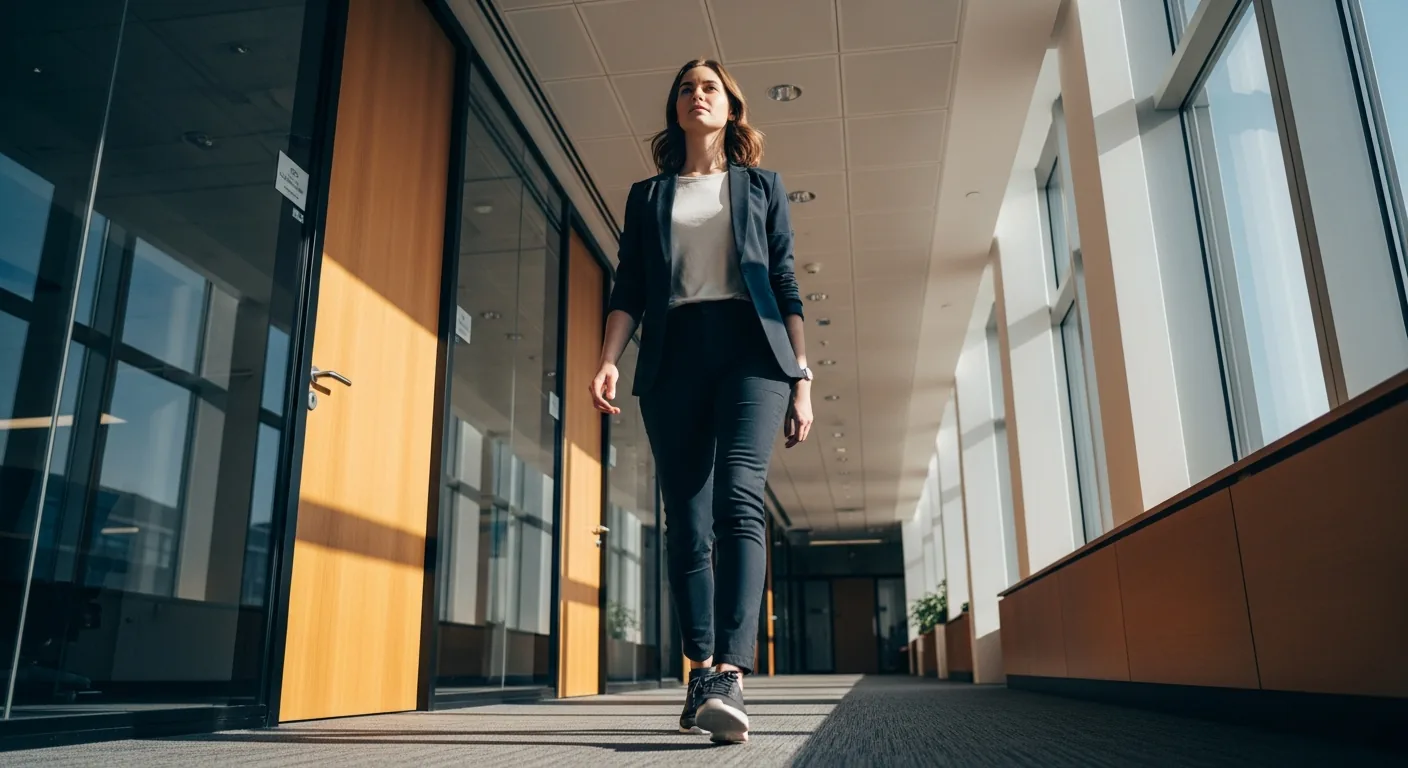
Fast forward to now. The pandemic accelerated a shift that was already underway: the death of rigid officewear. When millions of women returned to in-person work between 2021 and 2023, they didn’t return to the wardrobes they’d left behind. They returned with a new vocabulary. Corporate-core emerged not as a rejection of professionalism, but as its evolution: structured silhouettes, neutral palettes, luxe fabrics, but on the wearer’s terms.
And the footwear of corporate-core? Sneakers. Specifically, low-profile, tonal sneakers that read as deliberate rather than casual. The Nike Cortez in Light Bone. The Veja Campo in Extra White/Natural Suede. The Common Projects Original Achilles Low in Warm Grey, a splurge at $450, sure, but a shoe that looks like it was designed to accompany a double-breasted blazer, because honestly, it was. These aren’t sneakers that apologize for being sneakers. They’re sneakers that understand their assignment.
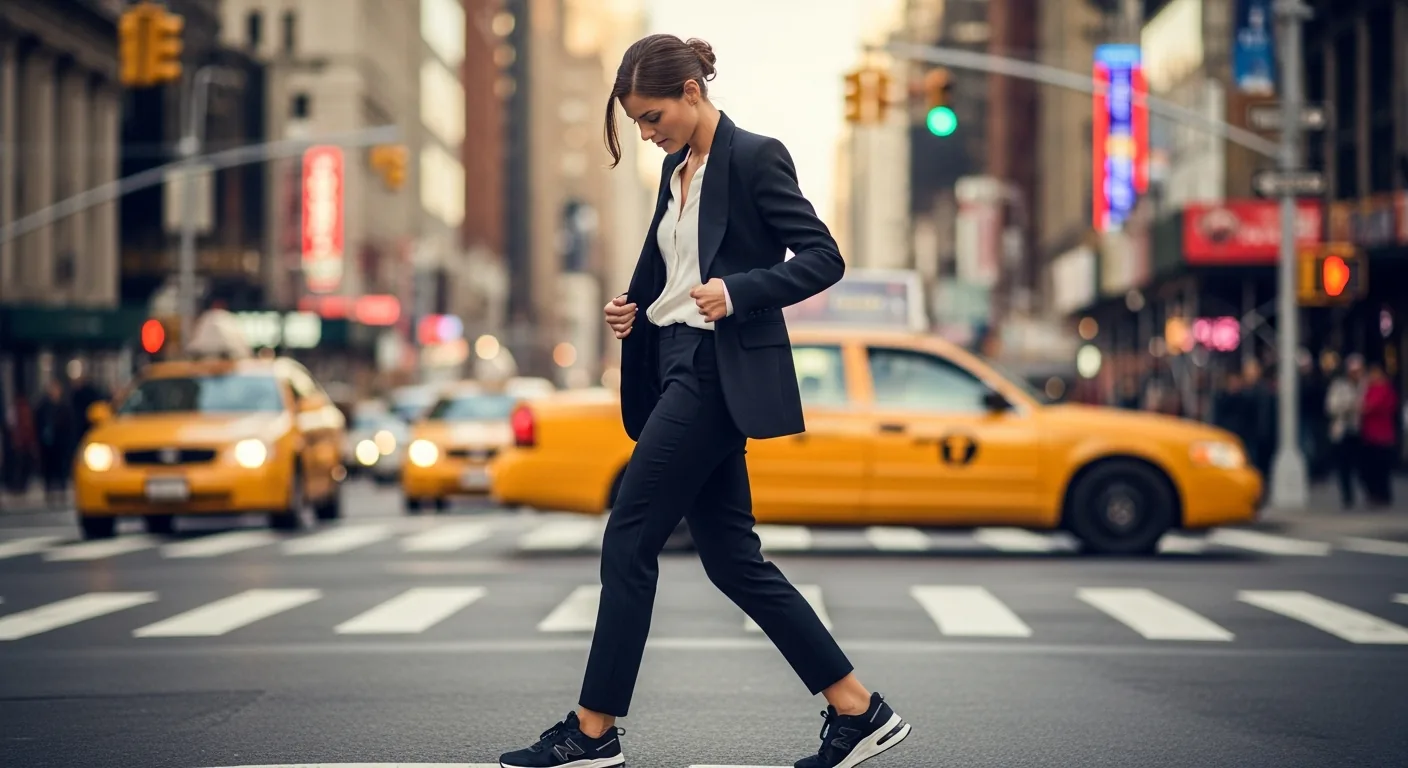
The styling formula is deceptively simple: a precision-fit trouser with a clean break at the ankle, a structured top half, and a sneaker with a slim sole profile. But within that formula, there’s enormous range. You can go full monochrome, a charcoal suit with a charcoal New Balance 990v6, for a look that whispers authority. Or you can use the sneaker as the single point of contrast: a cream linen set with a pop of the Nike Dunk Low in Team Red. The sneaker becomes the punctuation mark of the outfit, and the tailoring becomes the sentence.
Clean-Girl Aesthetics Meet Sneaker Precision
If corporate-core is about structure, clean-girl is about restraint, and the two are merging in ways that feel inevitable. The clean-girl aesthetic, which gained traction on TikTok around 2022, is built on the idea of looking polished without looking overdone. Slicked-back hair, minimal jewelry, neutral tones, flawless skin. It’s an aesthetic that prizes intentionality over excess, and sneakers fit into that philosophy seamlessly when they’re chosen with the same care as a gold hoop earring or a sharp-cut coat.
The sneakers that dominate this space are the ones with clean lines and restrained colorways. The Adidas Samba, which had its stratospheric resurgence through 2023 and into 2024, is the patron saint of clean-girl sneaker styling. Its slim profile, gum sole, and leather upper make it read as almost European, more café terrace than basketball court. Paired with pleated trousers and a cashmere knit, it’s the kind of look that gets screenshotted thousands of times on Pinterest and recreated in cities from London to Lagos to Los Angeles.
But the clean-girl sneaker universe extends beyond the Samba. The Onitsuka Tiger Mexico 66 in Birch/Indian Ink has become a quiet favorite for women who want something distinctive without being loud. The Maison Margiela Replica, with its paint-splatter details on an otherwise minimalist frame, bridges the gap between art-house fashion and everyday wearability. And the Salomon XT-6 in Vanilla Ice/Almond Milk has crossed over from trail running into clean-lined territory, its technical silhouette adding an unexpected edge under wide-leg trousers.
What unites all of these choices is intentionality. Clean-girl sneaker styling isn’t about grabbing whatever’s by the door. It’s about curating a footwear rotation that works as hard as the rest of the wardrobe.
Key Women Driving the Sneaker-and-Suiting Wave
No movement exists without its architects, and the women shaping this intersection of sneakers and officewear are doing it from every angle: design, styling, content creation, and sheer influence.
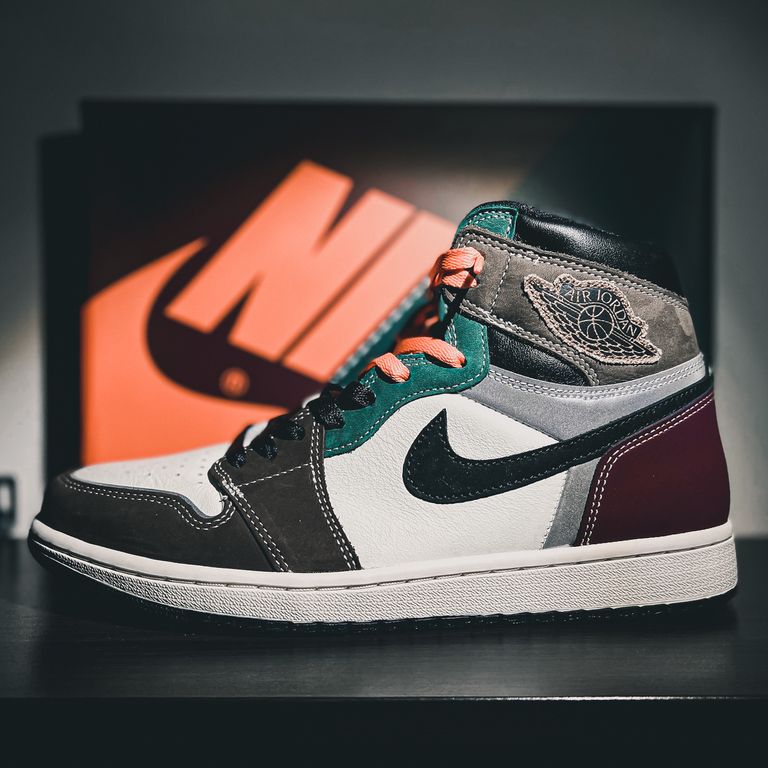
Aleali May, who became the first woman to design a Jordan Brand collaboration with the Air Jordan 1 “Shadow” (released in March 2018), has consistently styled her collaborations with structured and feminine silhouettes, pushing back against the idea that Jordans belong exclusively with streetwear. Her approach opened a door that hasn’t closed: the idea that a high-top can coexist with a trouser crease.
On the design side, Charlotte Lee, a sneaker collector whose personal archive exceeds 1,500 pairs, has become one of the most visible voices advocating for women’s-specific design. Not shrunken men’s models, but shoes built around women’s foot anatomy, aesthetic preferences, and styling needs. Her influence has been cited by multiple brands when explaining their shift toward women’s-exclusive launches.
In the styling world, Hailey Bieber’s near-daily pairing of New Balance 550s and Sambas with oversized blazers and precision-fit trousers has made her one of the most referenced figures in the clean-girl-meets-corporate-core conversation. But the real engine of this trend isn’t any single celebrity. It’s the thousands of women on TikTok and Instagram who document their work outfits with sneakers, tagging their exact shoe models and trouser brands, creating a living, breathing style guide that updates in real time.
Melody Ehsani, the designer and creative director who collaborated with Jordan Brand on the Air Jordan 1 Mid “Fearless” in late 2019, featuring a removable ankle strap and a hidden message inside the shoe, embodies the ethos that women’s sneaker design should be additive, not reductive. Her work doesn’t simplify or soften; it adds dimension.
The Sneaker-as-Luxury Shift in Real Time
There’s a reason luxury houses have been circling the sneaker category for the past decade, and it’s not just about revenue. It’s about relevance. When Bottega Veneta creative director Matthieu Blazy sent models down the Fall/Winter 2022 runway in shoes designed to look like sneakers but crafted from leather, he was acknowledging what women on the street had already proved: sneakers aren’t casual anymore. They’re a luxury object.
This shift is visible across price points. At the high end, the Loewe Flow Runner (approximately $690) has become a staple for women who pair it with structured coats and architectural bags, its suede-and-nylon construction reading as elevated without being ostentatious. The Brunello Cucinelli knit sneaker, which retails north of $800, is essentially designed to be worn with the brand’s own cashmere suiting. These aren’t performance shoes. They’re luxury goods that happen to be sneakers.
But the sneaker-as-luxury philosophy doesn’t require a luxury price tag. The Autry Medalist, which sits around $175, has carved out a space as the thinking woman’s retro sneaker, its vintage basketball silhouette and construction hitting a sweet spot between heritage and accessibility. Women are wearing it with everything from midi skirts to wool trousers, and its presence in boutiques that traditionally stocked only heels and flats tells you everything you need to know about where the market is headed.
The Brooklyn Museum’s recent exhibition on sneakers in popular culture reinforced this shift on an institutional level, treating sneakers not as sportswear artifacts but as artistic objects worthy of the same curatorial attention as fine art. When a museum hangs a pair of kicks on the wall, it’s not a novelty. It’s a canonization.
Practical Styling Notes Woven Into the Look
So how do you actually execute this? The details matter. The trouser break is everything: too much fabric pooling over the sneaker reads sloppy, while a clean crop at the ankle (showing a half-inch to an inch of skin or sock) reads sharp. This is why wide-leg trousers with a slight kick have become the go-to silhouette for this pairing. They create a fluid line from hip to shoe without bunching.
Sock choice is its own micro-decision. No-show socks keep the clean-girl energy intact with low-top silhouettes like the Samba or the Veja Campo. But a ribbed crew sock in a coordinating tone, think oatmeal sock with cream sneaker, can add a layer of texture that elevates the look. Avoid athletic socks with visible logos unless that contrast is the entire point of the outfit.
The top half of the outfit should do enough work that the sneaker doesn’t have to carry the formality alone. A structured blazer, a sharp trench, a tucked button-down with clean lines: these all signal intention. When the top half says “I meant to be here,” the sneaker can just be a sneaker.
Color coordination between bag and sneaker is a move that’s gaining traction: a white Adidas Stan Smith paired with a white leather tote creates a visual through-line that ties the outfit together without being matchy-matchy. Similarly, letting the sneaker be the only pop of color in an otherwise neutral outfit, like a Nike Dunk Low “University Blue” under a beige suit, gives the shoe protagonist energy.
And don’t overlook proportion. A chunkier sneaker like the New Balance 2002R or the ASICS Gel-Kayano 14 pairs best with wider-leg trousers that can balance the sole’s visual weight. Slimmer silhouettes like the Samba or Common Projects Achilles call for trousers with a narrower, more streamlined cut. Matching the shoe’s volume to the trouser’s width is the difference between looking styled and looking like you grabbed what was closest to the door.
One more thing worth noting: the rotation matters. The women who do this best aren’t wearing the same sneaker every day. They’re cycling through three or four pairs that each serve a different mood within the same wardrobe framework. A white leather sneaker for the sharpest days. A suede pair in a warm neutral for softer tones. Something with a little edge, maybe a trail silhouette or a collab, for the days when the outfit needs a conversation starter. Your kicks tell a different story depending on the day, and that’s the whole point.
Where This Convergence Goes From Here
The trajectory is clear, and it doesn’t bend backward. As more brands invest in women’s-exclusive sneaker lines with colorways, materials, and sizing designed from the ground up rather than adapted from men’s models, the integration of sneakers into professional and polished wardrobes will only deepen. We’re already seeing brands like Axel Arigato and Filling Pieces design sneakers with explicitly outfit-compatible palettes: muted earth tones, soft metallics, tonal whites, and textured leathers that read as fashion rather than function.
The signal is undeniable. Women aren’t just participating in sneaker culture; they’re redefining what it looks like when it shows up in a conference room, at a dinner reservation, in a boardroom, at a gallery opening. The sneaker-and-tailoring combination isn’t a workaround for women who can’t find the right heel. It’s a declaration that the right shoe was always the one that let you move through the world on your own terms.
The market is following, not leading. When UK sales data shows women’s trainers outselling heels, that’s not a forecast; it’s a receipt. When luxury houses build entire sneaker programs around women’s styling, that’s not experimentation; it’s acknowledgment. When a museum puts sneakers behind glass, that’s the world catching up to what women in this community have known for years.
The blazer is pressed. The trousers are sharp-cut. The sneakers are immaculate. And the woman wearing all of it? She’s not making a statement. She’s already made it.