347 Members, One Spreadsheet, Zero Hype Machine
The most influential voice in women’s sneakers right now doesn’t have a podcast, a YouTube channel, or a brand deal. She has a group chat with 347 members, a Google Sheet with resale comps updated every Sunday, and the kind of authority that makes a Jordan 1 in Sail and Fossil Stone either a must-cop or a pass, depending on what she posts before 9 a.m.
Her name is Tameka Reyes. She’s a 31-year-old pharmacy tech out of Houston who started a private Signal group called Sole Worth in late 2024 after getting tired of watching women overpay for pairs that men’s-dominated resale platforms were artificially inflating. What began as a circle of twelve friends sharing screenshots of StockX bids and GOAT listings has become something more consequential: a live, women-run market intelligence operation that now spans four channels across Signal, iMessage, and Discord, with a combined membership pushing past 1,400.
“We’re not waiting for some dude on Twitter to tell us a shoe is worth $280 resale,” Tameka told me over a voice note in March. “We know what we’d actually pay for it. And when enough of us agree, that becomes the price.”
She’s not exaggerating. And she’s far from alone.
Women’s Sneaker Networks Run the Market Now
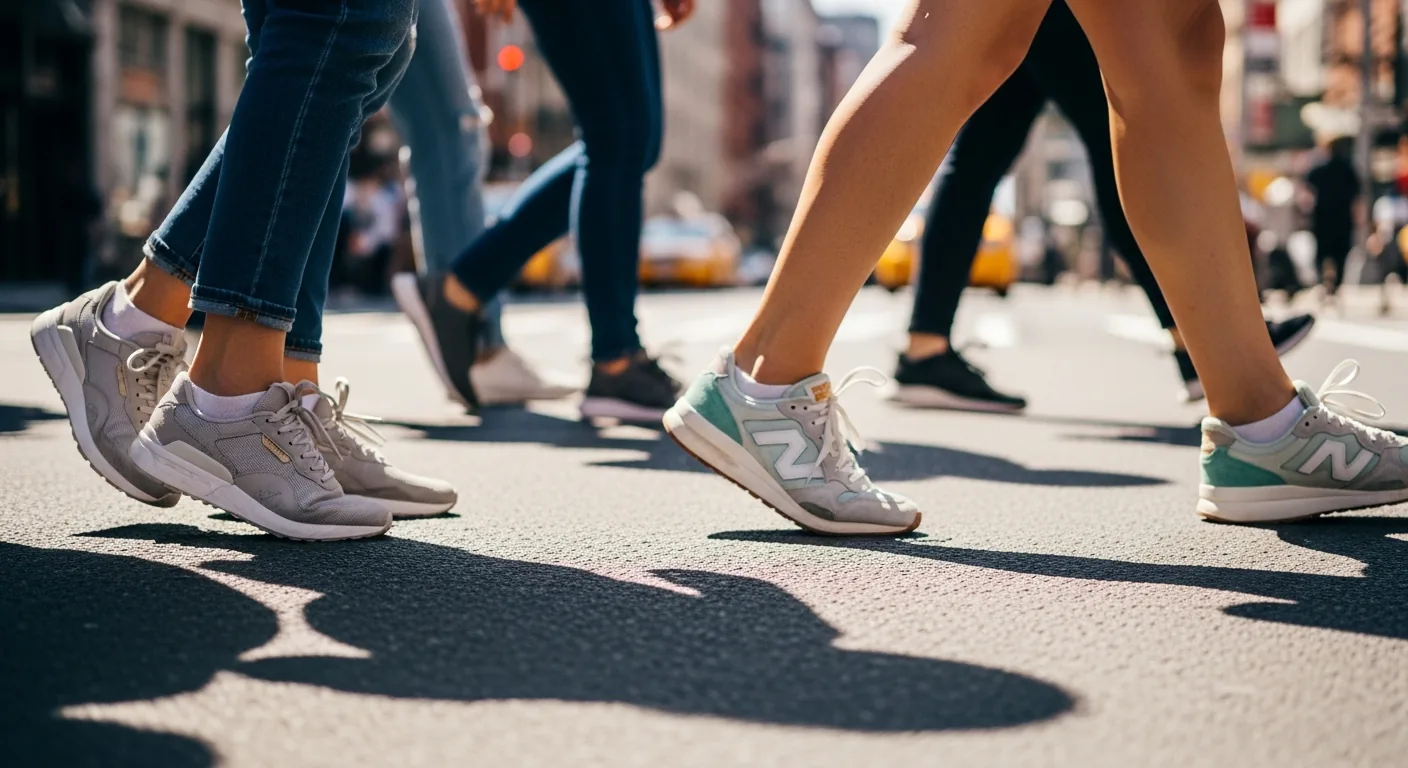
Across the country, and increasingly internationally, women’s sneaker communities have built parallel pricing ecosystems that operate outside the traditional resale infrastructure. These aren’t casual chats where someone asks “should I cop?” and gets a fire emoji in response. They’re structured, opinionated, deeply informed networks where women share retail-vs-resale breakdowns, track price trajectories on specific colorways, flag restocks in real time, negotiate trades with detailed photo verification, and collectively decide which releases deserve their money.
The shift didn’t happen overnight. It’s the result of years of frustration with a resale landscape that consistently undervalues women’s-exclusive releases while gatekeeping access to the extended sizing runs that brands have only recently started to take seriously. When Nike finally expanded women’s-exclusive sizing on the Dunk Low to include a full EU 35.5–44 run in early 2025, women in these networks first circulated the size chart updates, not sneaker news accounts. When New Balance’s Teddy Santis-era 990v6 in a women’s-exclusive Sea Salt colorway started climbing on secondary markets last fall, a Discord server called Laced In tracked the price from $210 resale to $385 in six weeks and told its members to hold, not sell, because the trajectory wasn’t done.
“We’d been watching that pair since it leaked on sample accounts,” says Dani Moreau, a Laced In moderator based in Atlanta who helps run the server’s pricing channels. “The conventional wisdom was that it was just another neutral New Balance. But we knew the materials story was different, and the fit pics our members were posting were doing all the convincing. We told people to sit tight.”
That call turned out to be right. The Sea Salt 990v6 hit $440 on GOAT by January 2026.
This is what sneaker intelligence looks like when women build it for themselves. Not a reaction to being excluded from the conversation, but a refusal to need the conversation in the first place.
Price-Talk Culture Is the New Sneaker Literacy
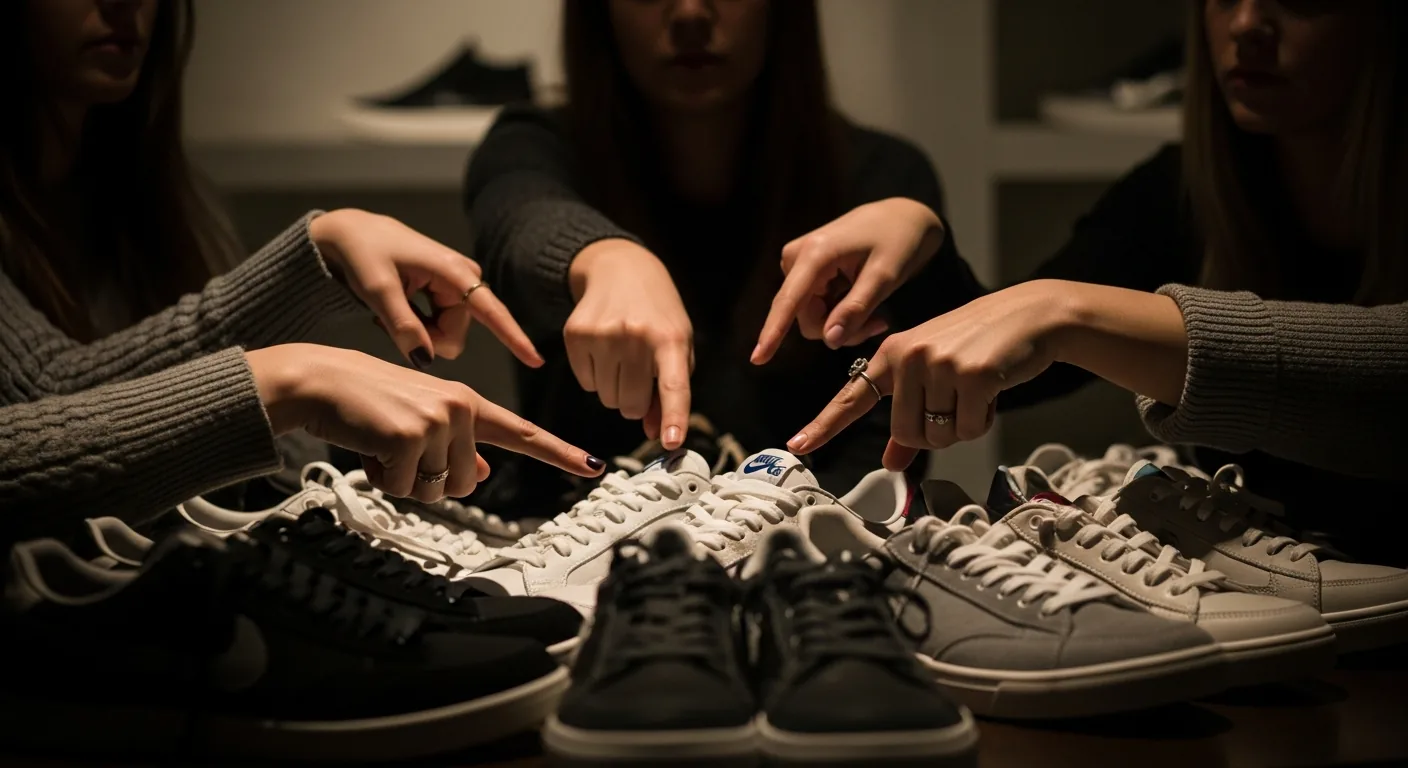
There’s a phrase that keeps surfacing in these communities: “price talk.” It doesn’t just mean discussing how much something costs. It means understanding the full economic narrative of a sneaker: the production run size, the regional release strategy, the brand’s marketing spend, the influencer seeding, the return rate, the colorway’s crossover appeal with non-sneaker fashion. Price talk is sneaker literacy applied to the wallet, and women’s communities have turned it into an art form.
In Sole Worth, Tameka runs a weekly thread she calls “Worth It Wednesday,” where members submit a pair they’re considering and the group dissects it from every angle. A recent thread on the Air Jordan 5 in Gore-Tex Fossil Rose, a women’s exclusive that dropped in February 2026 at $210 retail, ran to over 200 messages. Members debated whether the Gore-Tex construction justified the premium over the standard AJ5 and whether Fossil Rose landed too close to the played-out pink-neutral palette that Nike leaned on heavily in 2023 and 2024. They questioned whether the silhouette’s chunky midfoot would age well against the slimmer sneaker trend building since Miu Miu’s New Balance 530 collaboration broke open in late 2024. And they talked about how they’d actually wear it: with what coats, in what weather, to what effect.
“The Worth It conversation is never just about the price tag,” Tameka says. “It’s about whether this shoe earns a spot in the rotation. Can you style it three ways? Does it hold up in rain? Will you still reach for it in six months? That’s what worth means to us.”
The verdict on the AJ5 Gore-Tex Fossil Rose: cop at retail, skip above $240 resale. The reasoning was granular. Gore-Tex utility justified the retail price for anyone who’d actually wear them in weather, but the colorway lacked the distinctiveness to generate long-term aftermarket demand. Members who bought at retail reported back. Members who passed felt validated. Nobody felt pressured.
This is what happens when a community prizes knowledge over hype.
Which Women’s Pairs Are Quietly Becoming Status Pieces
Let’s talk about what’s actually gaining heat in 2026, because the status map has shifted dramatically, and women’s sneaker communities are the ones drawing the new borders.
The obvious frontrunner is the ASICS GT-2160 in women’s-exclusive Cream/Pistachio, which released in November 2025 through a staggered drop that hit Japan first, then Europe, then the U.S. The silhouette was already trending thanks to Cecilie Bahnsen’s continued partnership with ASICS on the GT-2160, but the women’s-exclusive Cream/Pistachio colorway, unattached to any collaboration, became the sleeper. No influencer seeding. No placement on anyone’s “most anticipated” list. But women’s sneaker communities identified it early, circulated fit pics showing how the pistachio accents played against earth tones and cream denim, and within weeks it was the most-requested pair in trade channels. Resale climbed from $140 to $310 by February 2026, and it’s still moving.
Then there’s the Saucony Shadow 6000 in Burgundy/Gum, a women’s-exclusive colorway that dropped with almost no marketing push in January 2026. The Shadow 6000 has always been a cult silhouette (Saucony heads know this), but the Burgundy/Gum hit different because it arrived at a moment when the cultural mood was shifting away from the greige-and-cream palette that dominated women’s sneaker releases for two years straight. Trade requests flooded in. One Laced In member described it as “the shoe that finally looks like it was designed for someone with taste, not someone with a mood board.”
The third piece gaining quiet status is the Salomon XT-6 in women’s-exclusive Black/Plum, which has become a kind of uniform in women’s sneaker circles that lean toward gorpcore-meets-nightlife styling. It’s not rare (Salomon’s distribution is wide), but the specific colorway has become a signifier. Wearing it says something. It says you were paying attention when the XT-6 conversation moved past the Ranra and MM6 collaborations and into the general release colorways that actually had staying power. Women in these communities have been styling the Black/Plum with sheer layers, technical outerwear, and low-rise tailored trousers, creating a look that’s been circulating heavily on private Instagram accounts and TikTok close-friends stories.
“That’s the thing people outside these spaces don’t get,” says Jess Nakamura, a sneaker collector in Portland who participates in both Sole Worth and Laced In. “It’s not just about the shoe. It’s about how you make it yours. I’ve seen the same Salomon XT-6 styled twenty different ways in one thread, and every single one felt like a personal statement. That’s what keeps me in these spaces.”
What unites these three pairs is that none of them were crowned by the traditional sneaker media complex. No “Top 10 Upcoming Releases” lists. No celebrity unboxings. The signal came from women talking to other women about what looked good, felt good, and made sense for their lives.
Trading Has Replaced Reselling for a Lot of Women
Here’s something the platforms don’t want to talk about: a significant chunk of the women’s sneaker economy is now happening off-platform entirely, through direct trades negotiated in private communities.
The reasons are practical and cultural. Resale platforms charge seller fees; StockX’s current rate sits at 9.5% for most sellers, GOAT’s at 9.5% plus a commission on shipping. For women trading pairs in the $150–$350 range, those fees eat margin fast. But beyond economics, there’s a philosophical dimension. Many women in these communities view trading as a more equitable exchange. You get something you want, she gets something she wants, nobody profits off the transaction except the two people holding the shoes.
Sole Worth has a dedicated trade channel with its own rules: both parties must submit timestamped photos with their username written on paper next to the shoe, condition must be disclosed using a standardized scale the group developed (DS, VNDS, Lightly Worn, Worn, Beaters), and both parties ship within 48 hours of agreement using tracked shipping. Disputes go to a three-person moderation panel. In over 600 trades since the channel launched, Tameka says there have been eleven disputes and zero instances of fraud.
“We built trust because we had to,” she says. “Nobody was going to build it for us.”
The trade economy has also produced its own status dynamics. Certain pairs become trade currency, shoes that everyone wants and that function almost like a liquid asset within the community. Right now, the ASICS GT-2160 Cream/Pistachio is one of the most liquid trade pairs across multiple communities. Having it in your collection means you can move it for almost anything. That’s a different kind of status than simply owning a rare shoe. It’s financial fluency expressed through product.
Styling as Market Signal in Women’s Sneaker Culture
One of the most fascinating dynamics in these communities is the way styling directly influences perceived market standing. In men’s-dominated sneaker culture, scarcity, celebrity association, and brand narrative have historically driven desirability. Women’s communities operate on different logic. A pair that looks incredible in three distinct outfit contexts carries more collective weight than a pair limited to 5,000 units but locked into one look.
This is why the Saucony Shadow 6000 Burgundy/Gum gained traction so fast. Members in multiple communities posted styling breakdowns showing the shoe paired with wide-leg olive trousers and a cropped shearling, with a vintage Levi’s 501 and a ribbed tank, and with a pleated midi skirt and a technical shell jacket. The versatility made the argument for itself. Within two weeks of those posts circulating, trade requests for the pair tripled.
“I bought the Burgundy/Gum because of a fit pic someone posted in Sole Worth at like midnight on a Tuesday,” says Keisha Brooks, a 27-year-old graphic designer in Chicago. “She had them with this long camel coat and a burgundy bag, and I just thought, that shoe has range. That’s what sold me. Not a hype video. Not a celebrity co-sign. Just a real woman showing me how it fits into her life.”
It’s also why certain highly anticipated releases have underperformed relative to hype in women’s communities this year. The Nike Air Max 1 ’87 in a women’s-exclusive Lilac Bloom colorway dropped in March 2026 with significant marketing spend: billboards in LA, influencer seeding, a SNKRS push notification. But consensus across these networks was swift and unforgiving. The colorway was too close to a dozen other pastel releases, the materials felt cheaper than the 2024 AM1 ’87 runs, and the styling ceiling was low. Resale flatlined at $15 above retail. Nobody was trading for it.
The market listened. Or more accurately, the market that matters, the one these women built, had already spoken.
The Backstory Brands Don’t Want You to Map
It’s worth remembering that women having to build their own sneaker infrastructure isn’t a feel-good story. It’s the logical outcome of decades of exclusion.
The first modern sneaker designed specifically for women didn’t arrive until 1982, born not from some visionary design studio but from labor activism, women demanding that the shoes they wore for work and sport actually fit their feet. For most of sneaker history after that, “women’s” meant a men’s shoe in smaller sizes, often in pink or pastel colorways that nobody asked for. The sizing gaps were real and persistent. As recently as 2020, major releases regularly excluded women’s sizing above a US 12 or below a US 5, effectively telling a huge portion of the market that they didn’t exist.
That history is why communities like Sole Worth, Laced In, and dozens of others operate with a particular intensity. They’re not hobbyist forums. They’re corrections. They exist because the infrastructure that was supposed to serve these consumers, the brands, the retailers, the resale platforms, the media, consistently didn’t.
And the women running them know the history. In Tameka’s group, a pinned message in the main channel reads: “We’ve been here since ’82. Act like it.”
Social Proof Is Reshaping What Brands Produce
The ripple effects of women’s group chat culture are starting to hit brand strategy in measurable ways. Several sources inside Nike, New Balance, and ASICS, none of whom would speak on the record, confirmed that their consumer insights teams now actively monitor women’s sneaker communities on Discord and Signal (the ones they can access, at least) to gauge sentiment before greenlighting colorways and sizing runs.
One product manager at a major brand told me, somewhat ruefully, “We used to test colorways with focus groups. Now we watch what these groups are saying about our competitors’ drops and adjust. They’re faster than our own market research.”
This is a significant power shift. When a community of 1,400 women collectively decides that a colorway deserves their money, or crucially that it doesn’t, and that consensus is backed by detailed price analysis, styling evidence, and real-time trade data, it functions as a market signal that brands can’t ignore. The women in these communities aren’t just consumers. They’re analysts, tastemakers, and market movers operating in a space they built from scratch because no one else would.
The Salomon XT-6 Black/Plum situation is a case in point. Salomon’s women’s business has grown significantly over the past two years, and sources familiar with the brand’s planning say that the Black/Plum’s unexpected breakout in women’s communities directly influenced the decision to expand the women’s-exclusive XT-6 color palette for Fall 2026, with at least three new tonal colorways designed to hit the same versatile, style-forward lane that made Black/Plum resonate.
“If brands are smart, they’ll stop treating us like a data mine and start treating us like partners,” says Moreau of Laced In. “We’re telling them exactly what we want. The question is whether they’re listening or just surveilling.”
Where This Goes Next and Who Leads It
The trajectory is clear. Women’s sneaker communities aren’t waiting for brands to catch up. They’re building pricing tools, trade networks, styling libraries, and collective bargaining power in real time, using the simplest technology available to outmaneuver an industry that spent decades underestimating their influence.
New communities are forming constantly. A London-based group called Sole Sisters UK launched in January 2026 with a focus on European releases and UK sizing, and already has over 800 members running the same playbook Tameka pioneered: shared price tracking, structured trades, weekly discussions on what’s actually worth copping. A São Paulo community called Tênis Delas is doing similar work across Brazilian sneaker culture, with particular focus on the Mizuno and ASICS silhouettes that dominate the South American market. In Seoul, a private KakaoTalk group has become the go-to for Korean women tracking New Balance and Salomon drops that hit Korea-exclusive sizing.
This is global. It’s organized. And it’s accelerating.
The resale platforms are starting to notice, too. StockX quietly added a “Women’s Trending” data filter to its app in late 2025, and GOAT has been testing a women’s-specific trade feature in beta since February 2026. Whether these platform moves are genuine or co-optive remains to be seen, and the communities themselves are watching with healthy skepticism. As one Laced In moderator put it: “They can add all the filters they want. We’ve already got the data.”
Back in Houston, Tameka Reyes is updating her Sunday spreadsheet. This week’s columns include the ASICS GT-2160 Cream/Pistachio (holding strong at $310, projected to climb), the Saucony Shadow 6000 Burgundy/Gum (rising, limited remaining supply in DS condition), and a new entry: the Adidas SL 72 OG in a women’s-exclusive Dark Brown/Chalk White that dropped without fanfare last Tuesday and is already generating trade interest in three separate communities.
She types a note at the top of the sheet, the same note she’s typed every Sunday for over a year now: *”Know what you’re buying. Know what it’s worth. Know who’s telling you otherwise.”*
Somewhere in the chat, 347 women are already reading.