The Parking Lot, the Run Club, the Waitlist
The door to sneaker culture doesn’t look the way it used to.
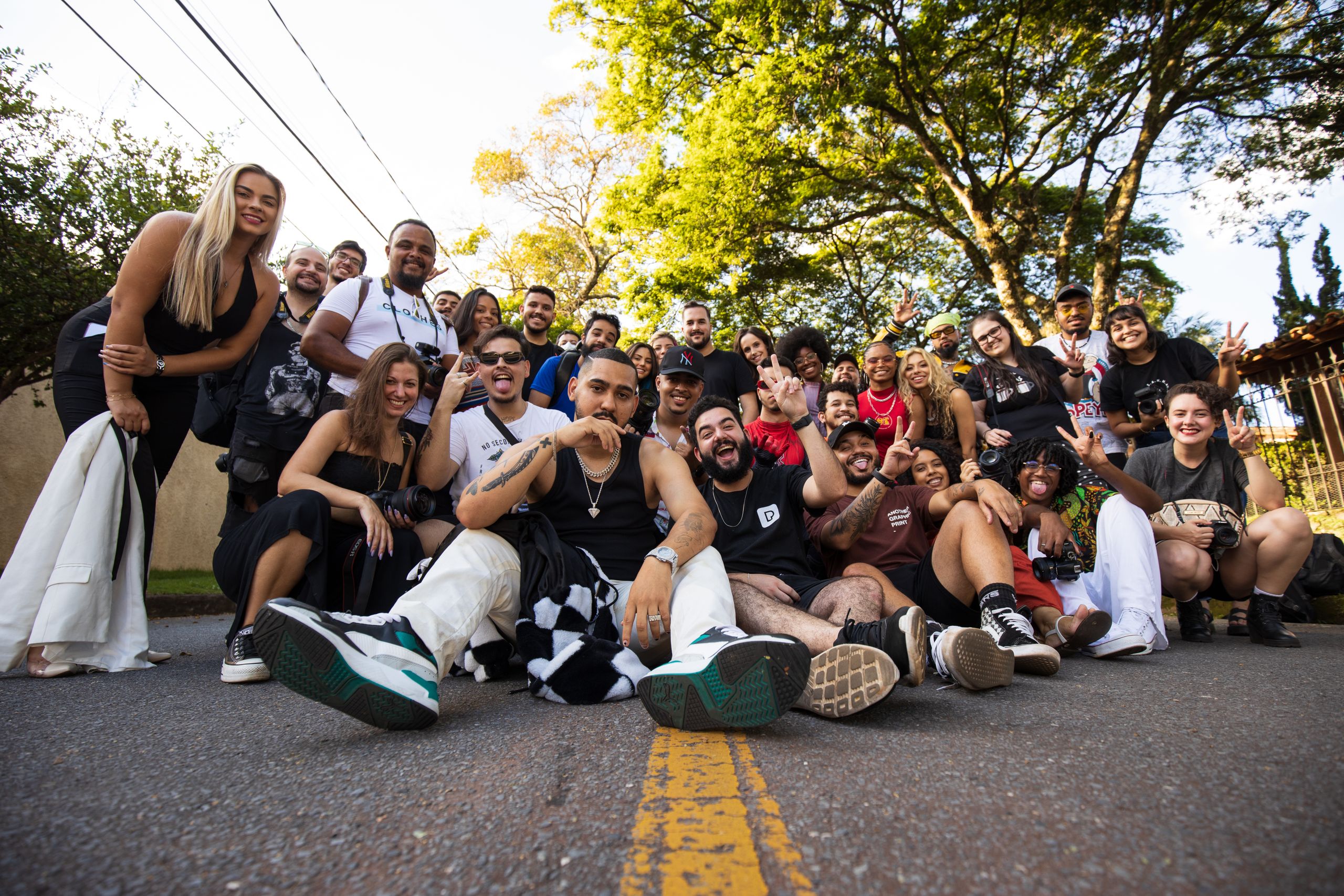
On a Saturday morning in March 2024, Jasmine Torres stood behind a folding table in a church parking lot in East Los Angeles, her personal collection of thirty-two pairs fanned out on a black tablecloth like a museum exhibit. She’d organized her first swap meet three months earlier with eleven people. This time, sixty showed up, almost all women, most under thirty, a handful bringing their daughters.
One attendee, a twenty-three-year-old nursing student named Dani, left with a pair of Nike Dunk Low “Rose Whisper” (a soft blush pink women’s-exclusive colorway) she’d never seen in person before. She told Jasmine it was the first time she’d ever held a sneaker she actually wanted in a size that actually fit. She’d been buying men’s 6s for years, settling.
That afternoon, she joined a group chat. By the next meetup, she brought a friend.
This is the pattern now. Across cities like Los Angeles, Atlanta, Chicago, Houston, Philadelphia, London, and Toronto, the physical, in-person sneaker meetup is experiencing a resurgence among women, and it’s rewriting how newcomers find their way in. Not through a hypebeast YouTube rabbit hole. Not through a lucky SNKRS draw. Through a table, a conversation, a pair passed hand to hand.
Swap Meets Became the New Front Door
For decades, the assumed entry point into sneaker culture was the retail floor or, later, the digital drop. You camped outside Foot Locker. You refreshed a browser. You followed the hype cycle. But that pipeline was built around scarcity, competition, and a consumer experience that rarely centered women’s sizing, preferences, or social habits. The swap meet flips that script entirely.
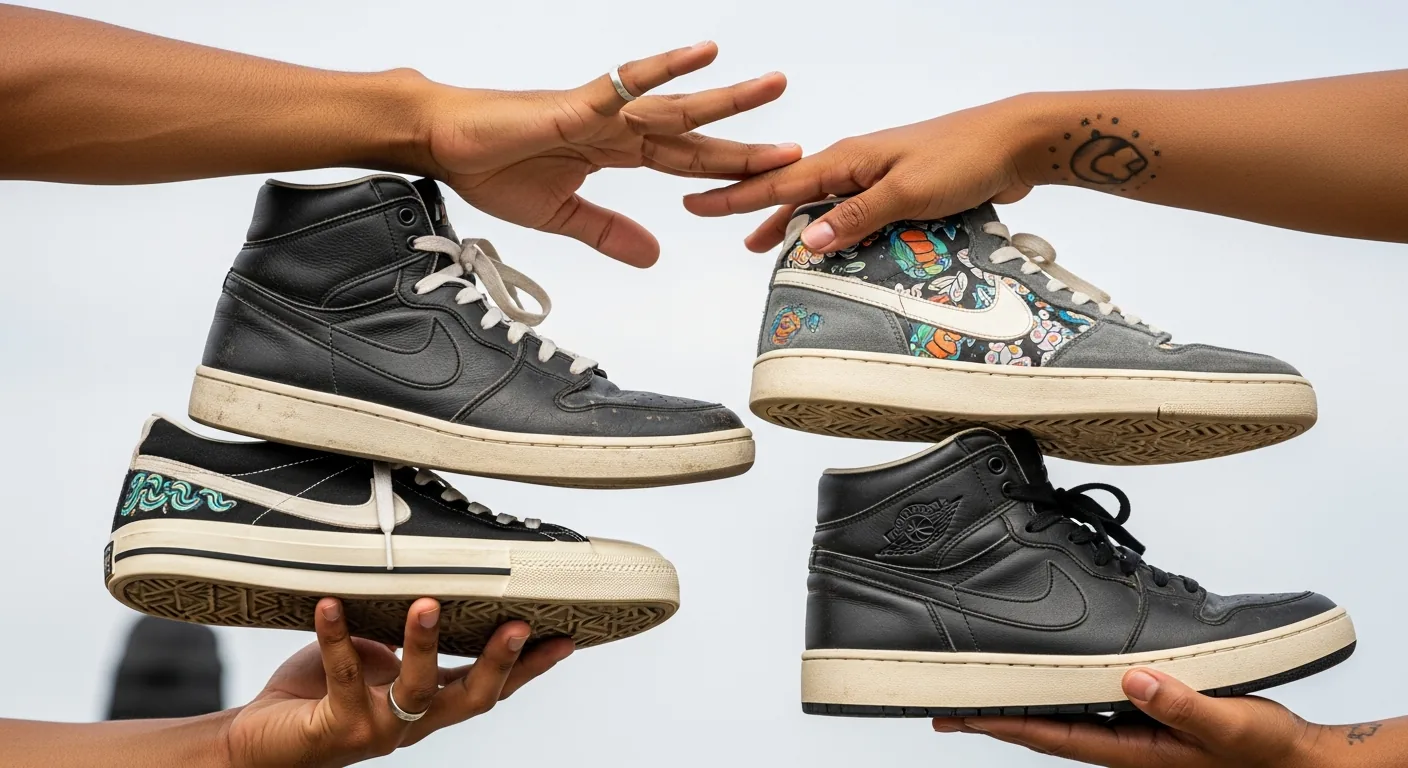
What’s happening in cities like Atlanta is instructive. Sole Sisters ATL, a women-focused sneaker collective founded in late 2022 by graphic designer Monique Hayes, started hosting quarterly swap meets at a vintage shop in Little Five Points. The format is deceptively simple: bring a pair you’re done with, browse what’s on the table, negotiate trades or small cash deals, and stay for the conversation. Hayes told Kicks & She the magic isn’t the transactions. It’s the thirty-minute conversations that happen over a pair of Air Jordan 1 “Satin Bred” (the satin-finish black and red that became a women’s grail) sitting between two strangers. “Women don’t just want to cop,” she said. “They want to understand why a shoe matters. They want the story. Swap meets give them room to ask.”
The format works because it removes two barriers at once. There’s no gatekeeping bouncer energy, no one quizzing you on Jordan release dates to prove you belong. And there’s no algorithm deciding what you see. You see what’s physically in front of you, and the person who brought it is standing right there, ready to talk. For first-time women sneakerheads, this tactile, social format builds knowledge and confidence simultaneously.
Hayes isn’t alone. In Chicago, the collective Laced Up Ladies hosts swap-and-style events where attendees bring sneakers and full outfits, staging impromptu lookbooks for each other’s Instagram pages. In Philadelphia, a group called Philly Sole Sisters runs bimonthly meets at a community center in West Philly, complete with a “first pair” table stocked with clean, entry-level heat: Air Force 1 “Craft” in women’s sail (a warm off-white leather build), New Balance 550s in sea salt (a tonal cream that goes with everything), Adidas Samba OGs in white and gum (the classic terrace silhouette having its mainstream moment). These pairs are donated by members and local shops specifically for newcomers who don’t yet have anything to trade.
Run Clubs Are Lacing Culture Into Fitness

If swap meets are the living room of women’s sneaker meetup culture, run clubs are the sidewalk. And they’re growing faster than almost anyone predicted.
The explosion of women-centered run clubs over the past two years, accelerated by pandemic-era outdoor fitness habits and turbocharged by brands like New Balance, On, HOKA, and Nike’s own community programming, has created a parallel pathway into sneaker appreciation that has nothing to do with resale value or hype rankings. It has everything to do with performance, fit, and the deeply personal act of finding the right shoe for your body.
Consider City Girls Run in Houston, founded in 2021 by former college track athlete Brianna Lockwood. The club meets three times a week at Hermann Park and has grown from a dozen members to over four hundred. Lockwood told us the sneaker conversations happen organically: women showing up in whatever they have, then slowly learning the differences between a Nike Pegasus 40 and a HOKA Clifton 9, debating stack heights and carbon plates with the same intensity collectors bring to colorway debates. “A lot of these women didn’t think of themselves as sneakerheads,” Lockwood said. “But when you own five pairs of running shoes and you have opinions about each one? You’re in it. You just didn’t have the word for it.”
What makes run clubs uniquely effective as entry points is their regularity. A swap meet might happen monthly or quarterly. A run club meets weekly, sometimes multiple times a week. That frequency builds relationships, and those relationships build trust, the kind of trust that leads a woman to ask, “What should I buy next?” and actually listen to the answer. Several run clubs have started integrating sneaker-specific programming: New Balance partnered with Black Girls RUN!, the national running community founded by Toni Carey and Ashley Hicks-Rocha in 2009, for exclusive early-access events around the FuelCell SuperComp Elite v4 launch in women’s sizing. Nike’s Run Club app has been hosting women-only group runs tied to Pegasus and Vomero releases since early 2024, blurring the line between product launch and community event.
The result is a new kind of sneakerhead, one whose knowledge starts from the sole up, grounded in how a shoe feels at mile three, not how it looks on a shelf.
Collector Groups Are Building Infrastructure
Beyond the swap and the run, a third format is quietly becoming the most durable force in women’s meetup culture: the city-based collector group.
These aren’t Facebook groups or Reddit threads. They’re organized, in-person communities with membership structures, regular programming, and, increasingly, relationships with brands and retailers. They operate more like sneaker clubs than casual hangouts, and their influence on the local scene is measurable.
Take Sole Women NYC, co-founded in 2023 by sneaker journalist and collector Keisha Ramos. The group caps its membership at one hundred to keep meetings intimate and meets monthly at rotating venues across Brooklyn and Lower Manhattan. Each meeting has a theme: one month it’s “Your First Grail,” another it’s “Underrated GRs,” another it’s “What Brands Get Wrong About Women’s Sizing.” Members bring shoes to display, discuss, and sometimes sell, but the structured conversation is the main event. Ramos described it as “book club energy for sneakers,” and the comparison lands. There’s preparation involved. Members research. They come with opinions.
The collector group format does something the others can’t: it creates institutional knowledge. When the same hundred women meet month after month, they develop a shared vocabulary, shared references, and shared standards. They know what’s good, what’s overhyped, and what deserves more attention than it’s getting. They become, collectively, a critical mass of informed taste that brands can’t ignore.
And brands aren’t ignoring it. In late 2023, New Balance invited Sole Women NYC to its Boston headquarters for an early look at the 1906R “Silver Metallic” in women’s exclusive sizing before the wider launch. Jordan Brand hosted Laced Up Ladies at a private event during Chicago’s Sneaker Con in February 2024, debuting the Air Jordan 5 “Sail” in women’s sizing and asking for real-time feedback on fit and finish. These aren’t charity moves. Brands are recognizing that women’s collector groups represent a concentrated, vocal, and deeply loyal consumer base, one that shapes purchasing decisions far beyond their own membership rolls through social proof and word of mouth.
Why the Format Matters More Than the Platform
Here’s what the data tells us, and what anyone paying attention already feels: the format of engagement determines who shows up. Social media is vast and accessible, but it’s also noisy, algorithmic, and lonely. A woman can scroll sneaker content for three years without ever feeling like she’s part of something. The moment she walks into a swap meet, laces up for a group run, or sits down at a collector meeting, that changes.
The formats driving the most real-world community growth share three characteristics. They’re recurring, not one-off. They’re sized for conversation, not spectacle. And they’re led by women who are themselves active participants in this space, not brand ambassadors reading scripts.
This matters because the entry point shapes the experience. A woman whose first sneaker community moment is a corporate pop-up with a DJ and a photo booth has a fundamentally different relationship to the culture than one whose first moment is trading a pair of Reebok Club C 85s across a table while someone explains the history of the silhouette. The pop-up says, “Consume this.” The meetup says, “You’re one of us.”
And the numbers support the meetup model. Jasmine Torres’s East LA swap meets have grown from eleven to over a hundred regular attendees in under a year. City Girls Run added three hundred members in eighteen months without paid advertising. Sole Women NYC has a waitlist. These aren’t outliers. In conversations with organizers in twelve cities across North America and the UK, the pattern repeats: word of mouth, organic growth, waiting lists, demand outpacing capacity.
Styling Culture Shifts When Women Gather
Something else happens when women collect in person around sneakers: the styling conversation evolves in real time, in ways no flat-lay Instagram post can replicate.
At Laced Up Ladies’ swap-and-style events in Chicago, the interplay between sneaker and outfit is the main event. Women arrive in full looks: a vintage Aaliyah-era baggy denim silhouette anchored by a pair of Air Jordan 4 “Shimmer,” or a tailored linen co-ord set with ASICS GEL-Kayano 14 “Simply Taupe” and gold jewelry. The styling isn’t performative. It’s conversational. Someone asks, “How do you make those work with a midi skirt?” and gets a real answer from someone wearing the proof.
This kind of styling exchange is uniquely powerful because it’s three-dimensional. You can see the proportions. You can clock the way a wider-leg pant breaks over a chunky sole versus a slim one. You notice details: the lace swap, the sock choice, the way someone deliberately mismatches her sneakers with a coordinated color elsewhere in the outfit. These are lessons you absorb through proximity, not through a curated feed.
The result is a styling vernacular that’s genuinely women-driven, born from women talking to women in person, unmediated by brand lookbooks or influencer sponsorships. It’s also more inclusive by nature: when you see a range of body types, heights, skin tones, and personal aesthetics wearing the same silhouette differently, you immediately understand that there’s no single right way to wear a shoe. That realization, casual, obvious, liberating, is one of the most valuable things meetup culture offers.
The Organizers Are the Culture Now
The women building these communities aren’t waiting for brands to invite them in. They’re building their own rooms and then deciding which brands get to visit.
Jasmine Torres doesn’t have a brand deal. She has a parking lot, a group chat, and a reputation. Monique Hayes designed her own logo, prints her own flyers, and funds Sole Sisters ATL through small vendor fees and her own pocket. Keisha Ramos leveraged her journalism background to create programming that’s equal parts education and celebration. Brianna Lockwood used her track experience to build a run club that treats sneaker knowledge as a natural extension of athletic identity.
These organizers are the culture now. They’re the ones setting the tone, deciding what’s worth talking about, and shaping the taste of the next generation of women sneakerheads. Their influence doesn’t register on StockX charts or follower counts, but it shows up in something harder to fake: the look on a woman’s face when she realizes she’s found her people.
And that’s the thing about meetup culture’s return. It’s not really about sneakers. It’s about the architecture of belonging: who builds it, who it’s for, and what happens inside it. For a long time, women had to retrofit themselves into spaces designed around someone else’s experience. Now they’re pouring their own foundations.
Back in that East LA parking lot, Dani, the nursing student who picked up the Nike Dunk Low “Rose Whisper” at Jasmine’s swap meet, has become a regular. She’s on her ninth pair now. She’s got opinions about toebox shape and midsole cushioning. Last month, she helped set up the tables. Next month, she’s bringing her sister.
The front door is wherever women decide to build one.