800 Women, One Google Form, and Nike’s Silence
A Drop, a Data Campaign, and a Movement Taking Shape

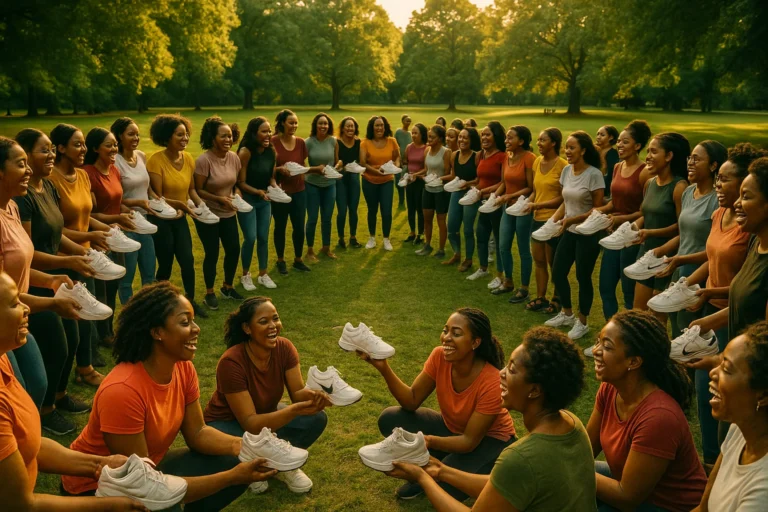
Last October, I watched a Discord server of 1,400 women sneakerheads lose its collective mind in under ninety seconds. The Air Jordan 4 “Sail” in women’s sizing, a release Nike had teased for weeks, sold out on SNKRS before most members could even get past the loading screen. Within three minutes, the server’s #sizing-gaps channel exploded. Screenshots of error pages. Size run receipts showing the women’s release topped out at a US 12 while the men’s equivalent ran to a 15. Someone posted a side-by-side of the men’s and women’s allocation numbers she’d pulled from a retail source: the women’s run was roughly 40% of the men’s. And then, instead of just venting, the moderators pinned a Google Form. “Fill this out. We’re sending it to Nike’s consumer feedback team, the Jordan Brand Instagram, and every sneaker journalist who’ll listen.” By midnight, 800 women had filled it out. By the following week, a sneaker reporter at Complex [referenced the data](https://www.complex.com/sneakers) in a story about shrinking women’s allocations.
That wasn’t a fluke. It was a playbook, one that’s been quietly developing across local Discords, private group chats, niche creator communities, and Instagram Close Friends lists for the past two years. Women sneakerheads aren’t just talking about the shoes they love anymore. They’re organizing demand, calling out what’s missing in real time, and making sure every gap between a brand’s promises and its actual production has a name, a number, and a receipts folder. This is what it looks like when a community styles its own story and rewrites the industry’s along the way.
Sneaker Culture’s Long History of Sizing Women Out
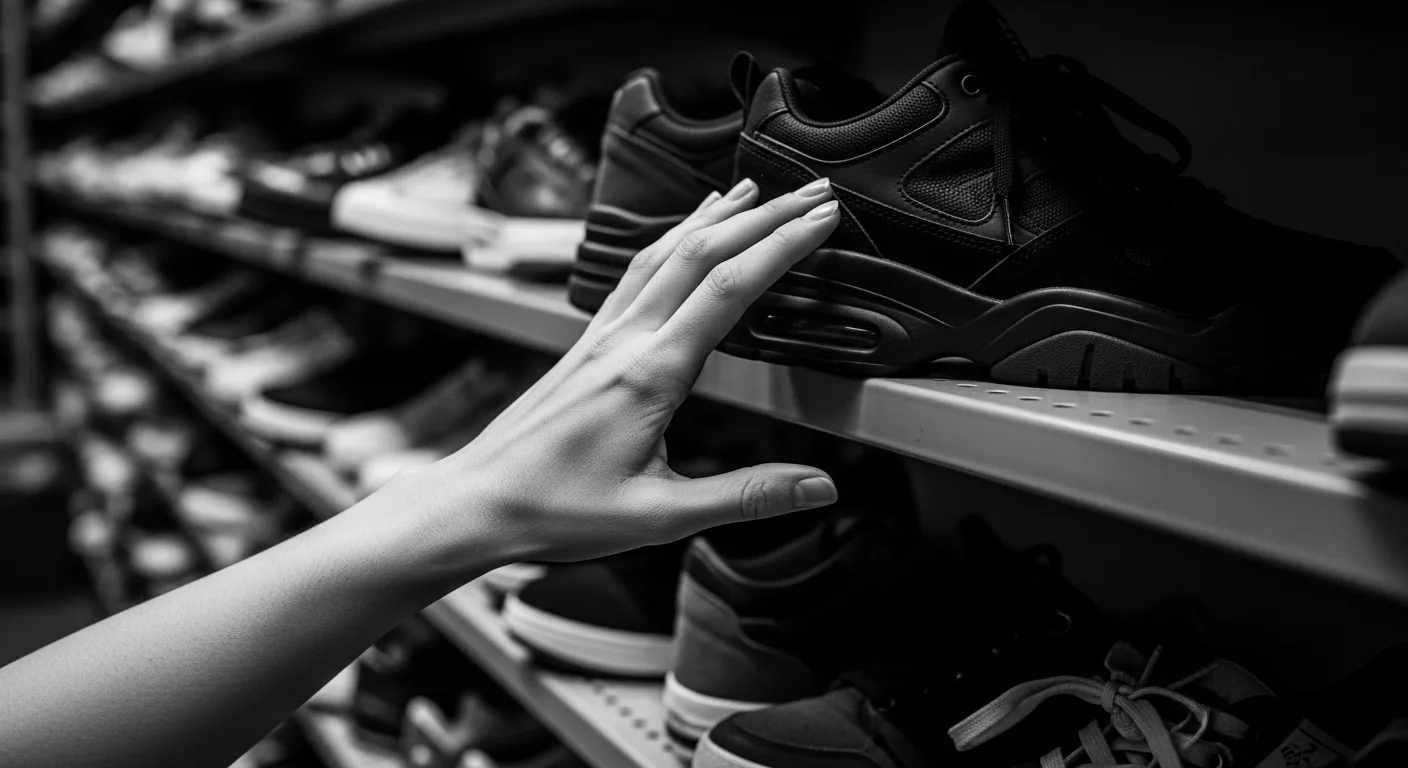
To understand why these digital communities have become so urgent, you have to understand just how long women were structurally locked out of sneaker culture—not by preference, but by production. For decades, major brands simply didn’t make their most coveted silhouettes in women’s sizes. If you wanted a pair of Dunks in 2004 and you wore below a men’s 7, you were out of luck unless you could squeeze into a grade school size and accept the compromised materials and cushioning that came with it. The industry treated women’s interest as an afterthought, a niche within a niche. Sneakers have always been a lens for race, gender, class, and identity (scholar [Yuniya Kawamura’s work on sneaker subcultures](https://www.bloomsbury.com/us/sneakers-9780857857637/) makes this explicit), but for years, the gender piece was defined almost entirely by absence.
When brands did produce “women’s” sneakers, the results were often insulting. Pastel colorways no one asked for. Slimmer tooling that didn’t account for the anatomical differences in women’s feet: wider forefeet, narrower heels, higher arches on average. The phrase “shrink it and pink it” became a rallying cry of frustration long before it became a meme. Women who wanted access to the same Retro Jordan, the same SB Dunk, the same New Balance 550 that male collectors were wearing had to learn men’s-to-women’s size conversion charts, navigate resale markups inflated by scarcity, or simply go without. That’s not a preference gap. That’s a structural barrier built into the supply chain itself.
From Frustration to Organized Digital Pressure

The shift started happening when women stopped treating these frustrations as individual problems and began recognizing them as collective ones. The infrastructure was already there; sneaker culture has always been community-driven, built on forums, Facebook groups, and later Reddit threads. But around 2021 and 2022, something changed. Women began carving out their own spaces, not as spin-offs of existing sneaker communities but as independent networks with their own norms, their own leadership, and their own agendas.
Discord became the platform of choice for a reason. It’s fast, organized by channels, and allows for both real-time conversation and persistent documentation. A server like Sole Sisters NYC (which started with 200 members and now sits above 2,000) doesn’t just have channels for release dates and styling inspiration. It has dedicated threads for sizing inconsistencies, for tracking which retailers actually stock extended women’s sizes, and for coordinating feedback campaigns after a botched launch. When the New Balance 1906R dropped in a women’s-exclusive “Sea Salt” colorway in March 2024 and ran a full size small according to dozens of members who copped, the server compiled fit data from over 150 buyers and sent it directly to New Balance’s product team through a contact one of the moderators had cultivated over months.
This is what makes these communities different from traditional sneaker forums. They’re not just spaces for discussion; they’re organizing tools. They function more like mutual aid networks than fan clubs. Members share intel about which Foot Locker locations received women’s stock, which raffles are region-locked, which brand reps are actually responsive to sizing complaints, and which ones send form-letter responses that go nowhere.
The Women Building These Networks from Scratch

The women leading these communities aren’t waiting for brands to notice them. They’re building the infrastructure themselves and then using it as leverage. Take someone like Jasmine “JazKicks” Torres, who runs a private group chat across Signal and Instagram with about 600 women sneakerheads in the greater Chicago area. Torres started the group in late 2022 after she attended a local sneaker convention and realized she was one of maybe fifteen women in a room of three hundred. “I wasn’t mad about the ratio,” she told me over a phone call earlier this spring. “I was mad that nobody had even thought to ask why the ratio was like that. The brands sponsoring the event didn’t have a single women’s-exclusive pair on display.”
Torres’s group has since become a testing ground for a model she calls “demand mapping.” Before a hyped release, say the Nike Air Max 1 ’86 “Jackie Robinson” from early 2024, her members fill out a quick survey indicating their size, preferred purchase method, and willingness to spend at retail. Torres aggregates the data and shares it directly with local boutique buyers she’s built relationships with, showing them that yes, there is verifiable demand for women’s sizing in specific silhouettes, in their specific market. She claims it’s directly influenced the size runs at two Chicago-area boutiques, though the shops themselves have been cautious about confirming it publicly.
Then there’s someone like Priya Venkatesh, a sneaker content creator in Atlanta whose TikTok following sits around 95,000. Venkatesh doesn’t run a Discord, but she uses her platform as a signal amplifier for the communities that do. When a Discord server she’s part of identifies a sizing issue (like the widely reported problem with the Adidas Samba OG women’s version running narrow through the midfoot compared to the unisex original) Venkatesh makes a video about it. She tags the brand. She shows the receipts. Her comment sections become secondary organizing spaces where women share their own fit data, creating a public record that’s much harder for a brand to ignore than a private email.
How Real-Time Callouts Are Changing Brand Behavior
The pressure is working, even if the progress is uneven. There’s a growing body of evidence, anecdotal but consistent, that brands are responding to organized community feedback in ways they weren’t even three years ago. Nike’s decision to expand women’s sizing on select Jordan retros to a US 14 in 2023 didn’t happen in a vacuum. It followed years of vocal, documented frustration from women’s sneaker communities, including a [widely shared open letter](https://www.instagram.com) drafted collaboratively in a Discord server called Laced Up Collective and signed by over 3,000 women before being sent to Jordan Brand’s consumer insights division.
New Balance has arguably been the most responsive. The brand’s 2023 decision to produce the 990v6 in a women’s-specific last, meaning the shoe was actually built around a women’s foot scan rather than simply scaled down from a men’s mold, came because women’s communities pushed consistent, organized feedback that went beyond anecdotal complaints and included measurable fit data. A brand representative who spoke at a [Sneaker Con panel in Philadelphia](https://www.sneakercon.com) confirmed as much directly. That’s a direct echo of the kind of work Torres and communities like hers have been doing.
But not every brand is listening, and the communities know it. Adidas has faced sustained criticism for its handling of women’s sizing on the Gazelle and Spezial lines, particularly around the inconsistency between European and US sizing charts that leaves many women between sizes. A UK-based Discord server called Sole Equity has been tracking these inconsistencies since mid-2023, maintaining a shared spreadsheet with fit reports from over 400 members across twelve Adidas silhouettes. The data shows that the Gazelle Indoor, one of the hottest silhouettes of the past eighteen months, fits nearly a half-size differently in women’s compared to what the brand’s own size chart predicts. Members have sent this data to Adidas’s UK team multiple times. The response, according to the server’s founder, a London-based collector named Amara Okafor, has been “polite but empty.”
Launch Access Remains the Deepest Inequity
Sizing is only part of the story. Launch access, who gets to buy the shoes in the first place, remains a deeply inequitable system, and women’s communities are increasingly focused on exposing that. The SNKRS app, Nike’s primary digital launch platform, has been widely criticized for its opaque draw system, but the specific concern from women’s communities is about allocation. When a shoe drops in both men’s and women’s sizing, how many units are produced in each category, and how does that ratio compare to actual demand?
This is the kind of question that individual consumers can’t answer alone. But communities can. A Discord server I’ve been lurking in for the past year, a midsized community of about 700 members mostly based in the Midwest, has been running what its moderators call “drop audits.” After every major SNKRS release, members report whether they hit or missed, what size they entered for, and how quickly the app showed the release as sold out. The server then aggregates this data and compares it to publicly available information about the release, like the number of sizes listed at launch and how quickly specific size runs disappeared.
The findings have been damning. On three separate Jordan retro releases in the first half of 2024, the server’s data showed that women’s sizes sold out in under two minutes while men’s sizes remained available for ten or more. That ratio (five times faster sellout) suggests either dramatically lower production quantities for women’s sizing or dramatically higher demand that the brand isn’t meeting. Either way, the gap is real, and it’s documented in a way that’s difficult to dismiss.
Styling Culture Meets Structural Critique in One Space
What makes these communities genuinely special is that they refuse to separate the cultural from the structural. The same Discord channel where someone posts a fit pic of the Asics Gel-Kayano 14 “Cream” styled with wide-leg trousers and a cropped blazer is also the channel where someone posts a screenshot of a brand’s launch page showing no women’s sizes above a 10. The styling conversation and the sizing conversation aren’t siloed. They feed each other. When you see someone nail a look with a shoe you can’t even buy in your size, the frustration isn’t abstract. It’s personal, it’s specific, and it drives action.
This integration of style and advocacy is something brands should be paying close attention to, because it means the women in these communities aren’t just potential customers. They’re tastemakers, critics, and organizers all at once. When a creator like Venkatesh styles a pair of Salomon XT-6 in a “Black/Vanilla Ice” colorway and simultaneously calls out the brand for only offering the shoe in unisex sizing that skews large for most women, she’s doing something more powerful than a traditional marketing campaign. She’s showing you exactly why you want the shoe and exactly why you might not be able to get it, in the same frame.
The practical knowledge flowing through these communities is staggering. Members share intel about which silhouettes run true to women’s sizing versus which ones require converting from men’s or grade school. They flag specific retailers like Kith Women or Bstn that carry extended women’s size runs when others don’t. They track restocks with a precision that rivals any bot-driven resale operation, but for the purpose of actually wearing the shoes rather than flipping them. If you’re a woman trying to cop the Nike Dunk Low “Rose Whisper” and you wear a size 5.5, these communities will tell you that the grade school equivalent is a 4Y, that the materials are slightly different, that the cushioning setup uses a thinner insole, and that your best bet for retail availability is a specific Foot Locker location in a specific suburb because it consistently receives women’s-extended stock that the app sells out of in seconds.
The Road Ahead for Women’s Sneaker Organizing
Where does this go from here? The trajectory is clear, even if the timeline isn’t. These communities are getting more sophisticated, more data-driven, and more connected to each other. Cross-server collaborations are already happening. Sole Sisters NYC and Laced Up Collective co-organized a virtual panel in February 2024 that drew over 500 live attendees and featured a product developer from Reebok answering direct questions about women’s fit testing processes. That kind of access didn’t exist two years ago. It exists now because organized communities earned it.
The next frontier is likely formal partnerships. Some community leaders are already being brought in as consultants. Torres told me she’s been approached by two brands she wasn’t ready to name, both interested in using her demand-mapping model for upcoming women’s releases. If that happens transparently and with genuine community input, it could reshape how brands plan production runs. If it happens as a co-option strategy, brands cherry-picking community leaders for photo ops while ignoring the underlying demands, these communities are savvy enough to call it out publicly and loudly.
The bigger picture is this: women sneakerheads have spent decades being told the culture wasn’t built for them and then proving, with their wallets and their creativity and their sheer persistence, that the culture doesn’t exist without them. What’s happening now in these Discords and group chats and creator networks isn’t just community building. It’s the construction of a parallel infrastructure, one that doesn’t wait for brands to get it right but instead documents every failure, amplifies every success, and makes it impossible to pretend the demand isn’t there. The spreadsheets are public. The receipts are screenshotted. The form letters get posted.
The next time a brand announces a women’s-exclusive release and produces it in a size run that stops at a 10, or allocates half the stock they’d give to a comparable men’s release, or drops it on SNKRS with a draw window so short it feels performative, someone in a Discord server is going to notice. She’s going to document it, share it across three platforms before the brand’s social media manager finishes their morning coffee, and rally a few hundred women to fill out a form, sign a letter, and send it somewhere it can’t be ignored.
That’s not a trend. That’s a movement with infrastructure. And it’s just getting started.