Sneaker Communities Reshaping the Culture
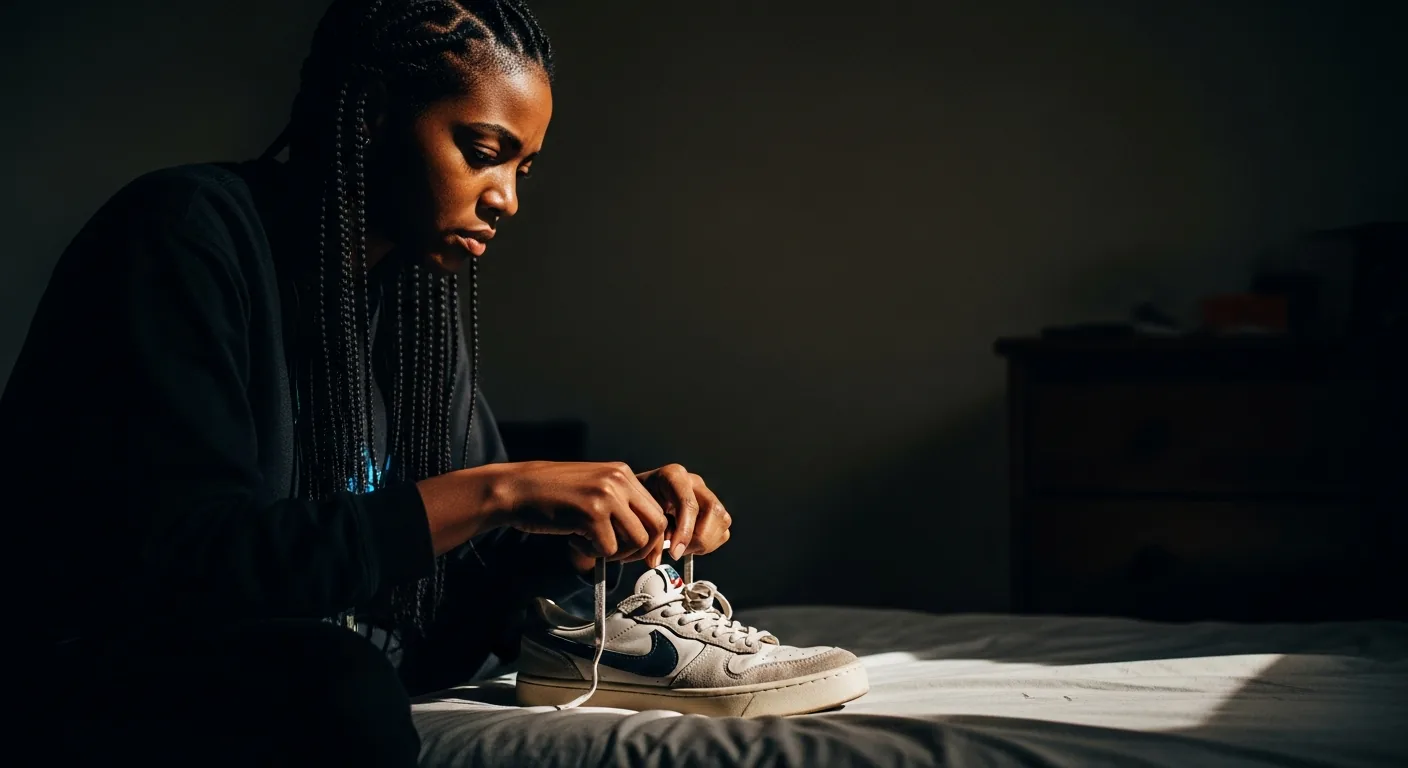
Sitting on the edge of her bed at 5:47 AM, the SNKRS app loaded, thumb hovering. The Nike Dunk Low in Coconut Milk hasn’t even dropped yet and she can already feel the leather in her hands—smooth, barely off-white, the kind of cream that’ll patina into something personal over time. Her group chat is already buzzing. Three friends in three cities, all locked in, all ready. When the clock hits 7:00 AM Eastern, she taps. The wheel spins. And whether she hits or catches an L, she’ll screenshot the result and post it to a community of five thousand women who understand exactly why this moment matters.
This is the sneaker world right now. Not the version you see on most mainstream panels or in brand campaign boardrooms—but the version that’s actually alive, steadily growing, and fundamentally reshaping what authority looks like in this space. Women aren’t waiting for an invitation to the table. They’ve built their own tables, their own rooms, their own entire buildings. And the bold, undeniable truth is this: women-led sneaker communities, creators, and collectors are the most important force redefining who gets to be taken seriously in sneaker culture, even as the biggest brands in the world continue to underestimate them.
Women Have Always Been in Sneaker Culture
The myth that women are newcomers to sneakers is exactly that—a myth. It’s a convenient narrative that erases decades of participation, influence, and taste-making. Go back to the late 1980s: women in New York weren’t just wearing Air Force 1s because their boyfriends had them. They were choosing colorways, styling them with door-knocker earrings and bike shorts, making decisions about how a shoe lived in the world beyond the court. In the 1990s, Missy Elliott wore Adidas Superstars and Timberlands in music videos that shaped an entire generation’s understanding of what cool looked like. Lauryn Hill performed at the 1999 Grammys in sneakers. These weren’t accidents. They were style choices made by women with vision.
But the infrastructure of the sneaker world, the magazines, the conventions, the resale platforms, the YouTube channels, was largely built by and for men. Not because women weren’t interested, but because they weren’t centered. They weren’t asked to speak on panels. Their collections weren’t featured. Their sizing was an afterthought; as recently as 2020, women’s-specific colorways made up a small fraction of marquee Jordan releases compared to men’s offerings, a gap that only began narrowing in the years since. The community didn’t lock them out with a sign on the door. It just never built the door to their dimensions.
That history matters because it explains the energy behind what’s happening now. The women leading today’s sneaker scene aren’t just passionate. They’re corrective. They’re filling gaps that shouldn’t have existed in the first place.
The Communities Women Built from Scratch
Look at what’s been built in the last five years alone. Groups like Lace Up NYC, founded by Jemella Odom, have created physical spaces, meetups, panels, sneaker swaps, specifically for women and non-binary sneakerheads. These aren’t watered-down versions of existing sneaker conventions. They’re intentionally designed gatherings where a woman can show up with her collection, talk about the engineering of a Zoom Air unit or the history of the Air Max 97 Silver Bullet, and be met with respect, not surprise.
On social media, communities like Femme Sole Collective and The Sole Womxn have built audiences in the tens of thousands by curating content that centers women’s perspectives on releases, styling, and collecting. Their reviews address how shoes actually fit women’s feet: narrower heels, different arch support needs, the reality that a size 8.5 in men’s is not the same experience as a women’s 10. That kind of specificity matters. It’s the difference between content that acknowledges its audience and content that merely tolerates them.
And then there’s the rise of women-led sneaker podcasts and YouTube channels. Creators like Jess Gavigan, whose content dives deep into sneaker history and release strategy, and KC Ifeanyi, whose cultural criticism connects sneakers to broader conversations about identity, have carved out spaces where women’s knowledge isn’t a sidebar. It’s the main text. These creators don’t soften their opinions to seem approachable. They argue about whether the Travis Scott x Jordan 1 Low Reverse Mocha was overhyped. They debate whether New Balance’s 550 is the decade’s most important silhouette. Each one brings the same heat, the same depth, the same obsessive love for the craft that any serious sneakerhead does.
Collectors Proving Authority Looks Different Now
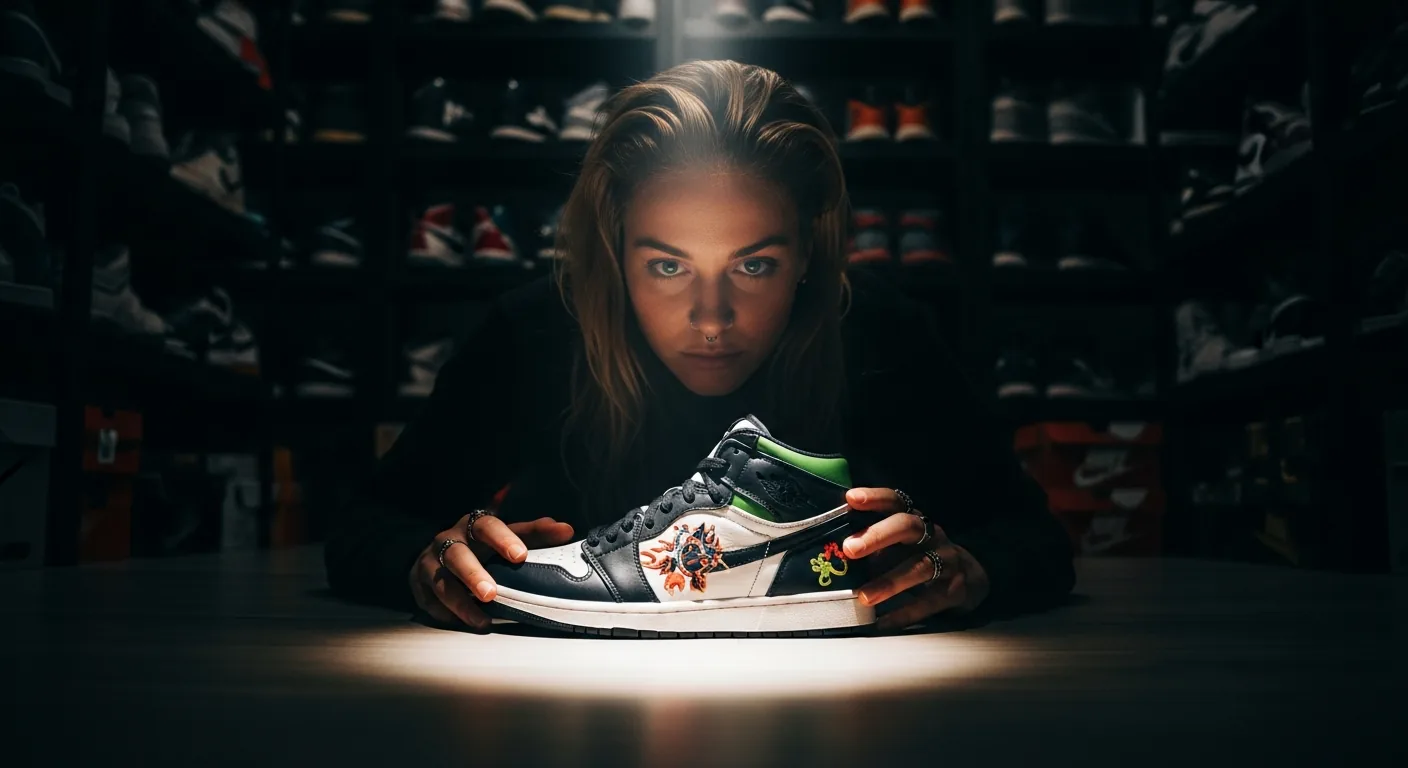
The collector space is where the shift becomes most visible and most challenging to the old guard. For decades, sneaker authority was measured by a specific kind of collection: rare Jordans, deadstock pairs from the early 2000s, maybe some Kanye-era Nike samples. The collectors who got the most shine tended to be men with massive walls of shoes, photographed in dim rooms with dramatic lighting.
Women collectors are rewriting that script. Take someone like Melody Ehsani, who’s both a designer and a collector, and whose personal archive reflects a curatorial eye that blends streetwear, high fashion, and cultural storytelling. Her Air Jordan 1 Mid collaboration in 2019, with its watch-shaped lace lock and the phrase “if you knew what you had, you would never settle” printed inside, wasn’t just a sneaker. It was a statement about self-worth delivered through footwear design. That pair, initially released in women’s sizing only, now commands resale prices north of $400—proof that women’s exclusives aren’t niche. They’re desired.
Or consider the growing visibility of women who collect not just Jordans but Asics Gel-Lyte IIIs, Saucony Jazz Originals, and Salomon XT-6s. Their collections are diverse, intentional, and often more aesthetically cohesive than the hype-driven walls that dominate mainstream sneaker media. These women collect with taste, not just clout. And they’re documenting it on platforms like Instagram and TikTok, building visual archives that function as both personal expression and cultural record.
The numbers back this up. According to StockX’s 2023 year-end data, women’s sneaker purchases on the platform grew significantly, with the New Balance 530 in White Silver and the adidas Samba OG in Cloud White ranking among the most-traded women’s pairs. Resale isn’t just a men’s market anymore, and the demand patterns reveal something important: women aren’t just buying what brands push at them. They’re driving trends. The Adidas Samba’s resurgence as a cultural staple wasn’t led by a campaign. It was led by women styling them with barrel-leg jeans and oversized blazers on social media, turning a decades-old indoor soccer shoe into the most-wanted silhouette in fashion.
How Brands Still Miss the Mark on Representation
Here’s where the conversation gets uncomfortable, and necessary. Despite the undeniable growth of women in this space, major brands still treat women’s lines as secondary. The evidence is structural, not just anecdotal.
Start with sizing and availability. Nike’s women’s-exclusive colorways frequently release in limited runs compared to their men’s equivalents. When the Air Jordan 1 drops in a women’s-exclusive colorway like the Satin Bred from late 2023, the production numbers are often smaller, the marketing quieter, and the retail distribution narrower. Women who want those pairs have to work harder to get them, and then pay more on resale when they miss out. That’s not a feature. It’s a failure of investment.
Then there’s the design pipeline. Women-specific silhouettes, shoes designed from the ground up for women’s feet, not just scaled-down men’s molds, remain rare. Nike’s Air Max Dia and Adidas’s Ozweego Celox were steps in this direction, but they haven’t received the sustained attention or iteration that men’s-origin silhouettes get year after year. The Jordan brand has increased its women’s output significantly, but much of it still relies on existing silhouettes in new colorways rather than new designs created with women’s input from the start.
Marketing tells a similar story. Flip through sneaker ads from the major brands in any given month and count how many feature women as the primary subject, not as an accessory to a men’s campaign, not in a Valentine’s Day capsule, but as the central figure in a mainline sneaker story. The ratio is still skewed, and when women do appear, they’re often styled in ways that emphasize fashion over knowledge, as though a woman can wear sneakers but couldn’t possibly have opinions about foam densities or outsole traction patterns.
This is where women-led communities become not just culturally important but commercially essential. They’re creating the representation that brands should be providing. When a sneaker Instagram account run by women reviews the On Running Cloudmonster 2 and talks about how the CloudTec sole unit performs on a morning run through Brooklyn, that’s content the brand should be amplifying. And often isn’t.
Style as Identity and the Women Driving Trends
One of the most significant shifts women have brought to the sneaker scene is the elevation of styling as a form of authority. For too long, sneaker knowledge was defined narrowly: release dates, production numbers, resale values. Those things matter. But they’re not the only things that matter. How a shoe lives in the world, what it’s paired with, how it’s worn, what it communicates, is equally valid knowledge, and women have been leading that conversation with extraordinary creativity.
Look at how women sneakerheads have driven the gorpcore-to-streetwear pipeline. The Salomon XT-6, originally a trail running shoe, became an urban fashion staple in large part because women styled it with everything from pleated skirts to cargo pants, proving it could exist outside its original context. That’s not just styling. That’s cultural translation. It takes knowledge of both the shoe’s heritage and the broader fashion landscape to make those connections work.
The “blokecore” soccer jersey trend of 2023 bled directly into a resurgence of terrace-culture sneakers—Sambas, Gazelles, Spezials—and women were the ones who made those silhouettes feel fresh again. When you see an Adidas Spezial in Collegiate Green paired with a vintage Arsenal jersey and wide-leg trousers on a woman’s TikTok, you’re watching someone with a deep understanding of subcultural aesthetics make something new. That’s authority. Full stop.
Women like Aleali May, whose Jordan collaborations have included the Air Jordan 1 Court Lux and the Air Jordan 14, have brought a design sensibility rooted in women’s closets: satin finishes, unexpected color stories, details that reference getting dressed up rather than getting on the court. Her work proves that when women are given authorship over sneaker design, the results aren’t just “women’s shoes.” They’re shoes that expand the vocabulary of what a sneaker can be.
Where the Scene Goes When Women Lead It
So where does this go from here? The trajectory is clear, even if the pace is frustratingly uneven. Women-led sneaker communities are growing in both size and influence. Brands that pay attention to that growth will benefit. Brands that don’t will find themselves playing catch-up in a market that’s already moved on without them.
The most immediate opportunity is in co-creation. Not the kind where a brand invites a woman influencer to pick from a preset palette of colorway options and calls it a collaboration. Real co-creation means bringing women into the design process at the brief stage, letting them define the silhouette, the materials, the story, and the audience. It means hiring women as sneaker designers not as a diversity initiative but because they bring perspectives that make the product better. It means treating women’s sizing as a first-priority production run, not a secondary order that gets cut when budgets tighten.
The resale market is another space to watch. As more women enter collecting with long-term intent, buying pairs to hold, to wear, to archive, the dynamics of what appreciates in value will shift. Women’s-exclusive colorways that were once dismissed as niche are already commanding serious resale premiums. The Jordan 1 in Atmosphere, the Dunk Low in Rose Whisper, the New Balance 2002R in Rain Cloud—these aren’t just pretty shoes. They’re assets, and the women who recognized their value early are building collections that rival anything in the traditional sneaker canon.
Community infrastructure will keep evolving too. The meetups and Instagram accounts of today will become the media companies and retail concepts of tomorrow. Lace Up NYC could become a sneaker convention on par with Sneaker Con, and might already be more meaningful to its attendees. Femme Sole Collective could evolve into a media brand that shapes how the entire industry thinks about women’s product. The foundations are being laid right now, in group chats and comment sections and DMs between women who’ve found each other through a shared love of well-made shoes.
The forward-looking question isn’t whether women belong in this community. That was never a real question, just a failure of attention by those who weren’t looking. The real question is whether the industry will catch up to what women have already built. Because the communities are here. The collectors are here. The creators, the stylists, the historians, the critics—they’re all here, and they’ve been here. The sneaker world doesn’t need to make room for women. Women have already made the room. They’ve furnished it, lit it beautifully, and laced up the freshest pairs in the building. The only thing left is for everyone else to walk in, look around, and recognize what’s been true all along: this world belongs to everyone who loves it, and the women who love it are shaping it into something bigger, sharper, and more alive than it’s ever been.